João Luiz Musa (São Paulo SP 1951)
Photographer, teacher.
He graduated in production engineering from the Escola Politécnica da Universidade de São Paulo (Poli/USP) in 1974. During his studies, he organized the photography lab of the Poli/USP student union with the photographers Raul Garcez (1949 - 1987) and Sérgio Burgi (1958- ). From 1978 to 1982, he worked in the lab of the Faculdade de Arquitetura e Urbanismo da USP (FAU/USP) [USP School of Architecture and Urbanism] and taught photography at private colleges. In the 1970s and 1980s, he carried out research and attended several courses in image conservation and tone control. In 1984, he became a photography teacher in the visual arts program of the Escola de Comunicações e Artes da USP (ECA/USP) [USP School of Communications and Arts]. At the same institution, in 1990, he completed a master's degree in arts with the dissertation Viagem a uma Terra Desconhecida [Journey to an Unknown Land], which gave rise to the photographic essay of the same name shown at the Museu de Arte de São Paulo Assis Chateaubriand (Masp) in 1992. With this work, he received the best photographer of the year award from the Associação Paulista dos Críticos de Arte (APCA) [São Paulo Association of Art Critics]. From 1994 to 1999, he developed the doctoral project O Viajante e as Cidades [The Traveler and the Cities] at ECA/USP. In 2004 and 2005, he was awarded a Fundação Vitae grant for research into digitization and representation technologies for color landscape images. In addition to teaching, he works as a photographer, mainly in advertising, institutional photography, reproduction of artworks, and the systematization and preservation of archives.
Critical Commentary
The etymological origin of the word photography (photo = light + graphy = writing) reveals that the photographic image is an inscription made with light. João Luiz Musa's work seems to be based on this elementary concept, as his interest focuses above all on knowing and mastering the techniques of imprinting light onto photosensitive materials. The artist usually exhibits his photos accompanied by labels listing the technical characteristics of the image capture: the camera used, the lens, the aperture, the film, the brand of enlarging paper, details about the exposure and the chemical development process. In the case of digital images, he indicates, for example, the printer used. This shows the importance he gives to the process of making the image and to the control he seeks over the results. The central theme of his work is photography itself.
Studies on film contrast and density, along with the pursuit of negatives with maximum detail and information in both highlights and shadows, link Musa to the work of the American photographers Ansel Adams (1902 - 1984) and Edward Weston (1886 - 1958). Both defended the idea that the artist must have full command of every stage of the photographic process in order to direct his poetic intentions precisely.
With Raul Garcez (1949 - 1987), Sérgio Burgi (1958- ) and Cristiano Mascaro (1944- ), among others, João Musa was part of the Movimento Photo USP [Photo USP Movement] in São Paulo in the 1970s. Lacking specialized academic training in the field, these photographers set up labs in the Engineering and Architecture Schools of the Universidade de São Paulo. These spaces became important points of reference for the generation of São Paulo photographers formed in that period, as they were places of aesthetic discussion and technical investigation, as well as hosting courses and exhibitions.
In the essays produced as part of his master's work, Viagem a uma Terra Desconhecida, and his doctorate, O Viajante e as Cidades, Musa proposes an analogy between the figure of the photographer and that of the traveler. For him, both have a tireless disposition to look at the world. The traveler's condition would also be a kind of model for the photographer, since, by distancing himself from everyday tasks, the one who wanders through unknown places becomes more attentive to the events of the present time.
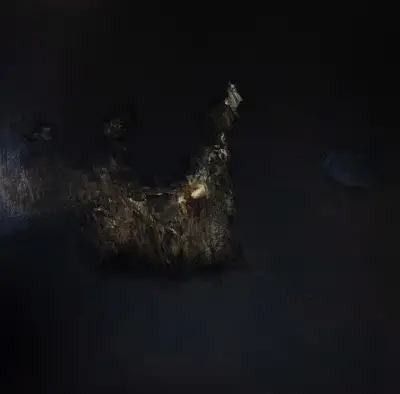
Viagem a uma Terra Desconhecida consists of color photographs of natural landscapes (seas, mountains and forests) taken between 1987 and 1990 in various regions of Brazil. Even so, they do not build an image of the country, since they lack elements that identify the places recorded. Without human figures, they convey an idea of emptiness, as if the artist were seeking moments of silence and stillness. Many are aerial views that look like abstract paintings, as shots taken from above eliminate the features of the terrain and flatten the image. The artist works with few elements: he frames homogeneous portions of sea and forest, creating monochromatic photos with a measured rhythm. Clouds and waves recall lines and brushstrokes. He tries to shoot in the morning and late afternoon, when light draws forms softly and contrasts are attenuated. In the photos taken on land, attention focuses on the raking light over the vegetation.
The careful construction of the framing is more important than freezing an action. The photographs are consequences of the relationship the photographer seeks to establish with reality: they seem the result of a moment of meditation in which the mind is empty of anxiety and expectation. As if the photographer were interested only in the passage of light across the landscape, they evoke the notion of contemplation and admiration for nature.
Critiques
"(...) Another attitude also common to the photographers and works on display is a careful articulation of the elements of photographic language. Onto the referential value, in this case the subject, another value is juxtaposed, that of the language recording it. Light and shadow, angle, framing, everything is taken into account and adapted to the stage of documentation and the author's intention. In other words, an aesthetic value is intentionally juxtaposed with socio-historical-anthropological-thematic values. And these aesthetic values have references, they have history. They incorporate, in a certain way, a historical language of photography, which develops slowly, assimilating gradually but definitively the innovations that photographers and movements create over the course of history itself. (...)"
Moracy R. de Oliveira
OLIVEIRA, Moracy R. de. A fotografia, descobrindo/mostrando a periferia paulistana. Jornal da Tarde.
"(...) In fact, João Musa does not seek to shock or assault. His dignified, clear work, imbued with respect for people, makes us think. That is where the strength of his work lies. João Musa, a poet, records dreams of the past and of the future. The young woman relives her wedding day and adorns herself with her wedding dress. The photographer, in his backlit shot, turns the dark walls of the shack into mere décor. And the sobriety, the elegance of the gesture and, above all, the luminosity of the silhouette completely invade the image. The photo of the man leaning on the television set gains a third dimension in a sequence of several planes, obtained through the reflection on the surfaces of the screen and the mirror. The dreams fade away".
Stefania Bril
BRIL, Stefania. Registro de sonhos passados e futuros. O Estado de S. Paulo. p. 18.
"(...) In his images, João Musa synthesizes a subjective vision of a poetic world that only the eclecticism of photographic language makes possible. Indeed, one of the most fascinating qualities of photography. (...)
(...) The concept of documentation is also inherent to the nature of the photographic process - and Musa manages to make explicit, in his essay, the contemplative and exuberant side of life. A deep work, rich in details and subtleties, with strong composition, which provokes the uncomfortable sensation of questioning photographic truthfulness and turns the reader into a traveler and accomplice. (...)"
Rubens Fernandes Junior
FERNANDES JUNIOR, Rubens. João Musa: viagem a uma terra desconhecida. IrisFoto, n. 455, p. 10-23.
Collections
Coleção Pirelli/Masp de Fotografias [Pirelli/Masp Photography Collection] - São Paulo SP
Masp Collection - São Paulo SP
Galeria Fotóptica Collection - São Paulo SP
MAC/USP Collection - São Paulo SP
MIS/SP Collection - São Paulo SP
Fundação Bienal de Curitiba Collection - Curitiba PR
Semasa Collection - Santo André SP
Solo Exhibitions
1974 - São Paulo SP - O Campo e a Cidade [The Countryside and the City], at Escola Politécnica da Universidade de São Paulo
1975 - São Paulo SP - Europa [Europe], at Faculdade de Arquitetura e Urbanismo da Universidade de São Paulo - FAU/USP
1975 - São Paulo SP - Europa [Europe], at Escola Politécnica da Universidade de São Paulo
1980 - São Paulo SP - Jardim Elba e Vila Renato [Jardim Elba and Vila Renato], at Bairro de Vila Prudente
1980 - São Paulo SP - Jardim Elba e Vila Renato [Jardim Elba and Vila Renato], at FAU/USP
1980 - São Paulo SP - Jardim Elba e Vila Renato [Jardim Elba and Vila Renato], at Fotóptica
1991 - São Paulo SP - Europa [Europe], at Museu da Imagem e do Som - MIS/SP
1992 - São Paulo SP - Viagem a uma Terra Desconhecida [Journey to an Unknown Land], at Museu de Arte de São Paulo - MASP
1992 - Santo André SP - Bom Ver-te Verde Santo André [Good to See You Green, Santo André], at Teatro Carlos Gomes
1994 - São Paulo SP - Paisagens [Landscapes], at MIS/SP
1996 - São Paulo SP - Um Projeto de Cidade [A City Project], at FAU/USP
1999 - São Paulo SP - O Viajante e as Cidades [The Traveler and the Cities], at Centro Cultural São Paulo - CCSP
1999 - Ribeirão Preto SP - O Viajante e as Cidades [The Traveler and the Cities], at Casa de Cultura
2005 - São Paulo SP - Sobre Fotografia [On Photography], at Centro Cultural Maria Antônia - USP
2006 - São Paulo SP - João Luiz Musa, at Galeria Brito Cimino
Group Exhibitions
1974 - São Paulo SP - O Campo e a Cidade [The Countryside and the City], at Escola Politécnica da USP
1974 - São Paulo SP - O Fotógrafo Desconhecido [The Unknown Photographer], at MAC/USP
1974 - São Paulo SP - Paisagem Europeia - Semana Internacional de Fotografias [European Landscape - International Photography Week], at Masp
1975 - São Paulo SP - Europa [Europe], at FAU/USP
1976 - São Paulo SP - Grande São Paulo [Greater São Paulo], at Masp
1977 - São Paulo SP - Amazônia [Amazonia], at FAU/USP and Sesc
1977 - Rio de Janeiro RJ - Amazônia [Amazonia], at Parque Lage
1979 - Milan (Italy) - Jardim Elba e Vila Renato [Jardim Elba and Vila Renato], at the Milan Triennial
1980 - São Paulo SP - Acervo [Collection], at Galeria Fotóptica
1980 - São Paulo SP - Mumbuca, at FAU/USP
1980 - São Paulo SP - Vila Renato e Jardim Elba, Vila Prudente [Vila Renato and Jardim Elba, Vila Prudente], at FAU/USP and Galeria Fotóptica
1982 - São Paulo SP - São Paulo, at FAU/USP
1985 - São Paulo SP - 1ª Quadrienal de Fotografia [1st Photography Quadrennial], at MAM/SP
1985 - Washington (United States) - Fotografias Brasileiras [Brazilian Photographs], at Brazilian-American Institute
1988 - Milan (Italy) - Imagens de São Paulo [Images of São Paulo], at the Milan Triennial
1989 - São Paulo SP - Imagens de São Paulo [Images of São Paulo], at Masp
1991 - São Paulo SP - Escolas [Schools], at MIS/SP
1991 - São Paulo SP - Europa 1973 [Europe 1973], at MIS/SP
1992 - Santo André SP - Bom Ver-te Verde [Good to See You Green], at Teatro Carlos Gomes
1992 - São Paulo SP - Viagem a Uma Terra Desconhecida [Journey to an Unknown Land], at Masp
1993 - Arona (Italy) - Fotos do Brasil [Photos of Brazil]
1993 - Milan (Italy) - 3º Festival de Arte Latino-Americana [3rd Latin American Art Festival]
1993 - São Paulo SP - Brasil: Pequenos Formatos, Poucas Palavras [Brazil: Small Formats, Few Words], at Galeria Documenta
1993 - São Paulo SP - 1º Mês Internacional da Fotografia. Fotografia Contemporânea Brasileira [1st International Month of Photography. Contemporary Brazilian Photography], at Sesc Pompeia
1994 - São Paulo SP - 4ª Coleção Pirelli/Masp de Fotografias [4th Pirelli/Masp Photography Collection], at Masp
1994 - São Paulo SP - Paisagens [Landscapes], at MIS/SP
1995 - São Paulo SP - 2º Mês Internacional de Fotografia. Coletiva Brasileira de Retratos Anos 80 e 90 [2nd International Month of Photography. Brazilian Group Show of Portraits from the 1980s and 1990s], at Faap - Espaço Cultural Faap
1995 - São Paulo SP - Investigação Brasil [Investigation Brazil], at CCSP
1996 - Bogotá (Colombia) - Imagenes de Brasil. Coleção Pirelli/Masp de Fotografias [Imagenes de Brasil. Pirelli/Masp Photography Collection], at Casa do Brasil
1996 - Buenos Aires (Argentina) - Imagenes de Brasil. Coleção Pirelli/Masp de Fotografias [Imagenes de Brasil. Pirelli/Masp Photography Collection], at Museo Nacional de Bellas Artes
1996 - Caracas (Venezuela) - Imagenes de Brasil. Coleção Pirelli/Masp de Fotografias [Imagenes de Brasil. Pirelli/Masp Photography Collection], at Museo de Arte Contemporáneo de Caracas Sofía Imber
2002 - São Paulo SP - Fotografias no Acervo do Museu de Arte Moderna de São Paulo [Photographs in the Collection of the Museu de Arte Moderna de São Paulo], at MAM/SP
2003 - São Paulo SP - Clube de Colecionadores de Fotografia do MAM [MAM Photography Collectors Club], at MAM/SP
2004 - São Paulo SP - Paralela Bienal
2004 - São Paulo SP - Versão Brasileira [Brazilian Version], at Galeria Brito Cimino
2005 - São Paulo SP - Panoramas SP, at MIS/SP
2006 - São Paulo SP - A Cidade para a Cidade [The City for the City], at Galeria Olido
2006 - São Paulo SP - Paralela 2006, at Pavilhão dos Estados
Source: Itaú Cultural