Helios Seelinger (Rio de Janeiro RJ 1878 - idem 1965)
Painter, draftsman, caricaturist.
Helios Aristides Seelinger studied at the Escola Nacional de Belas Artes - Enba [National School of Fine Arts] between 1891 and 1896 and also attended the studio of the brothers Henrique Bernardelli (1858 - 1936) and Rodolfo Bernardelli (1852 - 1931). On Henrique's advice, he left for Germany in 1897, where he remained until 1900. He attended the Azbe Academy and the Munich Academy and was a pupil of the painter Franz von Stuck (1863 - 1928). He returned to Brazil in 1901 and the following year held a solo exhibition at the offices of the magazine O Malho, with much of the work produced in Munich. From 1902, he took part in the Exposições Gerais de Belas Artes [General Exhibitions of Fine Arts] and received several awards. In 1903, he won the foreign travel prize with the painting Boêmia [Bohemia], in which he portrayed intellectuals of Rio's milieu, such as Gonzaga Duque (1863 - 1911), Fiúza Guimarães, Luis Edmundo (1878 - 1961), João do Rio (1881 - 1921) and Rodolfo Chambelland (1879 - 1967). On his second trip to Europe, again guided by Bernardelli, he settled in Paris, where he pursued advanced studies with Jean-Paul Laurens (1838 - 1921). After his scholarship ended, he returned to Europe several times for stays in Paris and other capitals until the eve of World War I (1914 - 1918), when he settled permanently in Rio de Janeiro. Around 1907, he worked as an assistant to the painter Eliseu Visconti (1866 - 1944) in Paris. In 1911, he made decorative paintings for the Clube Naval [Naval Club] in Rio de Janeiro. He made frequent trips to São Paulo and Porto Alegre to exhibit or sell his works. He worked as an illustrator and caricaturist for publications such as O Malho, Leitura para Todos, Careta and Fon Fon, among others. For several years he was an employee of the Museu Nacional de Belas Artes - MNBA [National Museum of Fine Arts] in Rio de Janeiro, which in 1943 organized a retrospective exhibition of the artist to celebrate his fiftieth anniversary as an artist.
Critical Commentary
Hélios Seelinger followed a singular path compared with other Brazilian artists of his generation. His formative years in Munich were of decisive importance for the artist. In an interview given to Angyone Costa, Seelinger acknowledged the influence of Franz von Stuck (1863 - 1928) and of Symbolist and mystical artistic tendencies anchored in a German spiritualist philosophy: "From Stuck I received the pantheistic influence, which is easy to discover in my works. The mysticism revealed in my studio studies developed strongly under the influence of German idealism".1 In that period, Stuck also had as pupils Wassily Kandinsky (1866 - 1944), Paul Klee (1879 - 1940) and Franz Marc (1880 - 1916), artists with whom Seelinger possibly mixed.
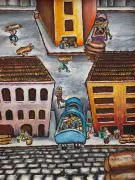
Under the influence of these experiences, his works acquired an allegorical, pantheistic character. They often depict figures from German folklore and Greek mythology, such as fauns, centaurs, nymphs and bacchantes, mixed with beings linked to Indigenous legends and Brazilian popular cultural manifestations, such as carnival and rituals of African origin.
The artist's exhibition at the offices of the magazine O Malho was received with puzzlement by the general public, but attracted the attention of part of the critics of the time, such as Carlos Américo dos Santos, who, in an article published in the Jornal do Commércio, identified Seelinger's sources of inspiration among the German artists Böcklin (1827 - 1901), Hans Thoma (1839 - 1924), Max Klinger (1857 - 1920) and Stuck, and recognized in the artist's production expressive, personal, imaginative and at times somber qualities.2
During his second stay in Europe, he went to Paris, and in his production the artist sought to adapt to the trends in vogue in France. To the German influence were added others, such as those of Jean-Paul Laurens (1838 - 1921) and Georges Antoine Rochegrosse (1859 - 1938). In the opinion of the historian José Roberto Teixeira Leite, this change was unfavorable, as his work became more refined and less expressive.3
In 1908, Seelinger exhibited works such as Salambô e a Lua [Salammbô and the Moon] and Salambô e a Cobra [Salammbô and the Snake], which enthused Gonzaga Duque (1863 - 1911) and prompted him to publish an article on the show in the magazine Kosmos in February of that year. In 1921, he produced the triptych Minha Terra [My Land] - representing three moments in the formation of Brazil: discovery, independence and republic - which is now in the Museu Histórico Nacional - MHN [National Historical Museum].
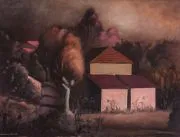
In several works, the influence of Art Nouveau can also be seen. In various other works, which can be characterized as series, he explores the same repertoire of motifs: caravels, lakes, moonlights and cypresses. He has works in the collections of the Museu Nacional de Belas Artes - MNBA and the Pinacoteca do Estado de São Paulo - Pesp [São Paulo State Pinacotheca].
Notes
1 COSTA, Angyone. A inquietação das abelhas. Rio de Janeiro: Pimenta de Mello & Cia., 1927. p. 160.
2 The review, published in the Jornal do Commércio, is mentioned by the authors Arthur Valle and José Roberto Teixeira Leite. See: VALLE, Arthur. Helios Seelinger, um pintor 'salteado'. DezenoveVinte. Online journal. Volume I, n. 2, August 2006. Available at: [http://www.dezenovevinte.net]. Accessed: Apr. 2007; and LEITE, José Roberto Teixeira. Dicionário crítico da pintura no Brasil. Rio de Janeiro: Artlivre, 1988.
3 LEITE, José Roberto Teixeira. Op. cit. p. 466.
Critiques
"Hélios Seelinger, this unique artist in our milieu, endowed with a fiery imagination, feeling dream, symbol and allegory with an almost diabolical frisson, would be the first to reject the extreme hypothesis set out in the lines above. So, to justify this so laboriously constructed work, one has to admit his affiliation with the German masters. Let us go even further. In France, where the young and refined artist has been more than once, one can find elements with which to relate Hélios's work. In the first place, Georges Rochegrosse. This artist must have left a deep impression on the spirit of our fellow countryman with his extraordinary painting La Joie Rouge. There are drawings by Helios that recall very vividly the inspiration that guided Rochegrosse's brush and pencil in the sketches and studies for that admirable canvas. Then comes Henri Martin, in his second phase, to which belong the beautiful paintings Chacun sa Chimère, L'Homme entre le Vice et la Vertu and Vers l'Abîme (1897), in which an anguished crowd pursues with its pleas and curses an androgynous demon, on whose back are two enormous black bat wings. (...) João do Rio, one of the most complete and interesting Hellenic temperaments of national literature, defined Helios Seelinger's prodigious and admirable work thus: ' - It is the epilepsy of paradox.' And explaining, he said: 'Note well: those backs in the open light of torches and flames, those twisted bodies, half men, half quadrupeds, give the impression of a power dominated by external, powerful and invincible elements.' João do Rio is quite right. That is exactly the work of this illustrious artist, whose extravagance of form and concept placed him in a distinct and unique position among his contemporaries. Hélios Seelinger is living paradox, never content, impatient for the latest manner, the rare manner, the unprecedented manner. He fled the world, creating for his art another world, which he populated with monsters, fantastic animals, terrible gods, resurrecting Salomes, Cleopatras, drunken fauns, tritons thirsting for revenge, nymphs and delicate white figures from a dream made of fantasies".
M. Nogueira da Silva
SILVA, M. Nogueira da. Um artista estranho e paradoxal. In: _______. Pequenos estudos sobre arte: pintura, escultura. Rio de Janeiro: Brasileira Lux, 1926. pp. 126-129 [Texto originalmente publicado na Gazeta de Noticias. Rio de Janeiro, novembro 1914]
"There is, therefore, in Helios's artistic nature an impulsive tendency toward decorative art. And so it must be, given his ardent imagination, for there is no specialty in which greater scope can be given to fantasy than this one, concerning the applications of the plastic arts, a free, audacious, creative and dazzling art.
For a long time now he has given us ample proof of his decorative skill. And not only in developing and combining volutes and plants of pure ornament, but also in the difficult and suggestive composition of animated subjects, his right hand obeys passively, and with vivifying power, what boils and tumbles in his brain. Here we have the carnival frieze, which is a good example, and in which the succession of postures has the clownishness of the most outlandish capers, a macabre ease of grotesque contortions as in an epilepsy of pleasures.
In general, one notices that decorators possess the caricaturist's fiber, through their skill at exaggeration. This trait, which is, as I said, common to the fantasists of form, expands in Helios Seelinger's art through countless cartoons, vignettes and album pages, which he fills with pencil and watercolor; but since the dominant characteristic of his artistic individuality lies in a subjective intention, which distinguishes it through the symbol, the caricature that comes from his hands is not confined to the hilarity of the deformed; it reaches social generalities, summarizes applied philosophies of legends that dispense with the written phrase".
Gonzaga Duque
DUQUE, Gonzaga. Contemporâneos: pintores e esculptores. Rio de Janeiro: Benedicto de Souza, 1929. p. 57-58 [Texto escrito em fevereiro de 1908]
"In 1951, specialized critics said that Seelinger was 'the only Symbolist painter we have (...) and he has given us interpretations of abstract themes in allegories such as A AMBIÇÃO [AMBITION] and A ÉPOCA DA MÁQUINA [THE MACHINE AGE]. There are times when Hélios seeks a warmer chromatic scale. This is when he focuses on aspects of macumba or carnival. The coloring in the former is somber like the souls of those who are there given over to a semi-religious cult. Occupying a very particular position among Brazilian painters, both for his original and free technical treatment and for his themes, sometimes drawn from popular sources, Seelinger addresses the mythological and the historical, as in the triptych Minha Terra, where the documentary is completed by arabesques and capriciously shaded colors. In the large panel executed for the headquarters of the Clube Naval in Rio de Janeiro, we see caravels and waves 'embroidered with foam beaten by the wind, enveloping mythological figures completed by heaped cumulus clouds under an intense blue sky. Another historical canvas is the arrival of the training ship Almirante Saldanha in Guanabara Bay, where mermaids and dolphins enrich the marine staging".
Quirino Campofiorito
LOUZADA, Júlio. Artes plásticas: seu mercado, seus leilões. São Paulo: J. Louzada, 1984.
Solo Exhibitions
1901 - Rio de Janeiro RJ - Solo, at the O Malho headquarters
1908 - Rio de Janeiro RJ - Solo, at Museu Comercial do Rio de Janeiro
1935 - São Paulo SP - Solo, at Galeria Martim
1943 - Rio de Janeiro RJ - Exposição Comemorativa do Cinquentenário do Artista [Exhibition Celebrating the Artist's Fiftieth Anniversary], at MNBA
Group Exhibitions
1902 - Rio de Janeiro RJ - 9ª Exposição Geral de Belas Artes [9th General Exhibition of Fine Arts], at Enba - foreign travel prize
1903 - Rio de Janeiro RJ - 10ª Exposição Geral de Belas Artes [10th General Exhibition of Fine Arts], at Enba
1904 - Rio de Janeiro RJ - 11ª Exposição Geral de Belas Artes [11th General Exhibition of Fine Arts], at Enba
1912 - Rio de Janeiro RJ - 19ª Exposição Geral de Belas Artes [19th General Exhibition of Fine Arts], at Enba
1913 - Rio de Janeiro RJ - 20ª Exposição Geral de Belas Artes [20th General Exhibition of Fine Arts], at Enba
1914 - Rio de Janeiro RJ - 21ª Exposição Geral de Belas Artes [21st General Exhibition of Fine Arts], at Enba
1916 - Rio de Janeiro RJ - 23ª Exposição Geral de Belas Artes [23rd General Exhibition of Fine Arts], at Enba
1917 - Rio de Janeiro RJ - 24ª Exposição Geral de Belas Artes [24th General Exhibition of Fine Arts], at Enba
1918 - Rio de Janeiro RJ - 25ª Exposição Geral de Belas Artes [25th General Exhibition of Fine Arts], at Enba
1919 - Rio de Janeiro RJ - 26ª Exposição Geral de Belas Artes [26th General Exhibition of Fine Arts], at Enba
1919 - Rio de Janeiro RJ - Exposição Carioca de Gravura e Água-Forte [Rio Exhibition of Printmaking and Etching]
1920 - Rio de Janeiro RJ - 27ª Exposição Geral de Belas Artes [27th General Exhibition of Fine Arts], at Enba
1921 - Rio de Janeiro RJ - 28ª Exposição Geral de Belas Artes [28th General Exhibition of Fine Arts], at Enba
1922 - Rio de Janeiro RJ - 29ª Exposição Geral de Belas Artes [29th General Exhibition of Fine Arts], at Enba
1923 - Rio de Janeiro RJ - 30ª Exposição Geral de Belas Artes [30th General Exhibition of Fine Arts], at Enba
1924 - Rio de Janeiro RJ - 31ª Exposição Geral de Belas Artes [31st General Exhibition of Fine Arts], at Enba
1926 - Rio de Janeiro RJ - 33ª Exposição Geral de Belas Artes [33rd General Exhibition of Fine Arts], at Enba
1928 - São Paulo SP - Grupo Almeida Júnior [Almeida Júnior Group], at Palácio das Arcadas
1929 - Rio de Janeiro RJ - 36ª Exposição Geral de Belas Artes [36th General Exhibition of Fine Arts], at Enba
1930 - Rio de Janeiro RJ - 37ª Exposição Geral de Belas Artes [37th General Exhibition of Fine Arts], at Enba
1931 - Rio de Janeiro RJ - Salão Revolucionário [Revolutionary Salon], at Enba
1933 - Rio de Janeiro RJ - 40ª Exposição Geral de Belas Artes [40th General Exhibition of Fine Arts], at Enba
1934 - Rio de Janeiro RJ - Salão do Núcleo Bernardelli [Núcleo Bernardelli Salon], at Enba
1935 - São Paulo SP - 3º Salão Paulista de Belas Artes [3rd São Paulo Fine Arts Salon]
1936 - São Paulo SP - 4º Salão Paulista de Belas Artes [4th São Paulo Fine Arts Salon]
1937 - São Paulo SP - Grupo Almeida Júnior [Almeida Júnior Group], at Palácio das Arcadas
1937 - São Paulo SP - 5º Salão Paulista de Belas Artes [5th São Paulo Fine Arts Salon]
1939 - São Paulo SP - 6º Salão Paulista de Belas Artes [6th São Paulo Fine Arts Salon]
1940 - Porto Alegre RS - 2º Salão do Instituto de Belas Artes do Rio Grande do Sul [2nd Salon of the Institute of Fine Arts of Rio Grande do Sul]
1940 - São Paulo SP - 7º Salão Paulista de Belas Artes [7th São Paulo Fine Arts Salon], at Salão de Arte Almeida Júnior da Prefeitura Municipal
1942 - São Paulo SP - 8º Salão Paulista de Belas Artes [8th São Paulo Fine Arts Salon], at Galeria Prestes Maia
1943 - São Paulo SP - 9º Salão Paulista de Belas Artes [9th São Paulo Fine Arts Salon], at Galeria Prestes Maia
1944 - Rio de Janeiro RJ - 50º Salão Nacional de Belas Artes [50th National Salon of Fine Arts], at MNBA
1948 - Rio de Janeiro RJ - Salão dos Humoristas da Sociedade dos Artistas Nacionais [Humorists' Salon of the Society of National Artists]
1949 - São Paulo SP - 15º Salão Paulista de Belas Artes [15th São Paulo Fine Arts Salon], at Galeria Prestes Maia
1950 - Rio de Janeiro RJ - Um Século da Pintura Brasileira: 1850-1950 [A Century of Brazilian Painting: 1850-1950], at MNBA
1951 - Rio de Janeiro RJ - 57º Salão Nacional de Belas Artes [57th National Fine Arts Salon], at MNBA
1955 - Rio de Janeiro RJ - 4º Salão Nacional de Arte Moderna [4th National Salon of Modern Art]
1960 - Rio de Janeiro RJ - 9º Salão Nacional de Arte Moderna [9th National Salon of Modern Art], at MAM/RJ
Posthumous Exhibitions
1974 - Rio de Janeiro RJ - Exhibition of the work Os Três Endiabrados [The Three Little Devils] in the program A Peça do Mês [The Piece of the Month], at MNBA
1980 - Rio de Janeiro RJ - Solo, at Museu Histórico da Cidade (Parque da Gávea)
1981 - Rio de Janeiro RJ - Universo do Carnaval: imagens e reflexões [The Universe of Carnival: Images and Reflections], at Acervo Galeria de Arte
1984 - Fortaleza CE - 7º Salão Nacional de Artes Plásticas [7th National Visual Arts Salon]
1984 - Rio de Janeiro RJ - 7º Salão Nacional de Artes Plásticas [7th National Visual Arts Salon], at MAM/RJ
1984 - Rio de Janeiro RJ - Doações Recentes 82-84 [Recent Donations 82-84], at MNBA
1984 - Rio de Janeiro RJ - Salão de 31 [The 1931 Salon], at Funarte
1986 - São Paulo SP - Dezenovevinte: uma virada no século [Dezenovevinte: A Turn of the Century], at Pinacoteca do Estado
1993 - Rio de Janeiro RJ - Brasil, 100 Anos de Arte Moderna [Brazil, 100 Years of Modern Art], at MNBA
1993 - São Paulo SP - O Desenho Moderno no Brasil: Coleção Gilberto Chateaubriand [Modern Drawing in Brazil: Gilberto Chateaubriand Collection], at Galeria de Arte do Sesi
1994 - Rio de Janeiro RJ - O Desenho Moderno no Brasil: Coleção Gilberto Chateaubriand [Modern Drawing in Brazil: Gilberto Chateaubriand Collection], at MAM/RJ
1994 - São Paulo SP - Bienal Brasil Século XX [20th-Century Brazil Biennial], at Fundação Bienal
1994 - São Paulo SP - Um Olhar Crítico sobre o Acervo do Século XIX [A Critical Look at the 19th-Century Collection], at Pinacoteca do Estado
1998 - Porto Alegre RS - Acervo: Instituto de Artes 90 Anos [Collection: Institute of Arts, 90 Years], at UFRGS - Instituto de Artes
2000 - Porto Alegre RS - De Frans Post a Eliseu Visconti: acervo Museu Nacional de Belas Artes [From Frans Post to Eliseu Visconti: National Museum of Fine Arts Collection], at Margs
2000 - Rio de Janeiro RJ - Quando o Brasil era Moderno: artes plásticas no Rio de Janeiro de 1905 a 1960 [When Brazil Was Modern: Visual Arts in Rio de Janeiro from 1905 to 1960], at Paço Imperial
2002 - Brasília DF - Barão do Rio Branco: sua obra e seu tempo [Barão do Rio Branco: His Work and His Time], at Ministério das Relações Exteriores - Palácio do Itamaraty
2003 - São Paulo SP - Arte e Sociedade: uma relação polêmica [Art and Society: A Controversial Relationship], at Itaú Cultural
Source: Itaú Cultural