Francisco Stockinger (Traun, Áustria 1919 - Porto Alegre RS 2009)
Francisco Stockinger was a sculptor, printmaker, draftsman, caricaturist, woodcut artist and teacher. He came to Brazil in 1921. In 1929, Francisco Alexandre Stockinger settled in São Paulo and took a drawing course with Anita Malfatti at Colégio Mackenzie.
In 1937, he went to live in Rio de Janeiro, and in 1946 he began studying at the Liceu de Artes e Ofícios do Rio de Janeiro. He became acquainted with Bruno Giorgi and frequented the artist's studio, in the former asylum of Praia Vermelha, between 1947 and 1950. He also associated with Oswaldo Goeldi, Marcelo Grassmann and Maria Leontina. He produced caricatures and political cartoons for newspapers.
In 1954, he moved to Porto Alegre to work on the layout of the newspaper A Hora. During this period, he began making woodcuts. In 1956, the year he became a naturalized Brazilian, he was elected president of the Associação Rio-Grandense de Artes Plásticas Francisco Lisboa, a position he held in 1957 and in 1978.
He was the founder and first director of the Atelier Livre da Prefeitura de Porto Alegre, in 1961, and director of the Museu de Arte do Rio Grande do Sul Ado Malagoli (Margs) and of the Arts Division of the Culture Department of the State Secretariat of Education and Culture, in 1967. He taught a sculpture course with live models together with Vasco Prado at Margs in 1985. In 1994, he received the title of honorary citizen of Porto Alegre and, in 1997, the Ministry of Culture award in the field of visual arts.
Critical Commentary
Francisco Stockinger moved to Porto Alegre in 1954, where he contributed caricatures to local newspapers and made woodcuts, revealing an interest in working with volume and space.
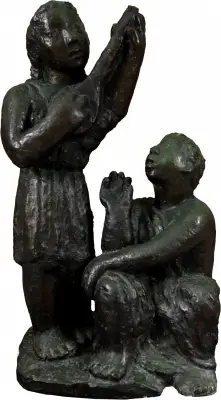
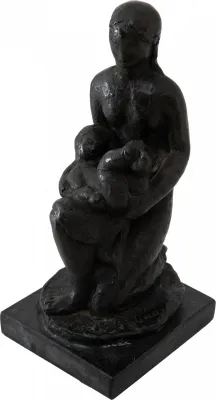
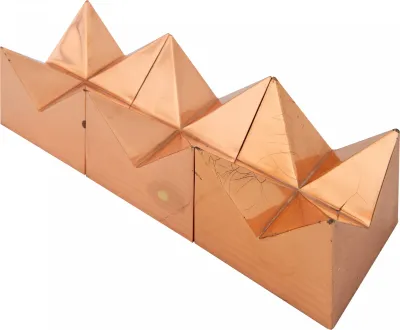
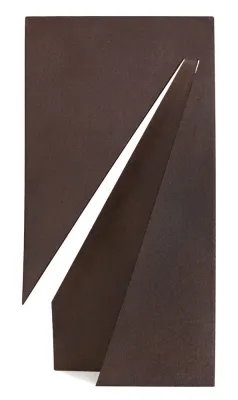
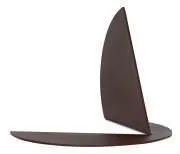
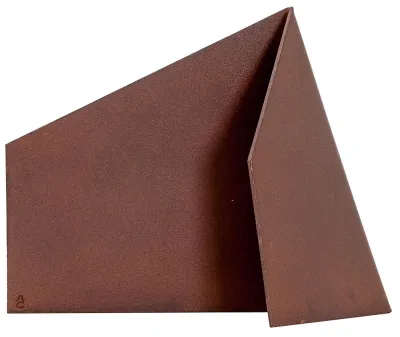
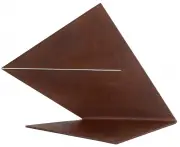
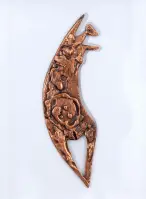
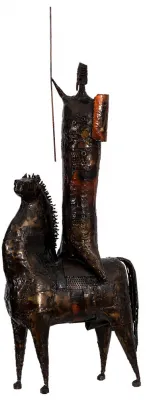
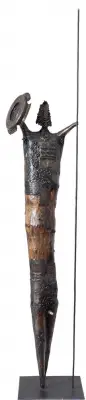
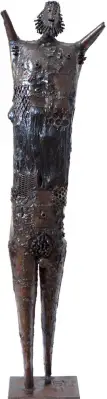
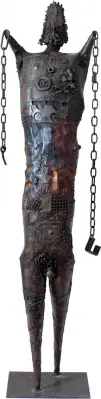
His sculptural production in metal initially shows an affinity with an expressionist tendency of archaizing character, with an emphasis on the production of synthetic figures, through the use of the most diverse materials and a rough finish. Certain twisted forms conceived by the artist add a connotation of tension or pain to the figures.
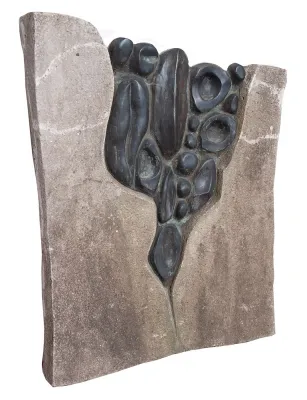
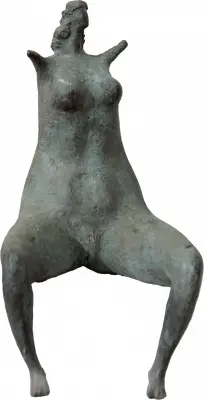
From the 1970s onward, a major change took place in his work, as the scholar Armindo Trevisan points out. The artist also began to work with marble, granite and other rocks. He created his sculptures from deformations suggested by the materials themselves.
Critiques
"We can divide Stockinger's career into two stages: in the first, he launched himself into an expressionist line, albeit with characteristics of his own. He received the lesson of the German masters, to which he added influences drawn from different sources. Little by little, he abandoned the sensual line of Maillol that his teacher (Bruno Giorgi) had passed on to him. He set out on a rough path, marked by a kind of rebelliousness, nonconformity and denunciation. To make his aggressiveness more moving, and also more communicative and universal, he embodied it in myths, which he sought in two sources: that of the collective archetypes, present in humanity since Prehistory, and the regional one, which provides him with a sort of fingerprint, allowing him, on the one hand, to perpetuate aspects of a tradition marked by more than a hundred years of resistance to border violations and, on the other, to recreate it in keeping with new social demands. What results from all this? An iconography, that is, a system of images in the likeness of the land, people and legends of the South, and an expression that at times rises to the grandeur of epic creation and at others is tinged with a lyricism that even his most vehement achievements cannot erase".
Armindo Trevisan
TREVISAN, Armindo. Escultura. In: STOCKINGER. São Paulo: Prêmio, 1987. p. 67.
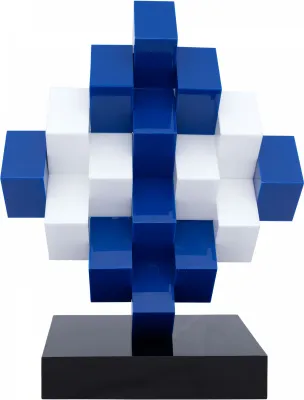
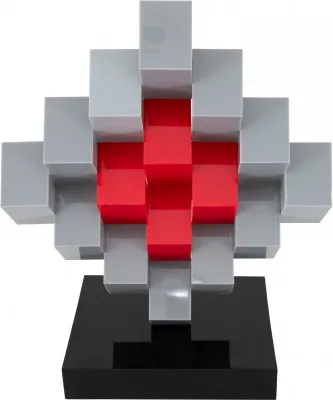
"Around the 1970s, Xico created the drapes. And with them he returned to compact volumes. He then intervened more intensely in the material and also achieved greater inventiveness there. At times he creates vertical rhythms unfolding from a smooth main block, at times he chisels horizontal planes articulated in draperies or in a fan of sections that seem to slide over themselves. Sometimes he invents a game that plays with the rigidity and weight of the stone, working some areas to express solidity and others that seem to give way and wrinkle under the action of this force. Or, again, he obtains effective traps for capturing light and shadow by ´crumpling´ the marble like a sheet of paper, inserting into it the counterpoint of compact cubes.
These works are Xico's most radically abstract. It is at this moment of his production in marble that he goes furthest in the adventure of seeking essentiality. The extreme reduction of elements results in heightened visual impact. Some of these pieces touch on or even plunge into the neoconcrete. It is the most cerebral moment. Soon the sculptor will flow back toward the senses, toward the erotic, and create the columns.
With them, finally, Xico makes a synthesis of elements that run through his work in stone and even appropriates something from the iron. The hieratic figures of the warriors find their abstract translation here. There are the small craters and lunar bubbles, the draperies. All to create something else: this ambiguous nature of classical Greco-Roman architecture and phallic insinuation".
Angélica de Moraes
STOCKINGER. São Paulo: Prêmio, 1987. p.117.
"When Stockinger decided to work on sculpture in metal, a task that attracted him between the 1960s and the early 1970s, it was a matter of adapting to the images he transposed from woodcut. Before, he had resorted to clay. These are works that border on the worldview of expressionist figuration. A stripped-down figuration, with deformations and simplifications meant to emphasize masses and volumes. They are hirsute creatures (...), dominated by a sense of verticality, with a strong dose of monumentality. His bulls, warriors or survivors are beings charged with introverted tension, with muscles and nerves exposed, textured through intrusions of rough fabrics, wood and machine parts. They are the additions or contrasts of materials retempered with the element of fire. The result is deformations, elongations, a disconcerting rawness. Despite the connotation of aggression and pain with which they are purposely created, these twisted, tortured, wounded silhouettes - despite this - call for touch. It is an impulse that goes beyond the very metal that the artist knows and masters intimately, through ´continuous, daily work, craft improvement and the development of sensitivity´".
Elvira Vernaschi
AMARAL, Aracy (Org.). Museu de Arte Contemporânea da Universidade de São Paulo: perfil de um acervo. São Paulo: Techint Engenharia, 1988. p. 273.
Testimonials
"Unable to make sculpture for lack of means, especially financial - I worked all day at Acessório São João -, there was no time left to make sculpture. Sculpture is a daytime art. What one does well, in art of course, during the night, is printmaking; which is why, having seen a bunch of wooden blocks at the back of the neighbor's yard, I decided to turn to woodcut. I was a friend of the father of Brazilian woodcut - Oswaldo Goeldi. Marcelo Grassmann, another great printmaker, lived with me for a long time in Rio and made his prints in the maid's room of my apartment. So there was no mystery, since woodcut is the simplest and most economical of the arts; it was just a matter of throwing myself into it. I did. In three years I made a hundred-odd prints. (...)
At that time [1957/1960] (...) I was in a strange environment, I had come from Rio shortly before, unemployed, that is, working in a place where nothing worked out, hence the restlessness. I had belonged to the Party, I had fallen out with their ideas, but I still considered myself frankly left-wing, and here, when I met the printmaking crowd, I always felt a bit rebellious too, but it was a peaceful time, when things were lived calmly. When things really got tough, I drew cartoons, remember that coup by Luz, they didn't want Juscelino to take office. . . I did things in the cartoons. . . At the time of Jânio's resignation, it lasted a number of days, I was working at a newspaper and drew my cartoons. But the Folha was a very good newspaper, I mean, good in this sense: I drew my cartoons and handed them in, they didn't publish them, because they were always against their interests, but they didn't say anything, they put them in a drawer and they didn't come out. Every day I drew a cartoon, each one harsher, but they simply didn't publish them. At A Hora it was something else. Nobody supported that coup by Carlos Lacerda, the whole of Rio Grande do Sul was against it, we drew cartoons and everything came out just right. Printmaking was something I did. The Abigeatários [Cattle Rustlers] and the Retirantes [Migrants] are twelve prints inspired by Cabral's Morte e Vida Severina. I knew the Northeast well, because in my aviation days I traveled around the São Francisco Valley; it was a social motive that led me to make them. Then things became violent after Jânio's resignation. I made the roosters and also made loose ones, sometimes falling more or less into mawkishness. The best thing was to finish quickly. [...]
Art is a universal thing, there is no longer the individual, the isolated life. It's not that you are influenced, but you can't make a regional art. At a time when art is universal, it only has value if it has individual characteristics, if it has things of your own, some world of your own. That's when it has value. [...]
Expressionism is a Germanic thing, but they did it a little differently from us. Expressionism was more violent than the things I do. It's that expressionism sought something that, deep down, we also agree with. [...] If you think about existentialism, about expressionism, when it comes to making a work, you don't make it. You keep working and it comes out the way you are, if that is honest; then it is others who have to decide, not us. We read, we look, we see all these things. You accept them or not, according to your way of being. You absorb that and unconsciously, I mean, you sublimate it, and you do it, you don't think much about it".
Francisco Stockinger a Daliana Amaral Mirapalhete - 2 de agosto de 1987
GRAVURA: arte brasileira do século XX. Apresentação Ricardo Ribenboim. São Paulo: Itaú Cultural: Cosac & Naify, 2000. p. 100.
Solo Exhibitions
1959 - Salvador BA - Francisco Stockinger: Woodcuts, at Biblioteca Pública Municipal de Salvador
1960 - Porto Alegre RS - Solo, at Museu de Arte do Rio Grande do Sul Ado Malagoli - Margs
1962 - São Paulo SP - Solo, at Galeria de Arte São Luís
1964 - Porto Alegre RS - Solo, at Sala de Exposições do Hotel Plaza
1964 - Porto Alegre RS - Solo, sponsored by the Goethe Institut
1964 - São Paulo SP - Solo, at Galeria de Arte São Luís
1965 - Porto Alegre RS - Solo, at Galeria Lakar
1966 - Porto Alegre RS - Francisco Stockinger: Ceramics and Sculptures, at Margs
1966 - Rio de Janeiro RJ - Solo, at Galeria Bonino
1968 - São Paulo SP - Solo, at Mirante das Artes
1969 - Porto Alegre RS - Fifty Years of Life, at Instituto de Idiomas Yázigi
1969 - Porto Alegre RS - Fifty Years of Life, at Galeria Candido Portinari
1970 - São Paulo SP - Francisco Stockinger: Marble Sculptures, at Documenta Galeria de Arte
1970 - São Paulo SP - Solo, at Mirante das Artes
1972 - Rio de Janeiro RJ - Francisco Stockinger: Sculptures, at Galeria Bonino
1974 - Rio de Janeiro RJ - Solo, at Galeria Ipanema
1975 - São Paulo SP - Solo, at Documenta Galeria de Arte
1976 - Porto Alegre RS - Francisco Stockinger: Drawings, Sculptures and Multiples, at Oficina de Arte
1976 - Rome (Italy) - Solo, at Galeria de Arte da Casa do Brasil
1978 - Rio de Janeiro RJ - Solo, at Galeria B-75
1978 - Rio de Janeiro RJ - Solo, at Concorde Galeria de Arte
1980 - Porto Alegre RS - Solo, at Bolsa de Arte de Porto Alegre
1980 - Porto Alegre RS - Commemorative Exhibition in Tribute to Xico Stockinger, at Galeria de Arte do Centro Comercial de Porto Alegre
1980 - Porto Alegre RS - Solo, at Galeria do Centro Comercial
1981 - Porto Alegre RS - Solo, at Galeria Tina Presser
1981 - Rio de Janeiro RJ - Solo, at Galeria Aktuell
1983 - Porto Alegre RS - Solo, at Galeria Tina Presser
1983 - Santana do Livramento RS - Solo, at Galeria Ponto d'Arte
1985 - Porto Alegre RS - Solo, at Galeria Tina Presser
1985 - São Paulo SP - Francisco Stockinger: Marbles, at Paulo Figueiredo Galeria de Arte
1987 - Belo Horizonte MG - Xico Stockinger: Bronzes, at Gesto Gráfico Galeria de Arte
1987 - Brasília DF - Francisco Stockinger: Marbles, at Galeria Paulo Figueiredo
1987 - Brasília DF - Xico Stockinger: Bronzes, at Galeria Paulo Figueiredo
1987 - Curitiba PR - Xico Stockinger: Bronzes, at Galeria Ida e Anita
1987 - Porto Alegre RS - Xico Stockinger: Bronzes, at Bolsa de Arte de Porto Alegre
1987 - Rio de Janeiro RJ - Xico Stockinger: Bronzes, at Galeria Bonino
1987 - São Paulo SP - Xico Stockinger: Bronzes, at Galeria Millan
1988 - Porto Alegre RS - Solo, at Galeria Alencastro Guimarães
1989 - Porto Alegre RS - Francisco Stockinger: 70 Years, at Margs
1990 - São Leopoldo RS - Solo, at Gestual Galeria de Artes
1991 - Caxias do Sul RS - Solo, at Centro de Cultura Doutor Henrique Ordovás Filho
1991 - Pelotas RS - Solo
1991 - Porto Alegre RS - Solo, at Galeria Tina Zappoli
1992 - Passo Fundo RS - Solo, at Espaço da Arte
1992 - São Paulo SP - Stockinger: Iron and Wood, at A Galeria
1994 - Quito (Ecuador) - Francisco Stockinger: Bronzes, organized by Itamaraty
1994 - Cuenca (Ecuador) - Francisco Stockinger: Bronzes, organized by Itamaraty
1994 - Bogotá (Colombia) - Francisco Stockinger: Bronzes, organized by Itamaraty
1994 - Caracas (Venezuela) - Francisco Stockinger: Bronzes, organized by Itamaraty
1994 - Salvador BA - Solo, at Escritório de Arte da Bahia
1995 - Porto Alegre RS - Gabirus, at the opening of the Galeria Xico Stockinger, at the Casa de Cultura Mario Quintana
1995 - Porto Alegre RS - Solo, at Cezar Prestes Arte
1995 - Porto Alegre RS - Gabirus, at Casa de Cultura Mario Quintana
1996 - Brasília DF - Rites of Passage: Female Nudes, at Teatro Nacional Cláudio Santoro
1996 - Buenos Aires (Argentina) - Rites of Passage: Female Nudes, at Centro Cultural Recoleta
1996 - Porto Alegre RS - Tribute to Anestor José Tavares, at Galeria Marisa Soibelmann
1996 - Porto Alegre RS - Rites of Passage: Female Nudes, at Parque Moinhos de Vento
1996 - Porto Alegre RS - Rites of Passage: Female Nudes, at Bolsa de Arte de Porto Alegre
1996 - Rio de Janeiro RJ - Rites of Passage: Female Nudes, at CCBB
1996 - São Paulo SP - Rites of Passage: Female Nudes, at Masp
1999 - Porto Alegre RS - Solo, at Garagem de Arte
2001 - Porto Alegre RS - Solo, at Garagem de Arte
2002 - Porto Alegre RS - Solo, at Garagem de Arte
Group Exhibitions
1948 - Rio de Janeiro RJ - 54th National Salon of Fine Arts, at Museu Nacional de Belas Artes - Mnba - bronze medal
1949 - Rio de Janeiro RJ - 55th National Salon of Fine Arts, at Mnba - silver medal
1950 - Rio de Janeiro RJ - Group Sculpture Exhibition, at Mnba
1951 - Rio de Janeiro RJ - Federal District City Council Salon - diploma of high merit
1951 - Rio de Janeiro RJ - Municipal Fine Arts Salon
1952 - Rio de Janeiro RJ - 1st National Salon of Modern Art - jury member
1954 - Rio de Janeiro RJ - 3rd National Salon of Modern Art
1954 - Rio de Janeiro RJ - 3rd Black and White Salon, at Palácio da Cultura
1954 - Rio de Janeiro RJ - 6th Federal District City Council Salon - gold medal
1957 - Porto Alegre RS - 4th Porto Alegre City Council Salon - 1st prize in printmaking
1960 - Porto Alegre RS - 1st Visual Arts Festival of the Rio Grande do Sul Culture Division - 1st prize in sculpture
1960 - Porto Alegre RS - Christian Art Salon, at Margs - 1st prize
1961 - Belo Horizonte MG - 16th Belo Horizonte City Fine Arts Salon, at MAP - 1st prize in sculpture
1961 - São Paulo SP - Exhibition with Marcelo Grassmann, at Galeria de Arte São Luís
1961 - São Paulo SP - 6th Bienal Internacional de São Paulo, at Pavilhão Ciccillo Matarazzo Sobrinho
1961 - São Paulo SP - Marcelo Grassmann and Francisco Stockinger, at Galeria São Luís
1962 - Carrara (Italy) - International Marble Biennial
1962 - Porto Alegre RS - Rio Grande do Sul Art Salon - 1st prize in sculpture
1962 - Rio de Janeiro RJ - Marcelo Grassmann and Francisco Stockinger, at Petite Galerie
1962 - São Paulo SP - Selection of Brazilian Artworks from the Ernesto Wolf Collection, at MAM/SP
1963 - Curitiba PR - 20th Paraná Salon of Fine Arts, at Biblioteca Pública do Paraná - gold medal
1963 - Porto Alegre RS - 1st City of Porto Alegre Salon - 1st prize in sculpture
1963 - São Paulo SP - 12th São Paulo Salon of Modern Art, at Galeria Prestes Maia - gold medal
1963 - São Paulo SP - 7th Bienal Internacional de São Paulo, at Fundação Bienal
1964 - Europa - Brazilian Art Exhibition
1965 - Paris (France) - Salon Comparaisons
1965 - Lisbon (Portugal) - Salon Comparaisons
1965 - Prague (Czechoslovakia, now Czech Republic) - Salon Comparaisons
1965 - São Paulo SP - 8th Bienal Internacional de São Paulo, at Fundação Bienal
1966 - Curitiba PR - 23rd Paraná Salon of Fine Arts, at Biblioteca Pública do Paraná - acquisition prize
1966 - Porto Alegre RS - Art Today in Rio Grande do Sul, at Margs
1966 - Salvador BA - 1st National Biennial of Visual Arts - special room - acquisition prize
1966 - São Paulo SP - 13 Gaúcho Artists, at MAC/USP
1967 - Mexico City (Mexico) - Brazilian Modern Sculpture, at Casa de La Paz
1968 - Curitiba PR - 25th Paraná Salon, at Biblioteca Pública do Paraná
1969 - São Paulo SP - 1st Panorama of Current Brazilian Art, at MAM/SP
1970 - Porto Alegre RS - 1st Visual Arts Salon, at UFRGS
1972 - São Paulo SP - Panorama of Current Brazilian Art, at MAM/SP
1972 - São Paulo SP - Brazilian Multiplied Art, at Múltipla de Arte
1972 - São Paulo SP - Art/Brazil/Today: 50 Years Later, at Galeria da Collectio
1972 - São Paulo SP - Brazilian Multiples, at Galeria Múltipla de Arte
1975 - Brasília DF - Gaúcho Art/74
1975 - Budapeste (Hungary) - 3rd Small Sculpture Biennial
1975 - Porto Alegre RS - Artistic Ceramics Exhibition, at Margs
1978 - Penápolis SP - 3rd Noroeste Visual Arts Salon, at Fundação Educacional de Penápolis. Faculdade de Filosofia, Ciências e Letras de Penápolis
1978 - Rio de Janeiro RJ - Brazilian Sculpture in Urban Space: 50 Years, at Praça Nossa Senhora da Paz
1979 - Rio de Janeiro RJ - Brazilian Sculptors, at Galeria Aktuell
1980 - Penápolis SP - 4th Noroeste Visual Arts Salon, at Fundação Educacional de Penápolis. Faculdade de Filosofia, Ciências e Letras de Penápolis
1980 - Porto Alegre RS - 1st Small Bronze Fair, at Centro Municipal de Cultura
1981 - Guarujá SP - Outdoor Sculpture, at Hotel Jequitimar
1981 - Porto Alegre RS - Brazilian Artists of the 1960s and 1970s in the Rubem Knijnik Collection, at Espaço NO Galeria Chaves
1982 - Penápolis SP - 5th Noroeste Visual Arts Salon, at Fundação Educacional de Penápolis. Faculdade de Filosofia, Ciências e Letras de Penápolis
1982 - São Paulo SP - A Century of Sculpture in Brazil, at Masp
1983 - Porto Alegre RS - 2nd Sculpture Exhibition, at Centro Municipal de Cultura
1983 - Porto Alegre RS - Francisco Stockinger/Vasco Prado, at Galeria Tina Presser
1983 - Porto Alegre RS - Gaúcho Art Book: 1950/1983, at Margs
1983 - Porto Alegre RS - From Past to Present: The Visual Arts in Rio Grande do Sul, at Cambona Centro de Artes
1983 - São Paulo SP - Gaúcho Sculptors, at Skultura Galeria de Arte
1984 - Porto Alegre RS - Prints: A Trajectory in Time, at Cambona Centro de Artes
1984 - Ribeirão Preto SP - Brazilian Printmakers of the 1950s/60s, at Galeria Campus
1984 - São Paulo SP - Tradition and Rupture: A Synthesis of Brazilian Art and Culture, at Fundação Bienal
1985 - Porto Alegre RS - Iberê Camargo: Trajectories and Encounters, at Margs
1985 - Rio de Janeiro RJ - 8th National Salon of Visual Arts, at MAM/RJ
1985 - São Paulo SP - 18th Bienal Internacional de São Paulo, at Fundação Bienal
1985 - São Paulo SP - Highlights of Brazilian Art, at MAM/SP
1985 - São Paulo SP - Panorama of Current Brazilian Art, at MAM/SP
1986 - Brasília DF - Iberê Camargo: Trajectories and Encounters, at Teatro Nacional Cláudio Santoro
1986 - Porto Alegre RS - Rubem Knijnik Collection: Brazilian Art of the 1960s/70s/80s, at Margs
1986 - Rio de Janeiro RJ - Iberê Camargo: Trajectories and Encounters, at MAM/RJ
1986 - São Paulo SP - Iberê Camargo: Trajectories and Encounters, at Masp
1988 - São Paulo SP - 19th Panorama of Current Brazilian Art, at MAM/SP
1989 - Porto Alegre RS - 1st Latin American Visual Arts Meeting, at Galeria Tina Zappoli
1989 - Porto Alegre RS - Arte Sul 89, at Margs
1991 - Curitiba PR - Museu Municipal de Arte: Collection, at Museu Municipal de Arte
1992 - Cachoeira do Sul RS - Francisco Stockinger and Iberê Camargo
1992 - Poços de Caldas MG - Brazilian Modern Art: MAC/USP Collection, at Casa de Cultura de Poços de Caldas
1992 - Porto Alegre RS - Contemporary Art: Highlights from the South, at Espaço Cultural Edel Trade Center
1992 - São Paulo SP - The Seduction of Volumes: The Three-Dimensional Works of MAC, at MAC/USP
1993 - João Pessoa PB - Woodcut: From Cordel to the Gallery, at Fundação Espaço Cultural da Paraíba
1993 - Paris (France) - 6 Gaúcho Sculptors, at Embaixada Brasileira em Paris
1993 - Porto Alegre RS - Arcangelo Ianelli, Antonio Henrique Amaral and Francisco Stockinger, at Bolsa de Arte de Porto Alegre
1993 - Porto Alegre RS - The Body and the Work: Three-Dimensional Forms, at Espaço Cultural Edel Trade Center
1994 - Poços de Caldas MG - Unibanco Collection: Exhibition Celebrating Unibanco's 70 Years, at Casa de Cultura de Poços de Caldas
1994 - Porto Alegre RS - Dialogues, at Espaço Cultural Edel Trade Center
1994 - São Paulo SP - Bienal Brasil Século XX, at Fundação Bienal
1994 - São Paulo SP - Woodcut: From Cordel to the Gallery, at Metrô
1995 - Fortaleza CE - April Salon
1995 - Rio de Janeiro RJ - Unibanco Collection: Exhibition Celebrating Unibanco's 70 Years, at MAM/RJ
1996 - Passo Fundo RS - Museu de Artes Visuais Ruth Schneider: Inaugural Exhibition, at Museu de Artes Visuais Ruth Schneider
1996 - Porto Alegre RS - 1st Sesc Sculpture: International Outdoor Sculpture Exhibition, at Sesc Campestre
1996 - São Paulo SP - Brazilian Art: 50 Years of History in the MAC/USP Collection: 1920-1970, at MAC/USP
1996 - São Paulo SP - 1st Off Bienal, at MuBE
1996 - São Paulo SP - Six Timeless Artists, at Múltipla de Arte
1997 - Porto Alegre RS - 1st Bienal de Artes Visuais do Mercosul
1997 - Porto Alegre RS - Latin American Collections, at Margs
1997 - Porto Alegre RS - Object Imaginary, at the Oficinas do Deprec; at the Depósito da Marinha; at the Parque da Marinha do Brasil and in public spaces of Porto Alegre
1997 - Porto Alegre RS - Political Strand, at Fundação Bienal de Artes Visuais do Mercosul
1997 - São Paulo SP - Three-Dimensionality in 20th-Century Brazilian Art, at Itaú Cultural
1998 - Belo Horizonte MG - Three-Dimensionality in 20th-Century Brazilian Art, at Itaú Cultural
1998 - Brasília DF - Three-Dimensionality in 20th-Century Brazilian Art, at Galeria Itaú Cultural
1998 - Penápolis SP - Three-Dimensionality in 20th-Century Brazilian Art, at Galeria Itaú Cultural
1998 - Porto Alegre RS - Collection: Instituto de Artes 90 Years, at UFRGS. Instituto de Artes
1998 - São Paulo SP - Skultura Collection 98, at Skultura Galeria de Arte
1999 - Porto Alegre RS - Garagem de Arte: Inaugural Exhibition, at Garagem de Arte
1999 - Rio de Janeiro RJ - Rio Printmaking Exhibition. Porto Alegre Printmaking, at IAB/RJ
1999 - São Paulo SP - The Female Figure in the MAB Collection, at MAB/Faap
1999 - Rio de Janeiro RJ - Rio Printmaking Exhibition: Porto Alegre Printmaking, at IAB/RJ
2000 - Bento Gonçalves RS - Group Printmaking Exhibition, at Universidade de Caxias do Sul
2000 - Canela RS - Group Printmaking Exhibition, at Universidade de Caxias do Sul
2000 - Caxias do Sul RS - Group Printmaking Exhibition, at Universidade de Caxias do Sul
2000 - Farroupilha RS - Group Printmaking Exhibition, at Universidade de Caxias do Sul
2000 - Guaporé RS - Group Printmaking Exhibition
2000 - Nova Prata RS - Group Printmaking Exhibition, at Universidade de Caxias do Sul
2000 - Porto Alegre RS - Francisco Stockinger and Tomie Ohtake, at Garagem de Arte
2000 - São Paulo SP - Investigations. Brazilian Printmaking, at Itaú Cultural
2000 - São Paulo SP - The Female Figure in the MAB Collection, at MAB/Faap
2000 - Vacaria RS - Group Printmaking Exhibition, at Universidade de Caxias do Sul
2000 - Veranópolis RS - Group Printmaking Exhibition, at Universidade de Caxias do Sul
2001 - Penápolis SP - Investigations. Brazilian Printmaking, at Galeria Itaú Cultural
2001 - Porto Alegre RS - Liba and Rubem Knijnik Collection: Contemporary Brazilian Art, at Margs
2001 - Rio de Janeiro RJ - Treading the Path of Printmaking, at Museu da Chácara do Céu
2001 - São Paulo SP - Museu de Arte Brasileira: 40 Years, at MAB/Faap
2001 - Brasília DF - Investigations. Brazilian Printmaking, at Galeria Itaú Cultural
2002 - Porto Alegre RS - Drawings, Prints, Sculptures and Watercolors, at Garagem de Arte
2002 - São Paulo SP - Brazilian Multiples 30 Years Later, at Múltipla de Arte
2003 - Porto Alegre RS - Humanities, at Galeria Tina Zappoli
2003 - Porto Alegre RS - Life, People, Hunger, Work and Religion, at Garagem de Arte
2003 - Rio de Janeiro RJ - Projeto Brazilianart, at Almacén Galeria de Arte
2003 - São Paulo SP - Art and Society: A Controversial Relationship, at Itaú Cultural
Source: Itaú Cultural