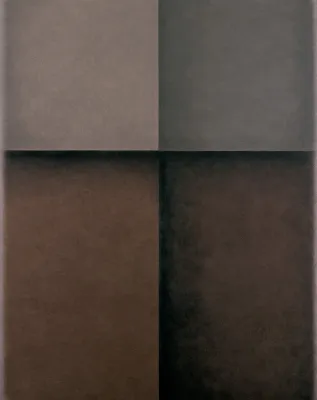
Francisco Brennand (Recife PE 1927 - idem 2019)
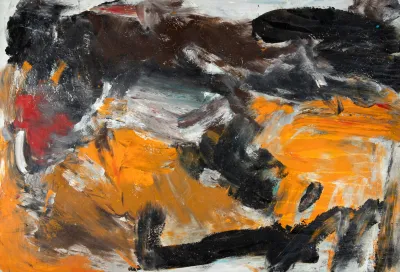
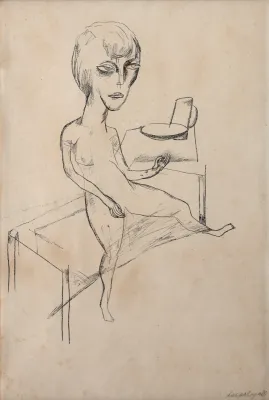
Francisco Brennand was a ceramist, sculptor, draftsman, painter, tapestry maker, illustrator and printmaker, and one of the leading names in Brazilian art. He began his artistic training in 1942, learning modeling from Abelardo da Hora. He later received guidance in painting from Álvaro Amorim and Murilo Lagreca. In the late 1940s, he devoted himself mainly to still-life painting, marked by an expressive formal simplification.
In 1949, encouraged by Cícero Dias, he traveled to France and attended courses with André Lhote and Fernand Léger in Paris, in 1951. In this period, he came into contact with the works of Pablo Picasso and Joan Miró and found in ceramics his main means of artistic expression. Between 1958 and 1999, he created several ceramic panels and murals in cities in Brazil and the United States. In 1971, he began restoring an old pottery belonging to his family, near Recife, transforming it into a studio and a permanent exhibition space for his sculptures, panels and ceramic objects.
In 1993, his production was the subject of an important retrospective at the Staatliche Kunsthalle in Berlin. In 1997, the book Brennand was published by Métron, with a text by Olívio Tavares de Araújo. The following year, the Pinacoteca do Estado de São Paulo presented the retrospective Brennand: Esculturas 1974-1998 [Brennand: Sculptures 1974-1998]. Since the 1990s, several videos about his career and work have been released, among them Francisco Brennand: Oficina de Mitos [Workshop of Myths], produced by Rede Sesc/Senac de Televisão in 2000. Francisco Brennand died in Recife on December 19, 2019.
Critical Commentary
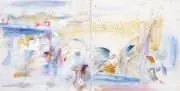
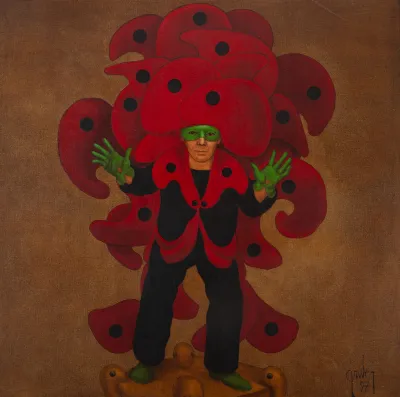
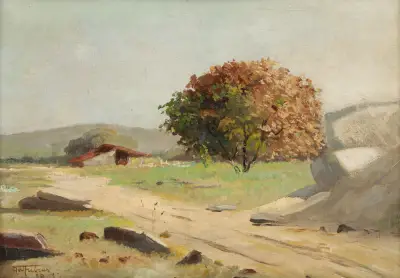
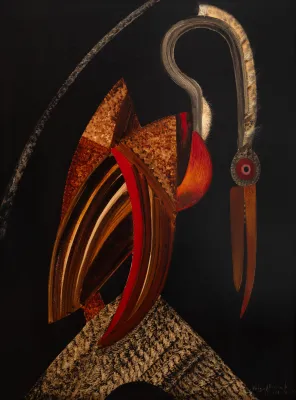
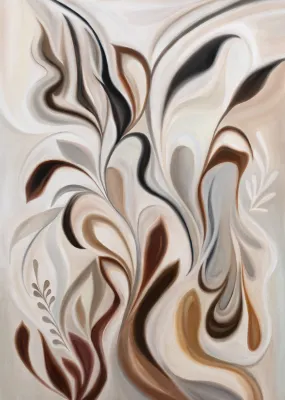
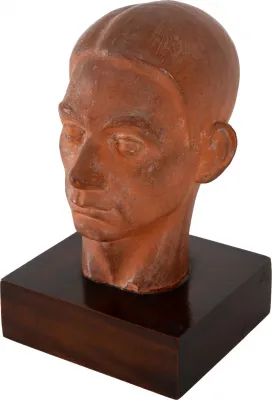
Francisco Brennand began his career as a painter and sculptor in the late 1940s. In his paintings, he depicts flowers and fruits that seem to float in the pictorial space, executed with simplified lines and pure colors. Later, he discovered his medium of expression in ceramics, encouraged by the works of Pablo Picasso (1881-1973), Joan Miró (1893-1983), and Léger (1881-1955), whom he met during a stay in Paris. In 1971, he renovated his father's ceramics factory, near Recife, then nearly abandoned, transforming it into a studio populated with fantastical beings, represented in reliefs, panels, ceramic objects, and sculptures.
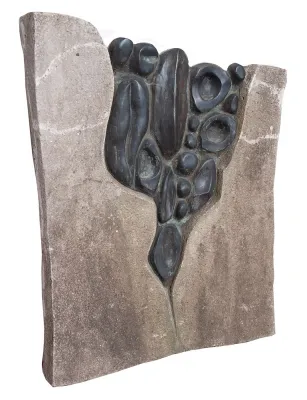
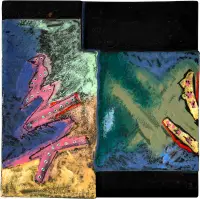
The artist works with ceramics not only with form but also with color. He obtains a wide range of hues through temperature variations that affect the pigments during the firing of the pieces.
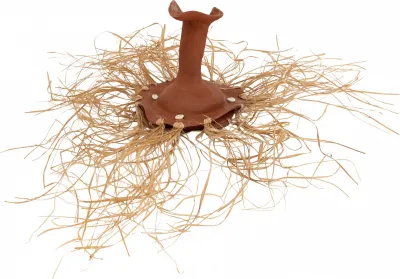
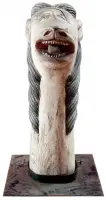
Brennand's sculptures have the character of totems or are related to symbols of popular tradition. In many works, he depicts terrifying creatures, monsters, deformed beings, or those that reveal a tragic character. Some sculptures are linked to fertility rituals from archaic cultures, presenting a strongly sexual character. He produces figures that often have a tragic aspect, whose strangeness is accentuated by the rough finish.
Critiques
"His work, combining ceramics and painting, has never ceased to identify with its Northeastern origins—the touch and smell of the earth, the emanations of images that emerge there, collective reality and fantasy, things that belong to everyone. But, far from being 'naive,' he is among those who demand of themselves constant knowledge of the motivations behind each resource used, probing advances, policing the balance of roughness and refinement. It would not be wrong to perceive in him, and in his work, a new manifestation of the typical link between the manor house and the slave quarters, which the social structure of the Northeast inevitably transposed to the realm of art. The popular source, therefore, serves as the sap on which the nobleman Brennand draws his nourishment. (The aristocratic element, of assumed nobility, marked the Armorial Movement, a parallel to the Pernambuco school of painting, of which he was also a pillar.) From it he draws certain essential constants, such as the desire to exorcise the real through the investigation of the imaginative, the reinvention of nearby nature according to a fantastic flora and fauna, the insistence on the epic of simple heroisms, the fusion of love and death sanctifying the everyday in a sea of primordial forces. From the beginning, until the mid-1960s, his work tended toward narrative, almost twinned with cordel literature, with frank colors and frequent humor. Later, and still today, elements of fauna and flora, isolated or mixed, began to predominate."
Roberto Pontual
PONTUAL, Roberto. Between Two Centuries: Brazilian Art of the 20th Century in the Gilberto Chateaubriand Collection. Rio de Janeiro: Jornal do Brasil, 1987.
"It is irresistible to describe these sculptures as totemic. In fact, along the lines of this description, we could say that this work is the offspring of surrealism, metaphysics, and fantasy. And this labeling would not help us better understand the artist, his work, and how this work speaks to us of our intuitions. For this is what it is about, the unveiling of an inner world, of submerged perceptions, of memories and emotions, until now, forever buried. (...) It is clear that Francisco Brennand's work is not just about aesthetics. This value, in one way or another, also serves as a reference for these works. It is a way of observing, a signaling element, a bridge to understanding. But it is not the main thing in this work, which does not follow straight lines, does not develop historically in relation to itself, is not concerned with coherence or immediate dialogue with the public."
Jacob Klintowitz
KLINTOWITZ, Jacob. Brennand and the fire beings. In: ______. The New Travelers. São Paulo: Sesc, 1993.
"We Northeasterners are concerned with being faithful to the land, the myths, the stories, the shapes, and the colors of the region. We are only satisfied when we feel that such things are attacking others at first glance, from within our works. In Francisco Brennand, however, this anxiety does not exist. He is absolutely not concerned with verifying whether what he is doing at the moment corresponds or not to the world around him, whether or not it is in keeping with his time. Here, he adopts a line seen in a Persian vase, there he is inspired by a Renaissance drawing, there by a Greek or medieval frieze. The fact is that Brazil and the Northeast are precisely the legitimate heirs of the Western, Latin, Baroque tradition, the luxuriant Mediterranean culture. And since he, at the same time, naturally absorbs everything that surrounds him, the result is that his work is the most universal and the most faithful to the land of all that has come out of the Northeast".
Ariano Suassuna
FERRAZ, Marilourdes. Francisco Brennand Ceramic Workshop: Factory of Dreams. Recife: AIP, 1997.
Solo Exhibitions
1960 - São Paulo SP - Paintings and Ceramics, at MAM/SP
1961 - Salvador BA - Paintings and Ceramics, at MAM/BA
1961 - São Paulo SP - Solo, at Galeria São Luís
1961 - Olinda PE - Paintings and Ceramics, at Galeria da Ribeira
1963 - Natal RN - Solo, at the Art Gallery and City Hall
1965 - Rio de Janeiro RJ - Solo, at Petite Galerie
1969 - São Paulo SP - Solo, at Galeria Astréia
1969 - João Pessoa PB - Solo, at UFPB
1969 - Rio de Janeiro RJ - Solo, at Petite Galerie
1976 - Washington (United States) - Drawings and Ceramics by Francisco Brennand, at the Inter-American Development Bank Association
1989 - São Paulo SP - Solo, at the Montessanti Gallery - Roesler
1989 - London (England) - Solo, at The South Bank Center Gallery - Royal Festival Hall
1993 - Berlin (Germany) - Paintings and Ceramics, at the Staatliche Kunsthalle Berlin
1994 - Recife PE - Paintings, at the Espaço Vivo Gallery
1994 - Recife PE - Paintings, at the Plêiade Gallery
1998 - São Paulo SP - Solo, at the Pinacoteca do Estado
1999 - Brasília DF - Solo, at the National Theater of Brasília
2000 - Rio de Janeiro RJ - Solo, at the Casa França-Brasil
2000 - Recife PE - Brennand: the search for form, at the Federal Center for Technological Education of Pernambuco
2000 - Manaus AM - Sculptures and Drawings, at the Rio Negro Palace Cultural Center
2004 - Curitiba PR - Brennand Sculptures: Man and Nature, at the Oscar Niemeyer Museum
Group Exhibitions
1947 - Recife PE - 6th Annual Painting Salon, at Museu do Estado de Pernambuco - 1st Prize
1948 - Recife PE - 7th Annual Painting Salon, at Museu do Estado de Pernambuco - 1st Prize
1950 - Recife PE - 9th Painting Salon of Museu do Estado de Pernambuco - 2nd Prize
1953 - Recife PE - 12th Painting Salon of Museu do Estado de Pernambuco
1954 - Recife PE - 13th Painting Salon of Museu do Estado de Pernambuco
1955 - Barcelona (Spain) - 3rd Hispano-American Biennial
1955 - Salvador BA - 5th Bahia Salon of Fine Arts - Silver Medal
1956 - São Paulo SP - 50 Years of Brazilian Landscape, at MAM/SP
1959 - Ostend (Belgium) - International Exhibition of Ceramics and Painting
1959 - São Paulo SP - 5th São Paulo International Biennial, at Pavilhão Ciccillo Matarazzo Sobrinho
1959 - São Paulo SP - Group Show, at Galeria de Arte das Folhas, competing for the Leirner Prize
1960 - Recife PE - Contemporary Painters, at Igreja São Pedro dos Clérigos
1961 - Recife PE - 1st Exhibition of Artistic Ceramics, at the 5th National Congress of Ceramics, at Galeria da Prefeitura Municipal
1961 - Recife PE - Painters from Pernambuco, at Galeria da Prefeitura Municipal
1962 - Recife PE - Religious Painting in Pernambuco, at Atelier São Bento
1962 - São Paulo SP - Selection of Brazilian Artworks from the Ernesto Wolf Collection, at MAM/SP
1964 - Punta del Este (Uruguay) - Biennial of Visual Arts
1965 - Porto Alegre RS - Six Artists from Pernambuco, at MARGS
1966 - Salvador BA - 1st National Biennial of Visual Arts
1970 - Recife PE - Movimento Armorial, at Igreja de S. Pedro dos Clérigos
1971 - São Paulo SP - 11th São Paulo International Biennial, at Fundação Bienal
1972 - São Paulo SP - Arte/Brasil/Hoje: 50 anos depois, at Galeria da Collectio
1975 - Faenza (Italy) - 33rd Concorso Internazionale della Cerámica d'Arte Contemporánea
1976 - São Paulo SP - Drawing in Pernambuco, at Galeria Nara Roesler
1977 - Rio de Janeiro RJ - 2nd Arte Agora: Visão da Terra, at MAM/RJ
1977 - Washington (United States) - The Original and its Reproduction: a Melhoramentos Project, at Brazilian-American Cultural Institute
1978 - Philadelphia (United States) - The Original and its Reproduction: a Melhoramentos Project, at Instituto Cultural Brasil-Estados Unidos
1979 - Recife PE - Brazilian Sculpture, at Galeria Arteespaço
1980 - Recife PE - Group Show, at Casa de Cultura de Pernambuco
1980 - Recife PE - Brazilian Painters, at Galeria Vila Rica
1981 - Rio de Janeiro RJ - Exhibition from the Gilberto Chateaubriand Collection, at MAM/RJ
1982 - Lisbon (Portugal) - Brazil 60 Years of Modern Art: Gilberto Chateaubriand Collection, at Centro de Arte Moderna José de Azeredo Perdigão
1982 - London (England) - Brazil 60 Years of Modern Art: Gilberto Chateaubriand Collection, at Barbican Art Gallery
1985 - Brasília DF - Brasilidade e Independência, at Teatro Nacional Cláudio Santoro
1985 - São Paulo SP - 18th São Paulo International Biennial, at Fundação Bienal
1986 - Brasília DF - Pernambucanos em Brasília, at ECT Galeria de Arte
1988 - São Paulo SP - 63/66 Figura e Objeto, at Galeria Millan
1989 - Portugal - 2nd International Biennial of Óbidos
1989 - Recife PE - Contemporary Artists from Pernambuco, at Espaço Cultural Josael de Oliveira
1989 - São Paulo SP - 20th São Paulo International Biennial, at Fundação Bienal
1990 - Venice (Italy) - 44th Venice Biennale
1991 - Recife PE - Aesthetics of Resistance, at Galeria Artespaço
1992 - Poços de Caldas MG - Brazilian Modern Art: Collection of the Museum of Contemporary Art, University of São Paulo, at Casa da Cultura
1992 - Recife PE - Interpretations, at Galeria Futuro 25
1992 - São Paulo SP - Aesthetics of Resistance, at Galeria Montessanti - Roesler
1992 - Seville (Spain) - Universal Exhibition, at Expo'92
1992 - Zurich (Switzerland) - Brasilien: Entdeckung und Selbstentdeckung, at Kunsthaus Zürich
1994 - São Paulo SP - Seascapes, at Galeria Nara Roesler
1994 - São Paulo SP - The New Travelers, at Sesc Pompéia
1995 - Caracas (Venezuela) - 2nd Bienal Barro de América, at Museo de Arte Contemporáneo de Caracas Sofía Imber
1995 - Maracaibo (Venezuela) - 2nd Bienal do Barro
1995 - São Paulo SP - Group Exhibition, Masp
1995 - São Paulo SP - Filhos do Abaporu - Ceramics, Arte Brasil
1996 - Recife PE - Art and Literature, Rodrigues Galeria de Artes
1996 - Recife PE - Art and Religion, Galeria Futuro 25
1996 - Recife PE - Visual Artists at Mansão dos Antiquários
1996 - Recife PE - Ceramics and Porcelain, Museu do Estado de Pernambuco
1996 - Recife PE - Pernambucanidade and Regionalism in Brazilian Painting, Citibank
1996 - Rio de Janeiro RJ - Visões do Rio, MAM/RJ
1996 - Salvador BA - ABAV-Recife Exhibition
1997 - São Paulo SP - Brazilian Sculpture: Profile of an Identity, Banco Safra Headquarters
1997 - Washington (United States) - Brazilian Sculpture: Profile of an Identity, Inter-American Development Bank Cultural Center
1998 - São Paulo SP - MAM Bahia Collection: Paintings, MAM/SP
1999 - São Paulo SP - Everyday Life/Art. Consumption, Itaú Cultural
2000 - Recife PE - Ateliê Pernambuco: Tribute to Bajado and Mamam Collection, Mamam
2000 - São Paulo SP - Brazilian Erotic Art, Galeria Nara Roesler
2000 - São Paulo SP - Brazilian Ceramics: Constructing a Language, Centro Brasileiro Britânico
2000 - São Paulo SP - Brazilian Sculpture: From Pinacoteca to Jardim da Luz, Pinacoteca do Estado
2000 - São Paulo SP - The Angels Are Back, Pinacoteca do Estado
2001 - Brasília DF - Collections of Brazil, CCBB
2003 - Rio de Janeiro RJ - Brazilianart Project, Almacén Galeria de Arte
2003 - São Paulo SP - MAC USP 40 Years: Contemporary Interfaces, MAC/USP
2005 - São Paulo SP - Collection 2005, MAB/Faap
Source: Itaú Cultural