Carlos Tenius (Porto Alegre RS 1939)
Sculptor.
Carlos Gustavo Tenius studied art with Fernando Corona in 1962. Two years later, he graduated in sculpture from the Escola de Artes [School of Arts] of UFRGS. In 1965, he became a teaching assistant in the sculpture and modeling courses at that school. In 1967, he created a sculpture for the headquarters of IAB/RS and, the following year, developed the Pira da Pátria [Homeland Torch] for the Porto Alegre City Hall. Between 1972 and 1975, he took part in several art competitions, winning first place in 1975 with his proposal for the monument commemorating the Centenary of Italian Immigration in Farroupilha RS. In 1977, he obtained the post of assistant professor at the Instituto de Artes [Arts Institute] of UFRGS through a public competition. Two years later, he developed the monument in honor of Marshal Castelo Branco, installed in Parcão, in Porto Alegre. He has taken part in group exhibitions since 1961, receiving, the following year, the gold medal at the 19th Salão Paranaense [Paraná Salon] and the title of best national sculptor at the 3rd Salão de Curitiba [Curitiba Salon].
Critiques
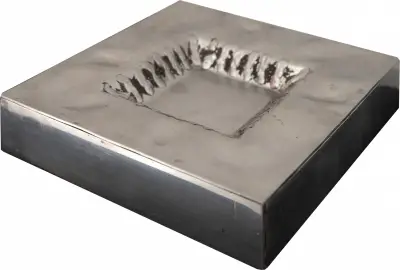
"A man of his time, living in the context of the industrial society in which constructive procedure and structural concern have become the basis of all productive and social organization, Tenius does not carve or model, but builds his figures by joining and overlapping metal sheets, with welding, with rivets and, often, takes advantage of the very oxidation of the iron, which covers it with a reddish patina. Likewise, he integrates into the urban universe of our time through the strong architectural sense with which he organizes volumes and divides space with open, linear forms that activate the whole and counterpoint the orthogonality of modern cities. However, he does not let himself be carried away by the rationalism of the century's great movements to the point of giving up allegory, the mythical formulation with which he approaches the creators of monuments of the past, devoted to the exaltation of individual deeds and collective hopes. In monuments intended for large public spaces, his figures speak to us of encounter, of tenacity, of the search for flight, for action or for the future. This does not mean that in his works narrative elements and romantic emotion prevail over the search to deepen the formal-conceptual discussion with which the art of our century has developed.
His works immediately raise questions such as the relationship between mass and line; between verticality and horizontality; between permanence and movement; between the visualization of volume and the perception of the nature of the material used; and the very notion of the figure, both as a representation of the scenes of the world and as the construction of the very structure of that world".
AMARAL, José Luiz do. Monumentos: a transparência do sonho na densidade do metal. In: TENIUS, Carlos. Tenius. n. p.
"Carlos Tenius's sculptural trajectory has been constantly populated by vigorous and dynamic characters. Not always figurative, for at times they were transfigured into half-split blocks or great explosions of welded iron. These characters often sought to evoke winged beings, in ingenious strategies of taking flight. Yet all of them, alone or in groups, never ceased to show the mark of an intense force and a surrender to movements of conquest. In the infinite diversity of dimensions, from the monumental to small scales, there is the constancy of solid structures, of formal cohesion and of a wise mastery of volume. A world of three-dimensional images in which signs of history, concepts of freedom and oppression, of confinement and victory, are constantly present.
The world of images leans between two poles, now toward the visible, now toward the invisible, thus constituting, in this oscillation, one of the fundamental characteristics of the cultural element. Just as this world refers us to a reality of what is seen, it also leads us to a more hidden universe, which nonetheless never ceases for an instant to be deeply present. Tenius's sculptural production explores these possibilities of the image with extreme insight. While his figures and abstract signs take shape from visible reality, they simultaneously propose endless other images of the non-visible world, symbolically organized. The latter lead us to dive into the spaces of fantasy, in which ideas and concepts, feelings and dreams richly construct the anatomy of language".
Mônica Zielinsky
ZIELINSKY, Mônica. Máscaras de ferro: sutilezas entre o visível e o invisível. In: TENIUS, Carlos. Tenius. n. p.
"Tenius generally dispenses with the support of the figure. He is interested in the architectural aspect of sculptural creation. Indeed, at the moment when reference to nature ceases to be a priority, the artist's hand can make the line dream, in Henri Michaux's beautiful expression applied to Klee. Except that, in Tenius's case, the line does not dream; it is subjected to a construction or tectonics, which may or may not please, but constitutes his choice as a sculptor. (...)
Apparently there is a certain emotional neutrality in Tenius's works. However, it is largely offset by the material enhancement of the support. The taste for patina, excluding the cliché of the metallic, leads the viewer to another visuality within the same material, one that may not be familiar to him. It is common to take the concept for the thing; now, by preserving matter in its original solitude, Tenius compels us to accept it as it is, in its passionate vulgarity. The optical challenge that characterizes his works, the uncomfortable sensation that emanates from pointed masses and upheaved volumes, becomes a spur to the observer's feelings. It is not easy to appreciate one of these sculptures: they irritate the viewer, push him emotionally. Nevertheless, once the disturbance has passed, it is possible to savor another emotion in them, more austere, slower: that of unruly matter clothed in hope or, at least, in an honest belief in the regenerative capacity of history".
Armindo Trevisan
TREVISAN, Armindo. Carlos Gustavo Tenius: o monumentalismo. In: _____. Escultores contemporâneos do Rio Grande do Sul. p. 67-74.
Solo Exhibitions
1963 - Porto Alegre RS - Solo, at Galeria do Instituto Cultural Brasileiro-Norte-Americano
1966 - Porto Alegre RS - Solo, at Pinacoteca do Instituto de Artes da UFRGS
1968 - Porto Alegre RS - Solo, at IAB/RS
1992 - Porto Alegre RS - Trinta Anos de Escultura [Thirty Years of Sculpture], at Galeria Tina Zappoli
Group Exhibitions
1961 - Montevideo (Uruguay) - Artistas Gaúchos em Montevidéu [Rio Grande do Sul Artists in Montevideo], at Palácio Brasil
1962 - Belo Horizonte MG - 17º Salão de Belas Artes da Cidade de Belo Horizonte [17th Fine Arts Salon of the City of Belo Horizonte]
1962 - Curitiba PR - 14º Salão de Belas-Artes de Primavera do Clube Concórdia [14th Concórdia Club Spring Fine Arts Salon] - bronze medal
1962 - Curitiba PR - 19º Salão Paranaense [19th Paraná Salon] - gold medal
1962 - Curitiba PR - 3º Salão de Curitiba [3rd Curitiba Salon] - best national sculptor
1962 - Porto Alegre RS - 1ª Feira Popular de Artes Plásticas [1st Popular Visual Arts Fair] - 3rd prize
1962 - Porto Alegre RS - 9º Salão de Artes Plásticas do Instituto de Belas Artes [9th Visual Arts Salon of the Instituto de Belas Artes] - 2nd prize
1963 - Belo Horizonte MG - 18º Salão Municipal de Belas Artes da Cidade de Belo Horizonte [18th Belo Horizonte Municipal Fine Arts Salon]
1963 - Curitiba PR - 15º Salão de Belas-Artes de Primavera do Clube Concórdia [15th Concórdia Club Spring Fine Arts Salon]
1963 - Curitiba PR - 20º Salão Paranaense de Belas Artes [20th Paraná Fine Arts Salon], at Biblioteca Pública do Paraná
1963 - Porto Alegre RS - 1º Salão Cidade de Porto Alegre [1st Porto Alegre City Salon] - 3rd prize
1963 - Porto Alegre RS - Salão Jubileu de Prata da Associação de Artes Plásticas Francisco Lisboa [Silver Jubilee Salon of the Francisco Lisboa Visual Arts Association] - merit prize
1963 - São Paulo SP - 12º Salão Paulista de Arte Moderna [12th São Paulo Salon of Modern Art], at Galeria Prestes Maia - 2nd prize and acquisition prize
1963 - São Paulo SP - 7ª Bienal Internacional de São Paulo [7th São Paulo International Biennial], at Fundação Bienal
1964 - Curitiba PR - 21º Salão Paranaense de Belas Artes [21st Paraná Fine Arts Salon], at Biblioteca Pública do Paraná - Emílio Roman Prize
1964 - Porto Alegre RS - Coletiva de Alunos da Escola de Artes da UFRGS [UFRGS School of Arts Students' Group Show] - acquisition prize
1965 - Campinas SP - 1º Salão de Arte Moderna de Campinas [1st Campinas Modern Art Salon] - 1st prize
1965 - Porto Alegre RS - 2º Salão Cidade de Porto Alegre [2nd Porto Alegre City Salon], at Margs - 2nd prize
1965 - Rio de Janeiro RJ - 1º Salão Esso de Artistas Jovens [1st Esso Salon of Young Artists], at MAM/RJ - honorable mention
1965 - São Paulo SP - 1º Salão Esso de Artistas Jovens [1st Esso Salon of Young Artists], at MAC/USP
1966 - Campinas SP - 2º Salão de Arte Contemporânea de Campinas [2nd Campinas Contemporary Art Salon]
1966 - São Paulo SP - 13 Artistas Gaúchos [13 Rio Grande do Sul Artists], at MAC/USP
1967 - Curitiba PR - 24º Salão Paranaense de Belas Artes [24th Paraná Fine Arts Salon], at Biblioteca Pública do Paraná - acquisition prize
1967 - Porto Alegre RS - 3º Salão Cidade de Porto Alegre [3rd Porto Alegre City Salon]
1969 - Porto Alegre RS - 4º Salão Cidade de Porto Alegre [4th Porto Alegre City Salon]
1970 - Brasília DF - Artistas Gaúchos em Brasília [Rio Grande do Sul Artists in Brasília], at Fundação Cultural do Distrito Federal
1970 - Porto Alegre RS - 1º Salão de Artes Visuais [1st Visual Arts Salon], at UFRGS
1970 - São Paulo SP - Pré-Bienal de São Paulo [São Paulo Pre-Biennial], at Fundação Bienal
1971 - Curitiba PR - 28º Salão Paranaense de Belas Artes [28th Paraná Fine Arts Salon], at Biblioteca Pública do Paraná
1972 - São Paulo SP - 4º Panorama de Arte Atual Brasileira [4th Panorama of Current Brazilian Art], at MAM/SP
1975 - Brasília DF - Arte Gaúcha/74 [Gaúcho Art/74]
1975 - São Paulo SP - 7º Panorama de Arte Atual Brasileira [7th Panorama of Current Brazilian Art], at MAM/SP
1976 - São Paulo SP - Escultores Brasileiros [Brazilian Sculptors], at Skultura Galeria de Arte
1977 - Porto Alegre RS - Professores de Ontem e Hoje [Teachers of Yesterday and Today], at Instituto de Artes da UFRGS
1978 - Rio de Janeiro RJ - Escultura Brasileira no Espaço Urbano: 50 anos [Brazilian Sculpture in Urban Space: 50 Years], at Praça Nossa Senhora da Paz
1982 - São Paulo SP - Um Século de Escultura no Brasil [A Century of Sculpture in Brazil], at Masp
1983 - Porto Alegre RS - Do Passado ao Presente: as artes plásticas no Rio Grande do Sul [From the Past to the Present: the Visual Arts in Rio Grande do Sul], at Cambona Centro de Arte
1986 - Porto Alegre RS - Coleção Rubem Knijnik: arte brasileira anos 60/70/80 [Rubem Knijnik Collection: Brazilian Art of the 1960s/70s/80s], at Margs
1989 - Porto Alegre RS - Arte Sul 89 [Art South 89], at Margs
1991 - Curitiba PR - Museu Municipal de Arte: acervo [Museu Municipal de Arte: Collection], at Museu Municipal de Arte
1991 - Porto Alegre RS - Group show, at Pinacoteca Aldo Locatelli
1991 - Porto Alegre RS - Group show, at Pinacoteca Rubem Berta
1992 - Campinas SP - Premiados nos Salões de Arte Contemporânea de Campinas [Prizewinners of the Campinas Contemporary Art Salons], at MACC
1996 - Porto Alegre RS - Group show, at UFRGS
1998 - Porto Alegre RS - Sete Mostras Especiais [Seven Special Exhibitions], at Galeria Tina Zappoli
1999 - Porto Alegre RS - Garagem de Arte: mostra inaugural [Garagem de Arte: Opening Exhibition], at Garagem de Arte
2001 - Porto Alegre RS - Coleção Liba e Rubem Knijnik: arte brasileira contemporânea [Liba and Rubem Knijnik Collection: Brazilian Contemporary Art], at Margs
2002 - Porto Alegre RS - Desenhos, Gravuras, Esculturas e Aquarelas [Drawings, Prints, Sculptures and Watercolors], at Garagem de Arte
2003 - Porto Alegre RS - Humanidades [Humanities], at Galeria Tina Zappoli
Source: Itaú Cultural