
Carlos Araújo (São Paulo SP 1950)
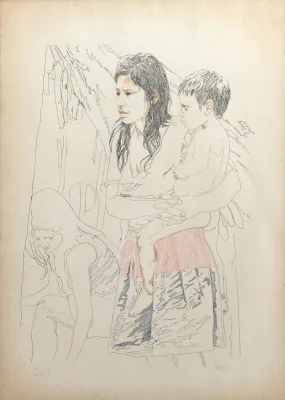
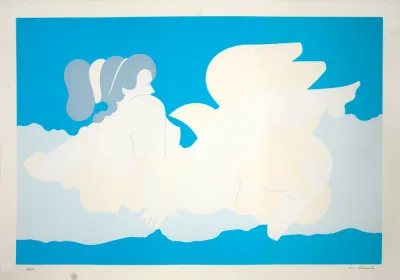
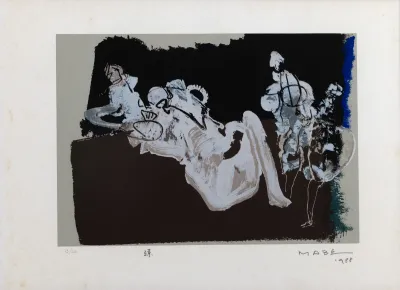
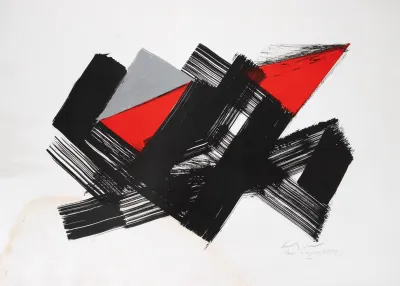
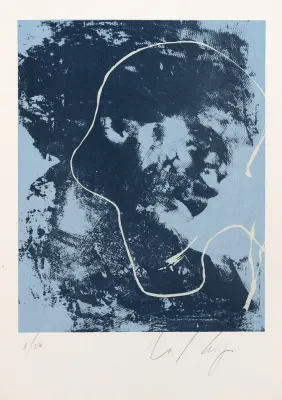
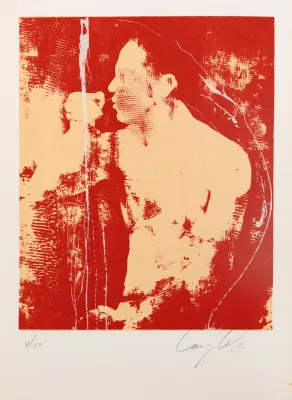
Carlos Araújo is a painter, draftsman and lithographer. In 1963, he began his studies in a self-taught way with the panel Allegory to Carnival. Between 1971 and 1975, he studied Engineering at Mackenzie University in São Paulo. In 1973, he was invited to participate in the exhibition Imagens do Brasil, in Brussels. The following year, he held his first solo exhibition at MASP, where he would exhibit on other occasions. In addition to painting, he worked with techniques such as drawing and lithography. In 1989, he released the book of lithogravures The Four Knights of the Apocalypse in Paris. His work presents characteristic elements of Renaissance painting. Throughout his career, he participated in several individual and collective exhibitions in Brazil and abroad. In 1980, the Annunciation Panel, of his authorship, was sent by the Brazilian government to Pope John Paul II. In 1984, he received the award from the São Paulo Association of Art Critics (APCA).
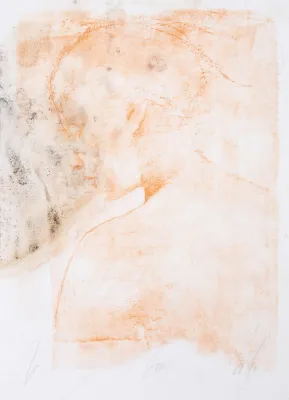
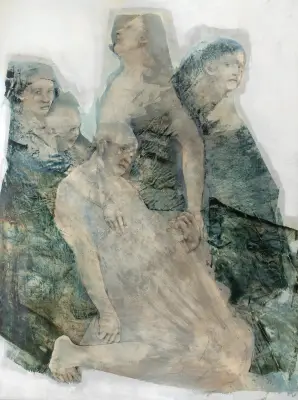
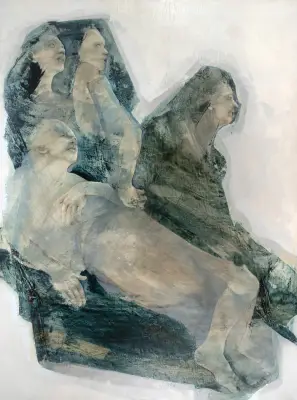
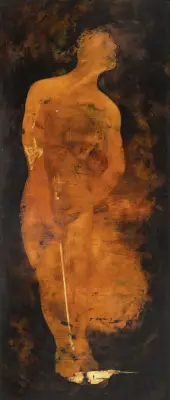
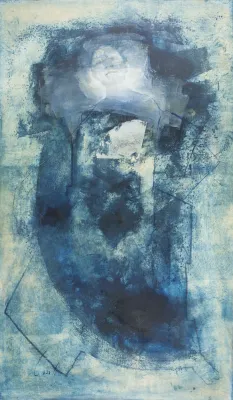
The artistic production of Carlos Araújo reveals a refined technical domain, associated with the talent he manifested since childhood. Its themes present a strong social inspiration, using the Brazilian reality as a basis to transform human tragedies and miseries into art. His paintings, loaded with spectra, acquire a metaphysical tone by the indefinition of human figures, built through ethereal spaces, without depth or weight. The works do not end where the painting ends; They seem to have existed before they were created, and they continue beyond the structural surface, wrapped in a spiritual and ethereal breath.
Over observing their works, the question that imposes itself is not what they represent, but who is its author. Carlos Araújo is beyond his own work. His work is not limited to visual contemplation, nor can it be evaluated only by technique, brush strokes or color combinations. Each of his creations appears as a world apart. And would it be possible to judge a world?
Your artistic discourse carries a creative impulse that harmonizes with nature, in which feeling anticipates emotion. The emotional movement guides the choice of themes, selecting elements that resonate with their artistic sensibility.
About 15 years ago, the artist from São Paulo started a daring project: painting 900 canvases depicting passages of the entire Bible. The works were gathered in a book, together with an ecumenical version of the sacred text, resulting in the publication Bible - Citations, measuring 685 pages, measuring 50 cm by 30 cm and weighing 7 kilos.
The work received the approval of the Pope Benedict XVI, who wrote the preface to the first edition, released on December 1st at the Florence Biennial of Contemporary Art, Italy. The publication also features the introduction and presentation of Dom Mauro Piacenza, Archbishop of Vittoriana, and Dom Emílio Pignoli, first diocesan bishop of Campo Limpo. The first copy was delivered to the pontiff during his visit to Brazil. Each edition of the Bible accompanies an engraving by Carlos Araújo made especially for the work — there are 35 different images, with one hundred copies each, totaling 3,500 copies of the print run in Portuguese.
The results of this work, added to their artistic trajectory, are reflected in A curriculum with exhibitions at the São Paulo Museum of Art (MASP – 1979 and 1987), Brazilian Art Museum (FAAP – 1984), International Contemporary Art Biennial (Florence – 2007), Casa França-Brasil (Rio de Janeiro – 2007) and at Carrousel du Louvre (Paris – 2008), among other prominent spaces in Brazil and abroad. Carlos Araújo established himself as one of the great names of contemporary art. The artist returned to Campo Grande, where he presented his Bible paintings at the Art Gallery Mara Dolzan.
Curiosities
São Paulo artist Carlos Araujo started a daring project 15 years ago: Painting 900 Screens depicting passages from the entire Bible. The paintings were reproduced in a book, along with an ecumenical version of the sacred text, resulting in the "Bible - Citations", a 685-page edition, measuring 50cm by 30cm and weighs 7 kilos. The preface to the book "Bible - Citations" was written by Pope Benedict XVI and the edition also features an introduction and presentation by Dom Mauro Piacenza, Archbishop of Vittoriana, and Dom Emílio Pignoli, 1st Diocesan Bishop of Campo Limpo, respectively. The first copy was delivered to the Pontiff in March of this year, on his visit to Brazil. Each Bible comes with an engraving made by Carlos Araujo especially for the edition - there are 35 different images with one hundred copies each, totaling 3,500 copies of the print run in Portuguese.
Critiques
"Angels, Demons, Specters. Ordinary People: The Spectral Universe of Carlos Araújo is populated by shadows and anonymous appearances, silhouettes trapped in the fraction of an attitude. The contours of shapes and faces barely cut through the fluidity of a space without Weight or depth other than that produced by the supported effect of the stroke or touch of the brush. Pale or bluish bistres tones evoke the classic watercolors of the rebirth as to the author's 'romantic-crepuscular' spirit. (.) The foundation that Carlos Araújo claims the influence of the Renaissance 'masters', Michelangelo in the first place, that he admires as much for his visionary genius and for his power of work. of children or circus people have, in postures and proportions, as if a furtive appearance, family aspects that resemble the characters of the Sistine Chapel. In his work notes, which constitute an analytical commentary of a touching lucidity, Carlos Araújo naturally finds the Leonardian or Michelangelesque touches naturally to evoke his methods of work, the course of his thinking, the anchoring points of his vision between the raptures of the feeling and the demands of making".
Pierre Restany
"(.). Araújo's work shows the tension that exists within humanity in a certain way, it is the conviction that the Bible manifests the message of salvation from human history. His chronicle, which occurs through allegories and is often inspired by religious sources, is directed to Brazil's tumultuous and mutant, and of all times. (.) Araújo's men and women are made of flesh and blood, they are impressions of Brazil freed by the artist to perform, in his own way, a version of Genesis and the prediction of another final judgment. (.). Araújo's usual world is the world of small people, the anonymous and suffering people of Brazil. He is the testimony and memory of the excluded, the fishermen, the sad, the frightened: Araújo's work is a chronicle of abandonment".
Jorge Glusberg
Interview with Carlos Araújo
By Fernanda Ferraz
I got to know the work of Carlos Raújo for the first time on display at Mube in 2009, whose curatorship of Bia Lessa turned that museum into a kind of sanctuary. Huge paintings that depict biblical images cause in those who see them is profound.
In this 2012, I received the task of interviewing the artist for the magazine that celebrates 50 years of the artist's house. inhabited by a quantity of screens of different sizes, in various stages of production.
Araújo remains there every day, producing as if he had received a divine task.
Carlos started painting at the age of 13. Self-taught, he used From the beginning the oil on the canvas, at the age of 18, met Professor Pietro Maria Bardi, founder of the Museum of Art de São Paulo, who began to accompany his work. The strong traits imprinted in this first phase questioned and criticized the world around us and emerged as the young artist perceived human existence, through trips through the interior of our country.
In 1973 he was invited by Bardi to make his first Individual exhibition at MASP, whose keynote was human figures and controversies. The nonconformity with social discrepancies and the questioning of who we are we appear in works such as "consecration of justice", "temporality of matter", "antagonism", "portrait of an idealist".
workers, Indians, Northeasterners, circus characters, thoughtful figures were represented, in traits that reveal and hide. And exhibitions followed in Brazil and abroad.
"I made a hearty critique": how can such poverty beat? How do men let their peers look like this?"
Bardi sent one of his paintings to Brussels, Belgium, and in the late 1980s came the invitation from the French publisher. Arianne Lancel to produce a book - a 'series de lithography - that portrayed the human dichotomy. Such a publication would be the last of a series of books commissioned by great artists, including Salvador Dali, with a strong influence of religiosity.
There, Araújo entered the spiritual world. of the Bible and there he found, surprised, many answers to human misery.
The phase was one of immense transformation, of abandonment of the ego, immersed in biblical studies, with archaic writing, which caused suffering. A new man was being born and abandoning what we have been Always painful.
C.A. Magazine - At this time there was the production of what work?
Carlos Araújo - I stayed for a while without being able to paint, depressed. I spent two years circulating the Bible and started painting
good parts of the book: motherhood, the nativity. And I quote the word of Jesus Christ "Why are you scandalized when I say that I am the Son of God?" We are all.
There is no time for the Bible: it is a futuristic text! I started to produce even more interesting. I felt myself disappearing, and at the same time feeling the presence of "I am". All
We must look for the light. Works such as "The Ascension" and "The Conversion of Saul" are from this period.
r.c - How is your technique?
C.A - I am an engineer by training. So there is a practical part, especially in the preparation of the screen. I have some assistants who help me at this stage. On the natural fabric,
we use many products, which have always been provided by the artist's house, over these many years. There are 7,8,9 hands with a white background, and between these hands of paint, we sand, we dry, reapply, stretch. This is essential for my paintings to have this "depth".
r.c - Are there any favorite works?
C.A - The role of the artists is of great responsibility. Each job has my total dedication and its meaning, its value. I have already portrayed the dichotomy earth (matter) versus
universe - which is infinitely greater. Especially when I started to portray the Bible, in those moments when I'm not me, I want to send a positive message
"Love the next as yourself." Biblical?
C.A - No. I have become invisible to the values to which most people are immersed. R.C - Its production is impressive. When do you consider a painting ready?
C.A - When it is understandable. The oil changes. My paintings have light and shadow, it's subtle. The features are made through projections. It is an intuitive and rational thing at the same time. I work every day, I still feel the need to paint. I ask God that I die with a brush in my hand.
"The pre-fixed, methodically executed idea partially outlines my creative process, inversely - it appears as figures jumping from a subconscious and prepared background."
r.c - What are you working on now?
C.A - Among so many screens, where I transit, I go and come back, I'm dedicated this year to an order I received: the panel "Genessi II Sesto Giorno", part of the organized exhibition by the Italian Government in a space assigned to each country that makes up the Parliament annually, next September.
r.c - You have a wonderful, touching work. Are you happy with this function?
C.A - Being happy is very relative. I can say that I am much more than this definition, the happiness that everyone says they seek. There is something greater, which I experience: fullness.
"I work ten hours a day, and I feel that my body sometimes no longer obeys my visions. Painting leads me to inconsistency and lethargy. Incorporating reality into the world of dreams. Transcend. Ah, Lucides's bliss, instead of misunderstanding."
Individual exhibitions
1974 - São Paulo SP - Carlos Araújo: Paintings, at MASP
1979 - São Paulo SP - Carlos Araújo: Paintings, at Masp
1982 - São Paulo SP - Individual, at Centro Campestre do Sesc
1984 - São Paulo SP - Individual, at Clube Atlético Monte Líbano. São Paulo SP - Thirty panels by Carlos Araújo, MAB/FAAP
1985 - São Paulo SP - Individual, at the Applied Art Gallery
1986 - Salvador BA - Individual, at the Bahia Art Office
1987 - São Paulo SP - Individual, at MASP
1989 - Paris (France) - Carlos Araújo: Paintings and sculptures, at Galerie Furstemberg
1992 - Panama (Panama) - Individual, at Bernhein Gallery
1996 - Rio de Janeiro RJ - Individual, at the VOTRE Art Gallery
1997 - Curitiba PR - Individual, at Simões de Assis Art Gallery
1998 - Fortaleza CE - Individual, at the Multiart Gallery
2000 - Miami (United States) - Scenes of the Bible, at Praxis Art International Gallery. New York (United States) - Individual, na. Praxis Art International Gallery. New York (United States) - Scenes from the Bible, at Praxis Art International Gallery. São Paulo SP - Ascension, at the Unicid Arts Space
2001 - Curitiba PR - Scenes of the Bible, at Simões de Assis Art Gallery. São Paulo SP - Scenes from the Bible, at the Brazilian Society of English Culture
Collective exhibitions
1973 Brussels (Belgium) - Images of Brazil
1976 - Penápolis SP - 2nd Northwest Plastic Arts Hall, at the Penápolis Educational Foundation. Faculty of Philosophy, Sciences and Letters of Penápolis
1977 - São Paulo SP - Art Exhibition, at the BBI Financial Group
1978 - Mexico City (Mexico) - 1st Ibero-American Painting Biennial
Penápolis SP - 3rd Northwest Plastic Arts Hall, at the Penápolis Educational Foundation. Faculty of Philosophy, Sciences and Letters of Penápolis
1979 - São Paulo SP - Art in Brazil: a five-century history, at MASP
1980 - Penápolis SP - 4th Salon of Plastic Arts of the Northwest, at Fundação Educacional de Penapolis. Faculty of Philosophy, Sciences and Letters of Penápolis
1982 - Bauru SP - 80 years of Brazilian art. Marília SP - 80 years of Brazilian art. Northwest, at the Educational Foundation of Penápolis. Faculty of Philosophy, Sciences and Letters of Penápolis. São Paulo SP - 80 years of Brazilian art, at MAB/FAAP
1983 - Belo Horizonte MG - 80 years of Brazilian art, at the Clóvis Salgado Foundation. Palácio das Artes. Campinas SP - 80 years of Brazilian art, at Macc. Curitiba PR - 80 years of Brazilian art, at Mac/Pr. Ribeirão Preto SP - 80 years of art Brazilian.&nsp;Santo André SP - 80 years of Brazilian art, at the Municipality of Santo André
1985 - São Paulo SP - 7 painters of Brazilian contemporary art, at the Portal Art Gallery
1987 - São Paulo SP - 20th Exhibition Contemporary Art, at Chapel Art Show
1991 - Chicago (United States) - Art Chicago International Art Exposition
1992 - Miami (United States) - Art Miami International Art Exposition. Santo André SP - Lithogravure: Methods and Concepts, at the Municipal Palace
1995 - Buenos Aires (Argentina) - Art Fair of Buenos Aires
1997 - Curitiba PR - Casa Cor Sul, at Simões de Assis Gallery of Art
1999 - Curitiba PR - Highlights of Brazilian Painting, at Simões de Assis Art Gallery
São Paulo SP - Lithography: Fidelity and Memory, at the Unicid Art Space
2001 - Caracas (Venezuela) - Ibero-American Art Fair. Miami (United States) - Art Miami
2003 - Rio de Janeiro RJ - BrazilianArt Project, at Almacén Art Gallery
2004 - São Paulo SP - Artist Collective Contemporaries, at Esporte Clube Sírio
Chronology
1980 - The Annunciation Panel is sent by the Brazilian government to Pope John Paul II. The work is currently at the Vatican Museum
1981 - São Paulo SP - executes the panel Os Trabalhadores, for Banco Itaú, starting social phase
1984 - São Paulo SP - receives the APCA award
1987 - Paris (France) - Claude Draeger edits an illustrated monograph, entitled Araújo, about his painting, with a presentation by Pietro Maria Bardi and Pierre Restany, reissued in 1995
1989 - Paris (France) - Launch of the book of Litographs The Four Knights of the Apocalypse, edited by Ariene Lancell, inspired by the work of Blasco Ibañez
1996 - São Paulo - Artist honored at the 28th Chapel Art Show