
Axl Leskoschek (Graz, Austria 1889 - Viena, Austria 1975)
Axl Leskoschek was a printmaker, painter, illustrator, draftsman, teacher and set designer. He entered the School of Fine Arts in Graz and the School of Graphic Arts in Vienna in 1919, taking classes with Hofbauer, Hermann Cossmann (1884 - 1966) and Schorotter. In that period, he took part in the Sezession groups in Graz and Vienna, and the Werkbund. In 1921, he showed watercolors in his first solo exhibition, held in Vienna. Between 1929 and 1932, he created theater sets. Fleeing Nazism, he took refuge in Switzerland, where he began the woodcut series Odysséia [Odyssey]. In 1939, he moved to Rio de Janeiro and began teaching woodcut in the advertising design and graphic arts course of the Fundação Getúlio Vargas (FGV). His students included Fayga Ostrower (1920 - 2001), Renina Katz (1926), Ivan Serpa (1923 - 1973) and Edith Behring (1916 - 1996). He also taught printmaking in his studio in the Glória neighborhood.
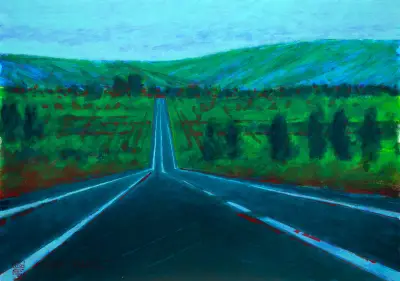
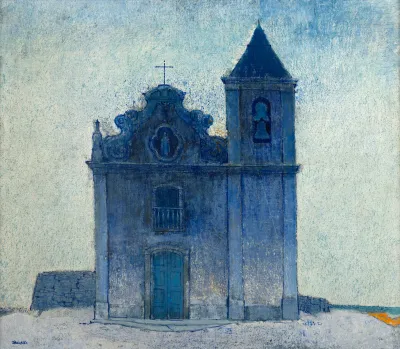
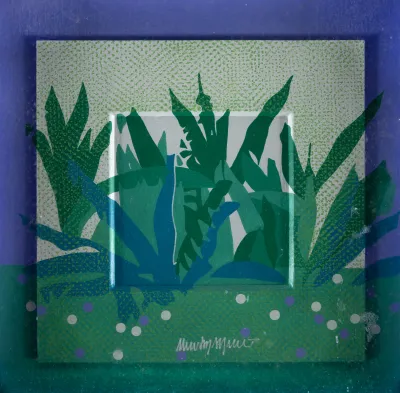
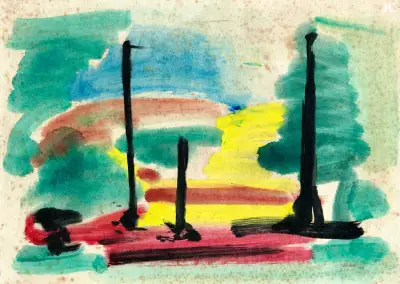
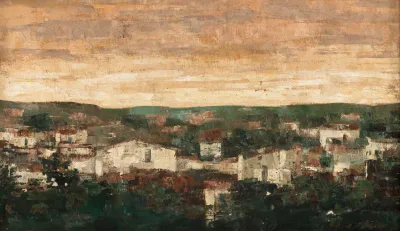
In addition to woodcuts, he produced paintings of landscapes, still lifes and scenes of everyday life in Rio de Janeiro city and state. He illustrated many books, most of them published by Livraria Editora José Olympio, such as O Romanceiro do Brasil [The Brazilian Romancero] by Ulrich Becher; Dois Dedos [Two Fingers] by Graciliano Ramos (1892 - 1953); Uma Luz Pequenina [A Tiny Light] by Carlos Lacerda; as well as Brazilian translations of works by Fyodor Dostoevsky (1821 - 1881). He returned to Austria in 1949, settling in Vienna, where he continued illustrating magazines and books.
Critical Commentary
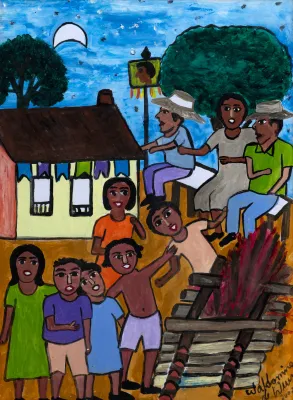
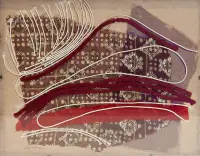
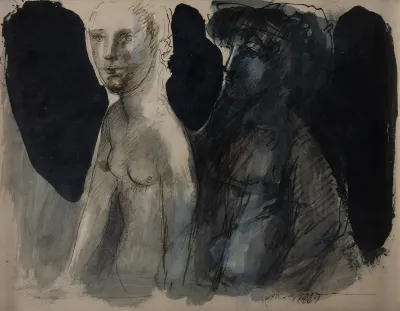
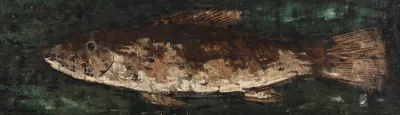
Axl Leskoschek's Brazilian production includes watercolors, oils, linocuts, etchings and, above all, woodcuts. The artist prefers to make small-format works, executed with great technical precision, in which he presents a great wealth of detail. In these works, he depicts scenes of urban and suburban life in Rio de Janeiro.
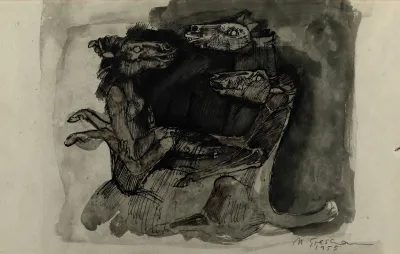
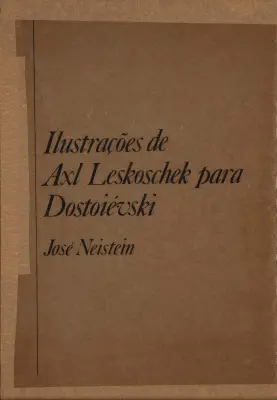
Leskoschek illustrated many publications, notably the series of 60 tiny woodcuts for O Romanceiro do Brasil by Ulrich Becher. As the researcher José Neistein points out, in the illustrations he made for the Brazilian translation of the works of Fyodor Dostoevsky (1821 - 1881), published by Livraria Editora José Olympio, the artist surprises with his formal and psychological fit to the human and literary truth of the characters created by the writer. For the art critic Radha Abramo, his attention to minutiae leads the artist, in his woodcuts, to reconstruct period settings with a wealth of textures and plays of light.
The artist carried out important teaching work, as a teacher in the design, advertising and graphic arts course created by the Fundação Getúlio Vargas - FGV, and giving printmaking classes in his studio. He was responsible for training several artists, among them Fayga Ostrower (1920 - 2001), Renina Katz (1926), Misabel Pedrosa (1927), Rachel Strosberg (1927), Danúbio Gonçalves (1925 - 2019), Décio Vieira (1922 - 1988), Ivan Serpa (1923 - 1973), Teresa Nicolao (1928) and Edith Behring (1916 - 1996).
Critiques
"In the miniatures, a genre in which [Leskoschek] is today recognized as a master of international stature, scenes of urban, suburban and rural life are recorded, both of the city and the State of Rio [...]. In the pochoirs, the densest and most dramatic angles of the poor areas, of the wild or the more disciplined landscape, were concentrated. The larger woodcuts illustrate works by Dostoevsky, published only in the Brazilian editions of the Russian novelist [...]. Some linocuts illustrate several classics among the modern Brazilian novelists. Among the larger woodcuts, special mention should be made of those forming the Ulysses series, Leskoschek's highly personal version of the inexhaustible Greek vein, begun in Brazil and completed years later in Austria. Layout, prints and vignettes for Os Lusíadas, initials, ex-libris, occasional cards and graphic works illustrate Axl's immense versatility and his contribution to activity in these fields in 1940s Brazil".
José Neistein (1981)
NEISTEIN, José. Feitura das artes. São Paulo: Perspectiva, 1981. p. 83-84.
"His oils reveal thematic affinities with the 'Brazilian miniatures'. They are landscapes, still lifes, compositions with fruits and flowers, aspects of everyday life in Rio city and state - hillside favelas, suburbs, vendors, bricklayers, cattle drives. Some places are cited in the titles of the works: Pendotiba, Mury, Santa Rosa, in Niterói, Cônego, as well as Portinari's gardens in Brodósqui, and those of Burle Marx. Among the paintings shown, some are considered decorative (panel, decomposition) by the author, who also paints legends and a Greek scene (Odysséia). (...) Both in Brazil and abroad, his work has been analyzed almost exclusively from the graphic angle, especially his activity as an illustrator. In examining the woodcut as a vehicle for illustration, one often forgets to examine its formal qualities. On the other hand, his gouaches and oils have never been the object of analysis. It is true that, in this field, his production was smaller, and the little he created was dispersed in private collections, here and abroad. One day, it will be necessary to analyze Leskoschek the painter".
Frederico Morais
AXL Leskoschek e seus alunos: Brasil/1940-1948. Curadoria e texto Frederico Morais. Rio de Janeiro: Galeria de Arte Banerj, 1985.
"He was an extraordinary person; he had the ability not to impose his artistic solution. He was an excellent technician and a great illustrator, capable of capturing the mental climate of a scene or a narrative, which he did brilliantly. As a teacher, he led students to take part in the critique of their own work. This is one of the best things there can be in teaching. At the time, he was the only modern teacher and, for that reason, he was much sought after.
When the course at the Fundação ended, a small group of students went to take classes with him in his studio. There the classes were no longer only in woodcut, but also in painting, drawing and composition. He showed that there were rules, but that these were not mere precepts. Each one had to discover them.
... For the artists of my generation, the great debt is to the pioneers, people like Leskoschek, Lívio Abramo, Oswaldo Goeldi and Carlos Oswald, because they lived 20, 30 years without the slightest incentive - they had no way of selling their works - but without ever losing their artistic integrity".
Fayga Ostrower
LESKOSCHEK, Axl. O mestre gravador: xilogravuras do período brasileiro: 1940-1948. Porto Alegre: Caixa Econômica Estadual, 1989. p. 5-6.
Solo Exhibitions
1921 - Vienna (Austria) - First solo exhibition
1942 - Rio de Janeiro RJ - Solo, at Le Connoisseur
1946 - Rio de Janeiro RJ - Solo, at Enba
1948 - Rio de Janeiro RJ - Solo, at MEC
1971 - Graz (Austria) - Solo, at Landesmuseum Joanneum
1973 - Washington (United States) - Os Anos de Brasil de Axl Leskoschek [Axl Leskoschek's Brazil Years], at Art Gallery of the Brazilian-American Cultural Institute
1974 - Rio de Janeiro RJ - Os Anos de Brasil de Axl Leskoschek [Axl Leskoschek's Brazil Years], at Galeria Grupo B
1974 - São Paulo SP - Os Anos de Brasil de Axl Leskoschek [Axl Leskoschek's Brazil Years], at MAB/Faap
1974 - Vienna (Austria) - Retrospectiva [Retrospective], at Museu Albertina
Group Exhibitions
1944 - London (England) - Exhibition of Modern Brazilian Paintings, at Royal Academy of Arts
1944 - Norwich (England) - Exhibition of Modern Brazilian Paintings, at Norwich Castle and Museum
1945 - Edinburgh (Scotland) - Exhibition of Modern Brazilian Paintings, at National Gallery
1945 - Glasgow (Scotland) - Exhibition of Modern Brazilian Paintings, at Kelvingrove Art Gallery
1945 - Bath (England) - Exhibition of Modern Brazilian Paintings, at Victoria Art Gallery
1945 - Bristol (England) - Exhibition of Modern Brazilian Paintings, at Bristol City Museum & Art Gallery
1945 - Manchester (England) - Exhibition of Modern Brazilian Paintings, at Manchester Art Gallery
1946 - Rio de Janeiro RJ - Os Pintores vão à Escola do Povo [Painters Go to the People's School], at Enba
Posthumous Exhibitions
1978 - Curitiba PR - 1ª Mostra Anual de Gravura Cidade de Curitiba [1st Curitiba City Annual Printmaking Exhibition], at Centro de Criatividade
1978 - São Paulo SP - Solo, at Graphus Galeria de Arte
1982 - Penápolis SP - 5º Salão de Artes Plásticas da Noroeste [5th Noroeste Visual Arts Salon], at Fundação Educacional de Penápolis. Faculdade de Filosofia, Ciências e Letras de Penápolis
1984 - Curitiba PR - 6ª Mostra de Gravura Cidade de Curitiba [6th Curitiba City Printmaking Show]
1984 - Curitiba PR - 6ª A Xilogravura na História da Arte Brasileira [6th Woodcut in the History of Brazilian Art], at Casa Romário Martins
1984 - Porto Alegre RS - Gravuras: uma trajetória no tempo [Prints: A Trajectory in Time], at Cambona Centro de Artes
1984 - Rio de Janeiro RJ - A Xilogravura na História da Arte Brasileira [Woodcut in the History of Brazilian Art], at Funarte. Galeria Sérgio Milliet
1984 - São Paulo SP - Tradição e Ruptura: síntese de arte e cultura brasileiras [Tradition and Rupture: A Synthesis of Brazilian Art and Culture], at Fundação Bienal
1985 - Rio de Janeiro RJ - Axl Leskoschek e seus Alunos: Brasil/1940-1948 [Axl Leskoschek and His Students: Brazil/1940-1948], at Galeria de Arte Banerj
1985 - São Paulo SP - 18ª Bienal Internacional de São Paulo [18th São Paulo International Biennial], at Fundação Bienal
1985 - São Paulo SP - Axl Leskoschek e seus Alunos: Brasil/1940-1948 [Axl Leskoschek and His Students: Brazil/1940-1948], at MAM/SP
1986 - Curitiba PR - 7ª Mostra da Gravura Cidade de Curitiba [7th Curitiba City Printmaking Exhibition]
1986 - Curitiba PR - Solo, at Museu Guido Viaro
1988 - Lisbon (Portugal) - Pioneiros e Discípulos [Pioneers and Disciples], at Centro de Arte Moderna José de Azeredo Perdigão
1989 - Porto Alegre RS - O Mestre Gravador Axl Leskoschek: xilogravuras do período brasileiro/1940-1948 [The Master Printmaker Axl Leskoschek: Woodcuts from the Brazilian Period/1940-1948], at Galeria de Arte da Caixa Econômica Estadual do Rio Grande do Sul
1991 - São Paulo SP - Registros e Impressões: artistas seminais [Records and Impressions: Seminal Artists], at Casa das Rosas
1992 - Rio de Janeiro RJ - Gravura de Arte no Brasil: proposta para um mapeamento [Art Printmaking in Brazil: A Proposal for a Mapping], at CCBB
1993 - João Pessoa PB - Xilogravura: do cordel à galeria [Woodcut: From Cordel to Gallery], at Funesc
1994 - São Paulo SP - Poética da Resistência: aspectos da gravura brasileira [Poetics of Resistance: Aspects of Brazilian Printmaking], at Galeria de Arte do Sesi
1994 - São Paulo SP - Xilogravura: do cordel à galeria [Woodcut: From Cordel to Gallery], at Metrô
1996 - São Paulo SP - Ex Libris/Home Page, at Paço das Artes
1998 - São Paulo SP - Os Colecionadores - Guita e José Mindlin: matrizes e gravuras [The Collectors - Guita and José Mindlin: Matrices and Prints], at Galeria de Arte do Sesi
1999 - Rio de Janeiro RJ - Mostra Rio Gravura. Axl Leskoschek [Rio Printmaking Show. Axl Leskoschek], at Espaço Cultural dos Correios
1999 - Rio de Janeiro RJ - Mostra Rio Gravura. Gravura Moderna Brasileira: acervo Museu Nacional de Belas Artes [Rio Printmaking Show. Brazilian Modern Printmaking: Museu Nacional de Belas Artes Collection], at MNBA
2000 - São Paulo SP - Investigações. A Gravura Brasileira [Investigations. Brazilian Printmaking], at Itaú Cultural
2001 - Brasília DF - Investigações. A Gravura Brasileira [Investigations. Brazilian Printmaking], at Galeria Itaú Cultural
2001 - Penápolis SP - Investigações. A Gravura Brasileira [Investigations. Brazilian Printmaking], at Galeria Itaú Cultural
2001 - Rio de Janeiro RJ - Aquarela Brasileira [Brazilian Watercolor], at Centro Cultural Light
2002 - London (England) - Axl Leskoschek: the brazilian years, at Gallery 32
2003 - São Paulo SP - Entre Aberto [Half Open], at Gravura Brasileira
Source: Itaú Cultural