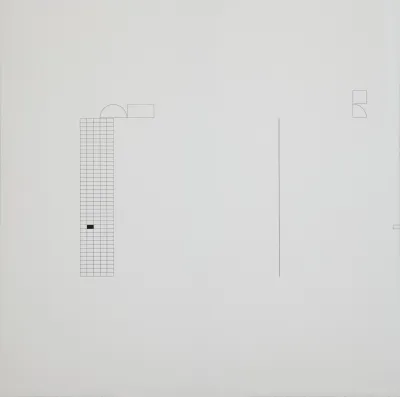

Antonio Lizarraga (Buenos Aires, Argentina 1924 - São Paulo SP 2009)
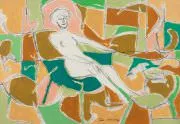
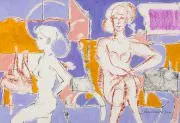
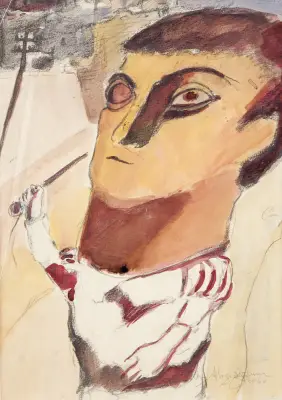
Antonio Lizarraga was a painter, sculptor, graphic artist and designer. Antonio Gundemaro Lizarraga moved to Brazil in 1959, taking up residence in São Paulo, where he began his career as an illustrator of the literary supplement of the newspaper O Estado de S. Paulo, an activity he carried out until 1967. His drawings from that period are located between figuration and abstraction. He worked as a designer in graphic projects for publishers and in the creation of objects for industries. From the 1970s onwards, he began to dedicate himself to other expressive means, such as engraving, sculpture and painting, in addition to interference in urban space and installations.
In 1983, he suffered a stroke and, Unable to perform his works directly, he began to work with assistants. He was a researcher at CNPq between 1987 and 1999. Two books were released about his production: Antonio Lizárraga: a poetics of radicalism, by Annateresa Fabris, in 2000, and Antonio Lizárraga: Quadragas In squares, by Maria José Siteri, in 2004.
Critical Comment
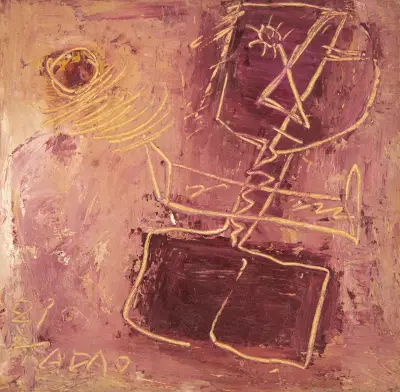
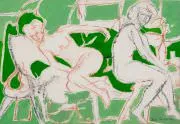
From 1959, Antonio Lizarraga works as an illustrator of the literary supplement of the newspaper O Estado de S. Paulo, acting also in publications by several publishers. At that time, its production is abstract, with predominantly organic forms. later, his work starts to have an affinity with constructive art. As noted by art historian Annaresa Fabris, in the mid-1960s, the artist creates dense shapes in his drawings, which allude to sculptures. In the following decade, it carries out several urban interventions, exploring industrial materials, such as concrete. The theme of the metropolis is present in many works of the period.
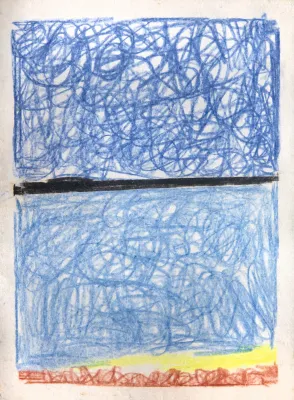
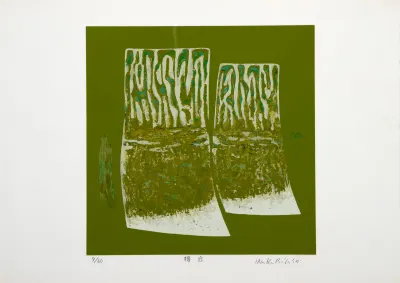
In the early 1980s, it performs metal engravings, seeking the feeling of three-dimensionality, according to the artist's definition of his work, that of "sculptor of the plan". He suffered a stroke in 1983, being practically without movement. Two years later, he returns to dedicating himself to the visual arts, starting to work with the help of assistants. In 1985, part of his production as an illustrator is exposed, in which the clear and precise sensitivity to the graphic space can be perceived. Lizarraga puts in question some of the central questions to the constructive aspects, proposing a problematization, sometimes impregnated with sensuality and a playful sense, of the relationship between space and matter.
Criticism
"(...) It is typical of constructivism The paradox of a project that, once finished, appears as a consequence and not as a matrix of form. Sculptures, paintings, we have the impression that every detail was precisely defined from a principle that remains obscure, as if his works were the point of arrival of a deductive process whose trajectory cannot be traversed backwards. The principle seems all the more general - and the procedure the more iron - the more the works appear to us as simple fragments, irregular because incomplete, of a geometry of enormous complexity. (...) The game doesn't always work entirely. In some screens, the deductive process is still revealed with some rigidity, the transition from the project to the realization does not occur without residues. The incompleteness or partial cancellation of the signs is not enough to absorb them in the general form - they still retain a certain graphic anonymity, regardless of the position they occupy. In the sculptures and panels, however, the geometric figures completely merge into the structure, and therefore acquire the value of individuals, personae. It is from the disappearance of the figure that the form is born. The panels suggest the screen, the simple support of each pictorial operation. They are white pages on which a fold is produced, a depression, a rounding, a trail. They insinuate the transformation of the surface into three-dimensional space".
Lorenzo Mammi
Mammi, Lorenzo. Antonio Lizárraga. 11, p. 67, 1988.
"Abstractions, considered from the point of view of Lizarraga's drawing, ask for much more from the appreciator an effort of intelligence to the good appreciation of the works that follow their observation. The drawing is mainly endowed with an intelligentsia that relegates to a less visible plane the affective load, the sensitive world. We deal with joint indications, arteries, radial systems, vertebrae. The rare textures are not entangled to the point of creating a new source of suggestibility are very discreet notations". 05/03/1960. in Bienal Brasil Século 20. São Paulo: Fundação Bienal, 1994. p. 388.
"The greatest fluency that Lizárraga's design was achieving, due to A harmonious coexistence between the gestuality of the lines drawn by the brush and the rationality of regular forms, is abruptly interrupted in April 1983, as a result of the vascular accident that makes it impossible for him to perform any work based on the domain of MANUALITY. The intellectual conception on which his graphic production has always been based allows him to overcome the physical obstacle after a first moment of disorientation. From there, the drawing plays a double role in its production: Note - moment of passage of the idea towards its materialization in other techniques - and autonomous research.
The design acquires once and for all that 'workshop' function that had been attributed to it by Fábio Magellan. Unable to physically carry out his works, Lizarraga transforms the drawing into a propedeutic instrument thanks to which the idea progressively acquires the character of a diagrammatic layout. A new operality is configured, which deepens the intellectual bias of the previous moments, gaining an initial record through a resource such as the dictation. assisted by collaborators, the artist orally guides the execution of lines, points, planes, shapes, colors, which are transferred to a graph paper, design matrix of the subsequent unfoldings of the idea in drawing, painting, sculpture, etc.
The operability involved in the visual operations elaborated from 1985 onwards places it once and for all in the scope of those constructive sign structures that already characterized, although not strictly, their previous production. What lizarraga draws from constructivism are those rational procedures postulated by artists such as Rodchenko and El Lissitzky, defenders of an art vision as the development of form based on safe and exact principles thanks to the use of vigorous instruments. The ruler and the compass become the symbols of this new vision, which abolishes the presence of the hand by bearer of individual and conscious values. The hand becomes an instrument at the service of the mind and the imagination becomes synonymous with design and morphopoetic capacity".
Annaresa Fabris
Fabris, Annateresa. Lizárraga: a poetics of radicalism Belo Horizonte: w/art: EDUSP, FAPESP, 2000. (History and Art Collection). p. 106.
Testimonies
"In mid-1983 I suffered a strong stroke that left me physically unable to act as a plastic artist, interrupting me a whole life of achievements in this field. The stroke left me with only a partial movement of the left arm and other peripheral mini-motions, but my senses were not affected, especially the vision. After the initial crisis I started the effort to maintain my creative activity and to look for solutions to carry out a production, trying to overcome my deficiency. In this effort it was that I found the possibility of transcoding verbal and visual ideas, guiding the execution of the work of the technical collaboration of helpers.
My first creations, in this situation, were poems, which elaborated dictating sentences completed that after being noted And through other readings and revisions, they were manipulated to the final configuration. As for the visual problematic, I realized that from a graph paper that worked as a reference mesh, I could verbally indicate the encoding of shape and color modules that corresponded to my aesthetic concepts. Finally I was able to approach the three-dimensional from a solid in a simple way, the cube, where I identified the coordinates that would guide the sections to be executed".
Antonio Lizarraga
Fabris, Annateresa. Antônio Lizárraga: a poetics of radicalism Belo Horizonte: C/Arte: Edusp, FAPESP, 2000. (History and Art Collection). p. 159.
Individual exhibitions
1960 - São Paulo SP - Lizarraga: Drawings, at Galeria São Luís
1962 - São Paulo SP - Lizarraga: Drawings, At Galeria Selearte
1966 - São Paulo SP - Antonio Lizarraga: Drawings, at Galeria Ponto de Encontro
1970 - Belo Horizonte MG - Antonio Lizarraga: Drawings, at AMI Art Gallery
1980 - São Paulo SP - LIZARRAGA: Drawings, at the Cooperativa dos Artistas Plásticos
1984 - São Paulo SP - Lizarraga: engravings, at the Monica Filgueiras Art Gallery
1985 - São Paulo SP - Anatomy of the Gol, at Espaço Humberto Tecidos
1986 - São Paulo SP - Antonio Lizarraga: Paintings, at Paulo Figueiredo Art Gallery
1988 - São Paulo SP - Forms: reliefs, sculptures and paintings, at the Paulo Vasconcellos Art Gallery
1989 - São Paulo SP - Individual, at Livraria Letraviva
1991 - São Paulo SP - Perpendicular, at the Millan Gallery
1992 - São Paulo SP - AcordaCor, at Montesanti Roesler Gallery
1993 - São Paulo SP - Lizarraga: paintings, at the Museum of Art Moderna
1994 - São Paulo SP - Fragile over fragile, at the Monica Filgueiras Art Gallery
1996 - São Paulo SP - Drawing the color, at the Valu Oria Art Gallery
1998 - São Paulo SP - Caixas de Cor - Arte Palavra, at Livraria Vozes
1999 - São Paulo SP - Antonio Lizarraga: Drawings, at Valu Oria Art Gallery
2003 - São Paulo SP - Individual, at Centro Universitário Maria Antonia
2006 - São Paulo SP - Antonio Lizarraga: graphic displacements, at the Pinacoteca do Estado
2006 - São Paulo SP - Geografia da Linha, at Centro Cultural São Paulo.
2006 - São Paulo SP - Geometry of color, at the Buck Studio
2008 - São Paulo SP - Individual, at the Buck
2009 - Ribeirão Preto SP studio - Displacements, at the Marcelo Guarnieri Art Gallery
Collective exhibitions
1960 - São Paulo SP - 9th Salão Paulista de Arte Moderna, Galeria Prestes Maia
1962 - Rio de Janeiro RJ - 11th National Salon of Modern Art
1965 - Belo Horizonte MG - 20th Salão de Belas Arts of the City of Belo Horizonte, Pampulha Art Museum
1965 - Campinas SP - 1st Contemporary Art Salon of Campinas - Acquisition Award
1965 - Curitiba PR - 22nd Salão Paranaense de Belas Artes, Public Library of Paraná - 1st Drawing Prize
1966 - Brasília DF - 3rd Federal District Modern Art Salon
1966 - Campinas SP - 2nd Contemporary Art Salon of Campinas, José Pancetti Contemporary Art Museum
1966 - Curitiba PR - 23rd Salão Paranaense de Belas Artes, Paraná Public Library - Gold Medal and Acquisition Iria Correa Award
1966 - São Paulo SP - 15th São Paulo Salão de Arte Moderna, Prestes Maia Gallery - Small Silver Medal
1967 - Campinas SP - 3rd Contemporary Art Salon of Campinas, José Pancetti Museum of Contemporary Art
1967 - São Paulo SP - 9th São Paulo International Biennial, Biennial Foundation
1969 - São Paulo SP - 10th São Paulo International Biennial, Biennial Foundation
1969 - São Paulo SP - Exhibition of the Alberto Bonfiglioli Gallery, Alberto Bonfiglioli Gallery
1970 - São Paulo SP - 2nd São Paulo Contemporary Art Salon Paulo - 1st Drawing Award
1970 - São Paulo SP - Pre-Bienal of São Paulo, Bienal Foundation
1971 - Campinas SP - 7th Contemporary Art Salon of Campinas - Acquisition Award
1971 - Curitiba PR - 28th Salão Paranaense, Paraná Public Library - 1st Prize in Drawing
1971 - São Caetano do Sul SP - 5th Contemporary Art Salon of São Caetano do Sul - Special Award and Acquisition Award
1971 - São Paulo SP - 11th São Paulo International Biennial, Biennial Foundation
1971 - São Paulo SP - 3rd Panorama of Current Brazilian Art, Museum of Modern Art
1971 - São Paulo SP - Industrial Design Exhibition, Galeria Eucatexpo
1972 - Belo Horizonte MG - Collective, at the Newman Gallery
1972 - Santo André SP - 5th Santo André Contemporary Art Salon, Municipal Palace
1972 - São Paulo SP - 4th Panorama of Current Art Brazilian, Museum of Modern Art
1972 - São Paulo SP - 4th São Paulo Contemporary Art Salon, São Paulo Museum of Art - The Best of 72 APCA Award
1972 - São Paulo SP - Sesquicentennial Art Exhibition da Independência e Brasil Plástica - 72, Bienal Foundation
1973 - São Paulo SP - 12th São Paulo International Biennial, Biennial Foundation
1973 - São Paulo SP - Architecture Biennial
1974 - São Paulo Paulo SP - 5th São Paulo Contemporary Art Salon, São Paulo Museum of Art - Special Prize
1975 - São Paulo SP - 7th Panorama of Current Brazilian Art, Museum of Modern Art
1975 - São Paulo SP - Antonio Lizarraga and Gerty Saruê, Graphic Arts Office
1976 - Bonn (Germany) - South American Art and Culture Week
1976 - Rome (Italy) - Incisioni Brasiliane Contemporanee, in Galleria d'Arte della Casa do Brasil and Palazzo Pamphilj
1976 - São Paulo SP - Applied Art, São Paulo Museum of Art
1976 - São Paulo SP - Immigrants in the plastic arts of São Paulo, Museum of Art of São Paulo
1976 - Taubaté SP - 1st Contemporary Art Salon of Taubaté
1977 - São Paulo SP - 9th Panorama of Current Brazilian Art, Museum of Modern Art
1977 - São Paulo SP - The City of São Paulo: Reflections on engraving, Graphic Arts Office
1978 - Curitiba PR - 1st Annual Engraving Exhibition City of Curitiba, Creativity Center
1978 - Rome (Italy) - Engraving collective, Brazilian embassy at Italy
1978 - São Paulo SP - Papels e Cia., Paço das Artes
1979 - São Paulo SP - Eros/Arts Show, Galeria Applied Art
1979 - São Paulo SP - Drawing as an instrument, Pinacoteca do Estado
1979 - Tel Aviv (Israel) - Engravings, Gallery 119
1980 - Belgrade (Serbia) - 2nd International Visual Arts Exhibition
1980 - Caxias do Sul RS - Xerografias, Fundação Universidade Caxias do Sul
1980 - João Pessoa PB - Xerografias, Nucleus of Contemporary Art of the Federal University of Paraiba
1980 - Joinville SC - Xerografias, Joinville Art Museum
1980 - Piracicaba SP - Xerografias, Casa de Cultura de Piracicaba
1980 - Porto Alegre RS - Xerographies, Espaço N.O. Alternative Center of Culture
1980 - São Paulo SP - 12th Panorama of Current Brazilian Art, Museum of Modern Art
1980 - São Paulo SP - Few and Rare, Municipal Library Mário de Andrade
1980 - São Paulo SP - Xerographies, Pinacoteca do Estado
1981 - Cali (Colombia) - 4th Graphic Arts Biennial
1981 - Franca SP - Xerografias, at Pinacoteca Municipal de Franca
1981 - Ribeirão Preto SP - Xerografias, Casa da Cultura Morro São Bento
1981 - Santo André SP - Xerografias, Civic Center
1981 - São Paulo SP - Exhibition of Heliography, Pinacoteca do Estado
1982 - Caxias do Sul RS - Artemicro, University of Caxias do Sul
1982 - Coimbra (Portugal) - Microarte, Circle of Plastic Arts
1982 - Lisbon (Portugal) - Microarte, Diferença Cooperativa
1982 - Rio de Janeiro RJ - Artemicro, Museum of Modern Art
1982 - São Paulo SP - Artemicro, Museum of Image and Som
1983 - Curitiba PR - 5th Brazilian Drawing Exhibition, Guaíra Theater - Guest Artist
1983 - Dallas (United States) - Artemicro, Bath House Cultural Center
1983 - Ribeirão Preto SP - Xerography: Brazilian sampling, Galeria Campus  
1983 - San Juan (Porto Rico) - 6th Bienal de San Juan del Grabado Latinoamericano y del Caribe, at the Institute of Culture Puertorriqueña
1983 - São Paulo SP - Amnesty International/Brazil, Museum of Image and Sound
1983 - São Paulo SP - Art on the street, organization MAC/USP, presentation on billboards spread across the city
1984 - Curitiba PR - 6th Engraving Exhibition City of Curitiba
1984 - São Paulo SP - 15th Panorama of Current Brazilian Art, Museum of Modern Art
1984 - São Paulo SP - Art Xerox Brasil, Pinacoteca do Estado
1984 - São Paulo SP - Diretas Já, Centro Cultural São Paulo
1984 - São Paulo SP - Tradition and Rupture: Synthesis of Brazilian Art and Culture, Biennial Foundation
1985 - Niterói RJ - Trends of the Artist's Book in Brazil - Current Brazilian Art: 1985, UFF Art Gallery
1985 - São Paulo SP - Artist Book Trends in Brazil, Centro Cultural São Paulo
1986 - Buenos Aires (Argentina) - 1st Latin American Biennial of Art on Paper, Museum of Modern Art of Buenos Aires
1986 - São Paulo SP - 17th Panorama of Current Brazilian Art, Museum of Modern Art
1987 - Rio de Janeiro RJ - Geometric and informal abstractionism: aspects of the Brazilian avant-garde of the 50s, Funarte
1987 - São Paulo SP - The plot of taste: another look at everyday life, Biennial Foundation
1987 - São Paulo SP - Art and New Technologies: Optical Fibers, Museum of Contemporary Art of the University of São Paulo
1987 - São Paulo SP - 13 Western Rugs, Paulo Figueiredo Art Gallery
1988 - São Paulo SP - 19th Panorama of Current Brazilian Art, Museum of Modern Art
1988 - São Paulo SP - 1st International Visual Poetry Exhibition of São Paulo, Centro Cultural São Paulo
1988 - São Paulo SP - MAC 25 years: Acquisitions and Recent Donations, Museum of Art Contemporary of the University of São Paulo
1989 - São Paulo SP - Artist's Look: Haroldo de Campos - A Choice, Museum of Contemporary Art of the University of São Paulo
1990 - Curitiba PR - 1st Brazilian Design Biennial - Seal of Excellence Award
1990 - São Paulo SP - 21st Panorama of Current Brazilian Art, Museum of Modern Art
1990 - São Paulo SP - Annual Program for Plastic Arts Exhibitions, São Paulo Cultural Center
1991 - São Paulo SP - 22nd Panorama of current Brazilian art, Museum of Modern Art
1991 - São Paulo SP - Geometric and informal abstractionism: aspects of the Brazilian vanguard of the 1950s, Pinacoteca do Estado
1992 - São Paulo SP - The language of MINERALS, Miriam Mamber Art Gallery
1992 - São Paulo SP - The Seduction of Volumes: The Three-dimensional MAC, Museum of Contemporary Art of the University of São Paulo
1992 - São Paulo SP - Polarities/Perspectivas, Paço das Artes
1993 - Santos SP - 4th National Bienal de Santos, Patrícia Galvão Cultural Center
1993 - São Paulo SP - 23rd Panorama of Brazilian Current Art, Museum of Modern Art
1993 - São Paulo SP - Abstraction in the MAM collection, Museum of Modern Art
1993 - São Paulo SP - They were the Brazilians who stayed, Pinacoteca do Estado
1993 - São Paulo SP - Garden of Sculptures, Museum of Contemporary Art of the University of São Paulo
1993 - São Paulo SP - Works for illustration of the literary supplement: 1956 - 1967, Museum of Modern Art
1994 - Brasília DF - Imagined City - Imagined City, Athos Bulcão Foundation
1994 - São Paulo SP - Flags: 60 artists honor the 60th anniversary of USP, Museum of Contemporary Art of the University of São Paulo Paulo SP - Senses: a sensitive look at current art, Renato Magalhães Gouvêa Art 
1995 - Belo Horizonte MG - Babel Project, Liberdade Square
1995 - São Paulo SP - Babel, Sesc Pompéia
1996 - Osasco SP - 4th Art Exhibition, Centro Universitário FIEO
1996 - Rio de Janeiro RJ - Constructive trends in the MAC USP collection: Measurement and proportion, Centro Cultural Banco from Brazil
1996 - São Paulo SP - 12 artists researchers from ANPAP, Paço das Artes
1996 - São Paulo SP - Bandeiras, SESI Art Gallery
1996 - São Paulo SP - Ex Libris/Home Page, Paço das Artes
1998 - São Paulo SP - Impressions: Art in Brazilian Engraving, Banespa-Paulista Cultural Space
1998 - São Paulo SP - The Collectors - Guita and José Mindlin: Matrices and Engravings, SESI Art Gallery
2000 - São Paulo SP - The Role of Art, SESI Art Gallery
2000 - São Paulo SP - New work, Museum of Contemporary Art of the University of São Paulo
2001 - São Paulo SP - Small Formats, Valu Oria Art Gallery
2002 - São Paulo SP - CidadeProject / CidadeExperiência, Espaço MAM - Villa-Lobos
2003 - São Paulo SP - Art Hoje, Valu Oria Art Gallery  
2003 - São Paulo SP - Art Knowledge: 70 years USP, Museum of Contemporary Art of the University of São Paulo
2003 - São Paulo SP - Constructivism and the way of clothing, museum of Modern Art
2004 - Campinas SP - Metropolis Collection of Contemporary Art, CPFL Cultural Space
2004 - São Paulo SP - Contemporary Art at the Municipal Collection, São Paulo Cultural Center
2004 - São Paulo SP - Office of Papel, Centro Cultural São Paulo
2006 - Rio de Janeiro RJ - Football is a 11th, Museum of the Republic
2006 - São Paulo SP - The city for the city, Galeria Olido
2008 - São Paulo SP - MAM 60, Hollow
2009 - São Paulo SP - white & Black, Galeria Daslu
Source: Itaú Cultural