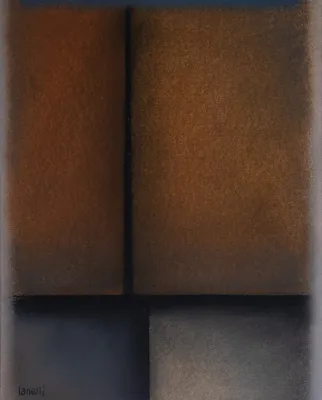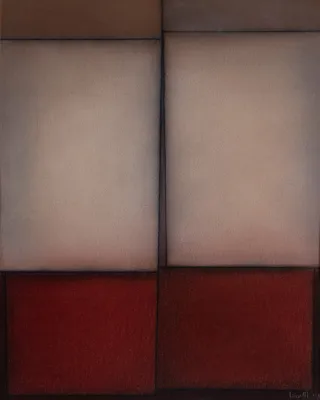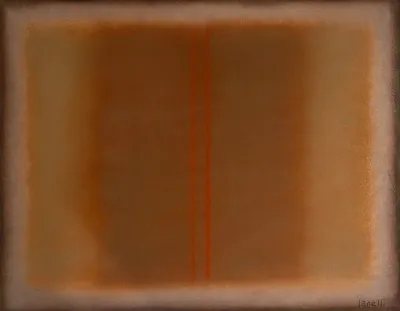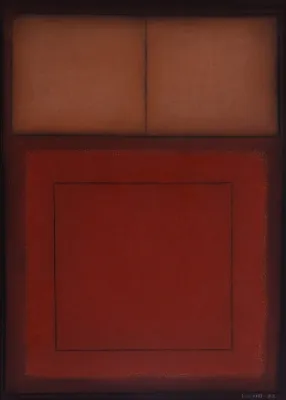

Waltércio Caldas (Rio de Janeiro RJ 1946)
Waltércio Caldas is a sculptor, draftsman, graphic artist and set designer. In 1964, he began studying painting with Ivan Serpa at the Museu de Arte Moderna do Rio de Janeiro (MAM/RJ). Between 1969 and 1975, he produced drawings, objects and photographs of a strongly conceptual character. In the 1970s, he taught at the Instituto Villa-Lobos, co-edited the magazine Malasartes, served on the Cultural Planning committee of MAM/RJ, took part in the publication A Parte do Fogo [The Part of Fire] and, together with Carlos Zilio, Ronaldo Brito and José Resende, published the article "O Boom, o Pós-Boom, o Dis-Boom" [The Boom, the Post-Boom, the Dis-Boom] in the newspaper Opinião.
In 1979, his production was the subject of the book Aparelhos [Apparatuses], with an essay by Ronaldo Brito, and in 1982 it was featured in Manual da Ciência Popular [Manual of Popular Science], part of Funarte's Arte Brasileira Contemporânea series. In 1986, Miguel Rio Branco's video Apaga-te Sésamo [Close, Sesame] focused on his work. In 1993, he received the Mário Pedrosa Prize from the Brazilian Association of Art Critics (ABCA) for a solo exhibition at the Museu Nacional de Belas Artes (MNBA) in Rio de Janeiro. In 1996, he published O Livro Velázquez [The Velázquez Book] and held the exhibition Anotações 1969/1996 [Notes 1969/1996] at the Paço Imperial, showing his study notebooks to the public for the first time.
Waltércio Caldas's work is recognized for its ability to induce a state of suspension in the observer. His creations challenge perceptual certainty and shift the viewer to a position of constant questioning, activating thought through calculated and rigorous compositions. The clarity and formal elegance of his works contrast with their unfinished nature and the suggestion of virtuality they carry, guiding the eye in a careful and subtle manner.
With refined formal intelligence and visual plays that sometimes incorporate humor, Waltércio Caldas encourages the viewer to transcend the usual gaze, revealing new possibilities for perceiving and understanding art.
Biography
Waltercio Caldas was born in Rio de Janeiro in 1946. At the age of 8, he visited a replica of the 14 Bis airplane displayed in the lobby of Santos Dumont Airport in Rio de Janeiro, which the artist considers "the first 'constructive' object I ever came across".
In the early 1960s, Waltercio Caldas became interested in art and began attending exhibitions in Rio de Janeiro. He studied with Ivan Serpa at the Museu de Arte Moderna do Rio de Janeiro - MAM/RJ starting in 1964.
The daily routine of classes and visits to the museum's collection brought him closer to modern and contemporary art.
Seeing works of art stimulated the artist's desire to respond to what he saw. As he stated, he began to be an "artist" by being a member of the public. The work of others awakened the desire for dialogue.
In 1965, he created his first graphic work: the cover of the book A Amazônia e a cobiça internacional [The Amazon and International Greed], by Arthur Cezar Ferreira Reis, for Editora Edinova, Rio de Janeiro.
In 1967, he began working as a technical draftsman and layout artist for Eletrobrás and participated in his first professional group exhibition, at Galeria Gead. At the time, he drew and created models of unlikely architectural projects.
In 1969, he created Condutores de Percepção [Perception Conductors], a pivotal work in his career. With it, he began a series of works made by inserting everyday objects into well-kept cases with a plaque bearing the work's title, a defining element. These works were exhibited in his first solo exhibition, at MAM/RJ, in 1973, to great acclaim. According to art critic Ronaldo Brito, the works on display are "much less an object of contemplation than an active way of conveying a thought, of producing a crisis in the spectator's mental habits".
In 1970, Waltercio created sets for the play A Lição [The Lesson] by Eugène Ionesco, directed by Ronaldo Tapajós and staged at the Conservatório Nacional de Teatro in Rio de Janeiro, constituting his first public work. In 1967, he had already noticed Svoboda's set designs at the Bienal Internacional de São Paulo.
In 1971, he participated for the first time in an art salon—the Salão de Verão [Summer Salon], at MAM, Rio de Janeiro—where he exhibited three box-objects. It was then that he first met the collector Gilberto Chateaubriand, who acquired the pieces in the exhibition.
Between 1971 and 1972, at the invitation of musician Reginaldo de Carvalho, director of the Instituto Villa-Lobos, he taught the Art and Visual Perception course there.
In 1973, Caldas held his first solo exhibition at MAM, Rio de Janeiro, featuring 21 drawings and 13 box-like objects. The exhibition received excellent critical, public, and market response. With it, the artist, along with Alfredo Volpi, won the Annual Travel Award from the Brazilian Association of Art Critics. Critic Ronaldo Brito wrote his first text on Waltercio Caldas's work—"Racional e absurdo" [Rational and Absurd]—about this exhibition, published in the newspaper Opinião, which marked the beginning of the relationship between the artist and the critic. In the text, Ronaldo Brito comments:
What interests him is the production of a click that provokes a moment of psychic disorientation in the viewer. Art, in this way, is much less an object of contemplation than an active way of conveying a thought, of producing a crisis in the viewer's mental habits. At a time when viewing art seems above all a refined social commitment, Waltercio Caldas's exhibition has the value of a refutation: that art is not just to be looked at, but to be thought about.
In 1975, the artist was invited by Pietro Maria Bardi to participate in the "Expo Bruxelles" in Belgium, along with the artist Alvim Correa (Brazilian, illustrator of the first edition of H.G. Wells's 1906 novel A Guerra dos Mundos [The War of the Worlds], one of the pioneers of science fiction literature). The event didn't take place, but Bardi invited the artist to present at the Museu de Arte de São Paulo - MASP, of which he was director.
He then held his first solo exhibition in São Paulo, titled "A Natureza dos Objetos" [The Nature of Objects], at the Museu de Arte de São Paulo Assis Chateaubriand - Masp. He presented 100 works, including drawings, objects, and photographs.
1978 was a year rich in achievements, in which the artist produced numerous works, such as Talco sobre Livro Ilustrado de Henri Matisse [Talc on a Book Illustrated by Henri Matisse], Convite ao Raciocínio [Invitation to Reasoning], Aparelho de Arte [Art Apparatus], Prato Comum com Elásticos [Ordinary Plate with Rubber Bands], Tubo de Ferro / Copo de Leite [Iron Tube / Glass of Milk] and A Experiência Mondrian [The Mondrian Experience]. It was also the year in which Waltercio Caldas began preparing Aparelhos, the first book on his body of work.
He made sculptures such as Convite ao Raciocínio [Invitation to Reasoning] and Objeto de Aço [Steel Object]. At this time, he created works that comment on works by established names in art history. He made A Experiência Mondrian [The Mondrian Experience] and Talco sobre Livro Ilustrado de Henri Matisse [Talc on a Book Illustrated by Henri Matisse]. This last work initiated other works based on books, such as Aparelhos (1979), Manual de Ciência Popular (1982) and Velázquez (1996).
The book Aparelhos was published by GBM Editora de Arte, Rio de Janeiro, in 1979, with an essay by Ronaldo Brito. The book presents a selection of works produced between 1967 and 1978. With distinctive editorial features, including previously unpublished works made exclusively for graphic contexts, among them Como Funciona a Máquina Fotográfica [How the Camera Works], of 1977, the book was designed by the artist and Paulo Venancio Filho. The cover features the work Dado no Gelo [Die on Ice]. At the opening of the essay, entitled "Os limites da arte e a arte dos limites" [The Limits of Art and the Art of Limits], Ronaldo Brito declares:
The work is bound by the limits of art; its demand is to situate itself there at the utmost extremes. More than consciousness, the work is obsessed with limits. It breathes this tension and draws strength from this ambiguity. What is art, what is not, when it is and when it ceases to be, how it can be and how it cannot be—these are the questions. But it does not pose them directly because that would be tantamount to denying them, escaping their constant pressure, defining itself as a consciousness that questions and answers. The work vibrates in these questions; these are its environment: only there does it produce meaning, organize, and stir senses. Its space is therefore the imminence of emptiness, the limits, what lies between, the lines that exist as a process of demarcation of different regions. It acts upon these lines, capturing the surrounding tension. And the work is nothing but these lines.
Regarding the book, critic Rodrigo Naves added, in an August 1979 text in the newspaper Leia Livros:
This book by Waltercio Caldas Jr. and Ronaldo Brito (text) is a work with a desire for itself. Let us then try to open it in a new way. To penetrate it and traverse it as it unfolds. After trying several alternatives, I was left with only one: to pierce this book and make some contact with this circular surface that would be created within the thickness of the paper. Coincidentally or not, this is precisely the movement of this work. However, concomitant with the hole must be the memory of the resistance offered by the pierced material, for its reaction to the cut is a condition for the delimitation of this paper profile. The nothingness that will be created reeks of the thickness traversed. And this thickness, in this case, is the languages and the circuit of art.
And, also about the book, Zulmira Ribeiro Tavares writes, in her text "Ironia e sentido" [Irony and Meaning]:
Waltércio Caldas and Cildo Meireles
More than in other books that disseminate the visual, in this one the graphic design itself results in a strongly structured montage. Its elements are part of a layout/production, that is, a layout that conditions perception to direct itself toward a unified material-support: the book itself. Volumes, surfaces, colors, and figurations lose part of their original condition and gain another, based on the graphic space. Therefore, from the book, a truly new space is created, almost with scenic characteristics. Through the reproductions, it conveys a strong impression of a retained and privileged moment, exactly as occurs on a stage, in this case, a stage populated not by beings, but by objects in programmed situations (Módulo magazine, no. 61, November 1980).
From the 1980s onward, the artist created a greater number of installations. In 1980, he created Ping Pong and 0 É Um [0 Is One]. Three years later, he showed A Velocidade [Speed] at the 17th Bienal Internacional de São Paulo. At the same time, he worked on a series of sculptures, dedicating himself primarily to this form in the second half of the decade. He made videos, drawings, and nearly invisible interventions in space, but his primary activity was sculpture.
In 1985, Caldas moved to New York, where he lived for a year. During this period, he worked on projects and created the work Escultura para Todos os Materiais Não Transparentes [Sculpture for All Non-Transparent Materials], which multiplies into several pairs of hemispheres of different sizes and materials (wood, granite, marble, etc.), a work of constant expansion that merges with the air. That same year, he took part in the "Panorama de Arte Atual Brasileira - Formas Tridimensionais" [Panorama of Current Brazilian Art - Three-Dimensional Forms] at the Museu de Arte Moderna de São Paulo.
In 1986, the video Apaga-te Sésamo [Close, Sesame], directed and photographed by Miguel do Rio Branco, was created based on a selection of the work. Produced by Studio Line / Rio Arte, the eleven-minute video won the award for best video and direction at the Maranhão Film and Video Festival, Embrafilme, that same year. On the video's release flyer, the artist writes:
Video is the name given to an electronic signal. The objects and sculptures recorded in this system present themselves more as images than as things. In fact, I almost believe in these "transparent things" as if they were close. The obvious is sometimes false.
In 1989, he installed his first public sculpture: O Jardim Instantâneo [The Instant Garden] in Parque do Carmo, São Paulo, and five years later, he produced another piece in an open space: Omkring, in Norway.
In 1993, he held the solo exhibition "O Ar Mais Próximo" [The Nearest Air] at the Museu Nacional de Belas Artes, Rio de Janeiro. The museum's enormous gallery was filled with thin, sparse, and sinuous lines of colored wool that hung from the ceiling, forming small [...], perhaps the artist's most radical exhibition on the question of the boundaries between the visible and the invisible, a recurring theme in a work that re-proposes "air" as "body." Here, Waltercio also radicalizes the photographic improbability of his pieces, which this time elude reproduction even further. The exhibition received the award for best work of the year in the country, the Mário Pedrosa Prize, awarded by the Association of Art Critics.
In 1996, he created the monument Escultura para o Rio [Sculpture for Rio], in downtown Rio de Janeiro, which highlights a synthesis of his work: the conceptual subtlety that has always characterized him, combined with an ability to mobilize public space. Also in 1996, he launched the work O Livro Velázquez [The Velázquez Book] and held the solo exhibition Anotações 1969/1996 [Notes 1969/1996] at the Paço Imperial, Rio de Janeiro, presenting his study notebooks for the first time.
In 2003, he held the solo exhibition "Waltercio Caldas: desenhos" [Waltercio Caldas: Drawings] at Artur Fidalgo Escritório de Arte, Rio de Janeiro. On the opening pages of the catalog accompanying the exhibition, the artist himself writes:
And the eyes, which go to the images wherever they are
And take them there, where they can smile at nonexistence.
Critiques
"The work is trapped within the limits of art; its requirement is to situate itself there in extremes. More than consciousness, the work is obsessed with limits. It breathes this tension and draws strength from this ambiguity. What is art and what is not, when it is and when it ceases to be, how it can be and how it cannot be—these are its questions. But it does not pose them directly because that would be tantamount to denying them, escaping their constant pressure, defining itself as a consciousness that questions and answers. The work vibrates in these questions; these are its environment: only there does it produce meaning, organize, and agitate meanings. Its space is therefore the imminence of the void, the limits, what lies between the lines that exist as a process of demarcation of different regions. It acts upon these lines, capturing the surrounding tension. And the work is nothing but these lines.
Let's say it is a kind of perverse device. Its eye, its calculation, would consist precisely in detecting the degrees of ambiguity and inadequacy of the art object, but of the concept of art, even more so of the institution of art.
All of this, of course, being a work of art.
One can imagine it in action: half-sullenly taking pleasure in dismantling the mechanisms that transform the work of art into an apparent totality, perfect in its circle, coherently dominating its circulation. In this sadistic process (which would also be masochistic), what counts above all is the power to disarticulate, to shuffle, the various instances that implicitly compose the work of art and mask its problematic constitution. It is, obviously, an analytical operation: deconstruction of the ground and walls of art (object, concept, circuit). The pleasure of the work, its thrill, only appears when the art is suspended, when art is placed in parentheses".
Ronaldo Brito
"Acoustic science knows of a phenomenon called combination sound, or third sound. If two notes of different but relatively close pitches are played simultaneously, their frequencies clash and produce a third, clearly audible note, equivalent to the difference between them. Although discovered in the 18th century, it is still unknown whether the third sound is a physical reality or a neurological reaction. By analogy, we could think of Waltercio Caldas's works as combination objects, or third objects. In them, there is great proximity, and therefore a clash, between the work's design and its physical presence. The design does not seem to precede the object; it could not be separated from it as an idea or a constructive method. However, the object is so mediated, so meticulously calculated, that it necessarily refers to a design. The volumes of Waltercio's sculptures are incorporeal, mental, and yet we cannot clearly define their geometry; we could not duplicate them or use them as modules. Things allude to space, but they do not depict it. If questioned, we would be forced to respond tautologically: 'This space here, which these things suggest'. Idea and body do not, therefore, occupy two separate places, one in thought, the other in space; they overlap, seeming to generate one another simultaneously. Like two close but different oscillations that enter into phase, thoughts and matter thus create a disturbance, a secondary vibration, which cannot be traced back to either one or the other primary frequency, although it is, quite clearly, a reflection of them. The substance of Waltercio's work lies precisely in this vibration, something that is neither body nor idea, something that we do not see in the work, but that we can intuit through or thanks to it. Where is the work, in this case? We would not bet on its physical reality, nor on its character as a mere illusion of the senses".
Lorenzo Mammì
"His sculptures in wood, glass, alcohol, and metal attest to the formal rigor ever present in his production and, at the same time, the mordacity with which he has almost always positioned himself in relation to art and its context. Observing his works, the visitor will realize that Caldas is currently immersing himself in the subversion of certain assumptions of the Constructivist tradition. His sculptures question the rigors of geometry applied to sculpture, criticize the physical participation of the public in the appreciation of the work (the glass pieces, if touched, can simply shatter), and, when they approach design—one of the Constructivist utopias—they deconstruct its concept of functionality. Caldas unleashes upon the Constructivist tradition an irony and critical awareness not seen with such intensity for years. The reason for this now-recovered gap perhaps lies in the artist's own trajectory. In 1979, his work gained notoriety with the publication of the book Aparelhos. There, critic Ronaldo Brito, analyzing the artist's work, highlights another possibility of making contemporary art in Brazil, apparently very far from that preached by the Nova Objetividade Brasileira [New Brazilian Objectivity], a trend dominated by Hélio Oiticica in the 1960s and 1970s.
Metaphorically, the book announced Oiticica's death the following year and, with it, the crumbling of that art with a romantic foundation, naively seeking to break down the barriers between art and life, artist and spectator. Caldas's production at the time—objects of Dadaist and Surrealist derivation, filtered through conceptual art—trampled on this libertarian romanticism.
In the 1980s, Caldas would undergo a circumstantial reversal, it seems: from an artist deeply concerned with the discourse on art, he would attempt to become a sculptor, probing and deepening the discourse of modern sculpture with each work. This was the moment when his production tended to lose its critical corrosion and approach a formalism without an exit".
Tadeu Chiarelli
"The movement of Waltercio's work within the sphere of Brazilian post-constructive art history, incorporating the Neoconcrete contribution and re-discussing its axioms and postulates through conceptual dialogue, is already a facet recognized by all who have followed the development of this work for over two decades. Beyond the cognitive interrogation of the concept, knowledge of this work brings an existential dimension.
In the project of expanding the field of vision by exploring a purely optical intelligence—Waltercio's art rarely has any embedded rhetoric—there is always a skeptical residue, in which the interrogation presents itself with a novelty: happy doubt. Perverting the positive logic that sustains worldly rationality and its petty praise of what has conventionally been called 'results,' these exercises insist on contradicting common sense. Denying the cult of the image and the false generosity of this universe full of figures and poor in reasoning, Waltercio's sculptures bring in their asceticism a subtle dose of humor from which pleasure derives. This existential dimension is realized in a chain process, in successive enigmas for the retina, in the promise that, if we do not stop using our intelligence, it is possible to live with reality, despite its brutality and absurd appearance".
Paulo Sérgio Duarte
Solo Exhibitions
1967
Rio de Janeiro RJ - Solo, at Galeria Gead
1973
Rio de Janeiro RJ - Waltercio Caldas: Objects and Drawings, at MAM/RJ - annual travel prize for best exhibition
1974
Rio de Janeiro RJ - Narratives, at Galeria Luiz Buarque de Hollanda e Paulo Bittencourt
1975
São Paulo SP - The Nature of Games, at Masp
São Paulo SP - Solo, at Galeria Luisa Strina
1976
Rio de Janeiro RJ - Waltercio Caldas Jr: Objects and Drawings, at MAM/RJ
1979
São Paulo SP - Aparelhos [Apparatuses], at Galeria Luisa Strina
São Paulo SP - Solo, at Gabinete de Arte Raquel Arnaud
1980
Rio de Janeiro RJ - Ping-Pong, at Galeria Saramenha
Rio de Janeiro RJ - Zero Is One, at Espaço ABC
1982
Rio de Janeiro RJ - Solo, at UFRJ
São Paulo SP - Waltercio Caldas: Sculptures, at Gabinete de Arte Raquel Arnaud
1983
São Paulo SP - Solo, at Gabinete de Arte Raquel Arnaud
1984
Rio de Janeiro RJ - Waltercio Caldas: Sculptures, at GB ARTe
1986
Rio de Janeiro RJ - Solo, at Galeria Paulo Klabin
São Paulo SP - Solo, at Gabinete de Arte Raquel Arnaud
1988
Rio de Janeiro RJ - Waltercio Caldas: Sculptures, at Funarte. Galeria Sérgio Milliet
Rio de Janeiro RJ - Waltercio Caldas: Four Curved Sculptures, at Galeria Paulo Klabin
1989
São Paulo SP - Solo, at Gabinete de Arte Raquel Arnaud
1990
Amsterdam (Netherlands) - Solo, at Pulitzer Art Gallery
Rio de Janeiro RJ - Waltercio Caldas: Drawings, at Galeria 110 Arte Contemporânea
1991
Kortrijk (Belgium) - Waltercio Caldas: Sculptures and Drawings, at Kanaal Art Foundation
São Paulo SP - Waltercio Caldas: Sculptures and Drawings, at Gabinete de Arte Raquel Arnaud
1992
Schiedam (Netherlands) - Waltercio Caldas: Sculptures and Drawings, at Stedelijk Museum
1993
Rio de Janeiro RJ - Waltercio Caldas: Sculptures, at MNBA - Mário Pedrosa Prize - exhibition of the year, awarded by ABCA
1994
Rio de Janeiro RJ - Entretexto, at UFF
São Paulo SP - Solo, at Gabinete de Arte Raquel Arnaud
1995
Geneva (Switzerland) - Solo, at Centre d'Art Contemporain
Rio de Janeiro RJ - Waltercio Caldas: Sculptures and Drawings, at Joel Edelstein Arte Contemporânea
1996
Rio de Janeiro RJ - The Story of the Stone, at Museus Castro Maya. Museu Chácara do Céu
Rio de Janeiro RJ - Notes 1969/1996, at Paço Imperial
1997
Madrid (Spain) - Waltercio Caldas: Sculptures, at Galeria Javier Lopes
Miami (United States) - Waltercio Caldas: new sculptures, at Quintana Gallery
1998
Rio de Janeiro RJ - Sea Never Name, at Centro Cultural Light
Rio de Janeiro RJ - Solo, at Galeria Paulo Fernandes
1999
Curitiba PR - Books, at Galeria Casa da Imagem
Rio de Janeiro RJ - Books, at MAM/RJ
New York (United States) - Domestic Pleasures, at Galerie Lelong
2000
Belo Horizonte MG - Solo, at Celma Albuquerque Galeria de Arte
Belo Horizonte MG - Books, at MAP
Rio de Janeiro RJ - A Room for Velázquez, at MNBA
Rio de Janeiro RJ - Solo, at Laura Marsiaj Arte Contemporânea
2001
Brasília DF - Waltercio Caldas: 1985/2000, at CCBB
Rio de Janeiro RJ - Waltercio Caldas: 1985/2000, at CCBB
São Paulo SP - Waltercio Caldas: Sculptures and Drawings, at Gabinete de Arte Raquel Arnaud
2002
Porto Alegre RS - Books, at Margs
São Paulo SP - Books, at Pinacoteca do Estado
2003
Rio de Janeiro RJ - Waltercio Caldas: Drawings, at Artur Fidalgo Escritório de Arte
2004
São Paulo SP - Solo, at Gabinete de Arte Raquel Arnaud
Group Exhibitions
1967
Rio de Janeiro RJ - Drawings, at Galeria Gead - 1st prize in drawing
1971
Rio de Janeiro RJ - 3rd Summer Salon, at MAM/RJ - special jury mention
1972
Rio de Janeiro RJ - 4th Summer Salon, at MAM/RJ - special jury mention
Rio de Janeiro RJ - Exhibition, at MAM/RJ
1973
Rio de Janeiro RJ - Some Aspects of Brazilian Drawing, at Galeria Ibeu Copacabana
Rio de Janeiro RJ - Inquiry into the Nature, Meaning and Function of the Work of Art, at Galeria Ibeu Copacabana
Rio de Janeiro RJ - The Face and the Work, at Galeria Grupo B
Rio de Janeiro RJ - International Avant-Garde, at Galeria Ibeu Copacabana
1974
Barcelona (Spain) - Arte Grafico Brasileño Hoy, at Sala de Exposiciones de la Direccion General de Bellas Artes
Campinas SP - 9th Campinas Contemporary Art Salon, at MACC
Campinas SP - Panorama of Brazilian Drawing, at MACC
Madrid (Spain) - Grabadores y Dibujantes Brasileños, at Museo de Arte Contemporaneo
Rio de Janeiro RJ - Brazilian Draftsmen, at Galeria Maison de France
Rio de Janeiro RJ - Drawings, at Galeria Intercontinental
1975
Campinas SP - (Arte), at MACC
Campinas SP - Waltercio Caldas, Rubens Gerchman, Carlos Vergara, José Resende, at MACC
Paris (France) - Brazilian Graphic Art, at Musée Galiera
Rio de Janeiro RJ - New Acquisitions, at MAM/RJ
1976
Belo Horizonte MG - Roots and Present Day, at Palácio das Artes
Brasília DF - Group show, at Fundação Cultural de Brasília
Recife PE - Group show, at Casarão de João Alfredo
Salvador BA - Brazilian Art of the 1960s/70s in the Gilberto Chateaubriand Collection, at MAM/BA
Salvador BA - Group show, at Museu de Arte da Bahia
1977
Brasília DF - Brazilian Art of the 1960s/70s in the Gilberto Chateaubriand Collection, at Fundação Cultural do Distrito Federal
Recife PE - Brazilian Art of the 1960s/70s in the Gilberto Chateaubriand Collection, at Casarão de João Alfredo
Rio de Janeiro RJ - Identification of Artist - a book, at EAV/Parque Lage
1981
Porto Alegre RS - Brazilian Artists of the 1960s and 1970s in the Rubem Knijnik Collection, at Espaço NO Galeria Chaves
Rio de Janeiro RJ - From the Modern to the Contemporary: Gilberto Chateaubriand Collection, at MAM/RJ
São Paulo SP - Art Research, at MAC/USP
São Paulo SP - Brazilian Artists, at Masp
São Paulo SP - Contemporary Brazilian Artists, at Galeria de Arte São Paulo
1982
Lisbon (Portugal) - Brazil 60 Years of Modern Art: Gilberto Chateaubriand Collection, at Centro de Arte Moderna José de Azeredo Perdigão
Lisbon (Portugal) - From the Modern to the Contemporary: Gilberto Chateaubriand Collection, at Centro de Arte Moderna José de Azeredo Perdigão
London (England) - Brazil 60 Years of Modern Art: Gilberto Chateaubriand Collection, at Barbican Art Gallery
Punta del Este (Uruguay) - International Sculptors Meeting
1983
Rio de Janeiro RJ - 3000 Cubic Meters, at Espaço Cultural Sérgio Porto
Rio de Janeiro RJ - Group show, at MAM/RJ
São Paulo SP - 17th Bienal Internacional de São Paulo, at Fundação Bienal
São Paulo SP - Imagining the Present, at Gabinete de Arte Raquel Arnaud
1984
Havana (Cuba) - 1st Havana Biennial
Niterói RJ - 1st Current Brazilian Art, at UFF
New York (United States) - Abstract Attitudes, at The Center for Inter-American Relations
Providence (United States) - Abstract Attitudes, at Rhode Island Museum of Art
São Paulo SP - Gilberto Chateaubriand Collection: Portrait and Self-Portrait of Brazilian Art, at MAM/SP
São Paulo SP - Group show, at Masp
São Paulo SP - Tradition and Rupture: A Synthesis of Brazilian Art and Culture, at Fundação Bienal
1985
São Paulo SP - 16th Panorama of Current Brazilian Art, at MAM/SP
1986
Porto Alegre RS - Rubem Knijnik Collection: Brazilian Art of the 1960s/70s/80s, at Margs
Rio de Janeiro RJ - Brazilian Contemporary Art Tendencies, at Galeria Montesanti
São Paulo SP - 12 Years, at Galeria Luisa Strina
São Paulo SP - The New Dimension of the Object, at MAC/USP
São Paulo SP - Group show, at Masp
1987
New York (United States) - Works on Paper, at CDS Gallery
Paris (France) - Modernity: 20th-Century Brazilian Art, at Musée d'Art Moderne de la Ville de Paris
Rio de Janeiro RJ - 11th Rio Art Salon, at Estação Carioca do Metrô
Rio de Janeiro RJ - To the Collector: Tribute to Gilberto Chateaubriand, at MAM/RJ
Rio de Janeiro RJ - Science and Culture Forum, Art and Word, at UFRJ
São Paulo SP - 19th Bienal Internacional de São Paulo, at Fundação Bienal
São Paulo SP - Palavra Imágica [Imagic Word], at MAC/USP
1988
Ribeirão Preto SP - Art Today 88, at Casa de Cultura
Rio de Janeiro RJ - Expression and Concept in the 1970s, at Galeria Gilberto Chateaubriand
Rio de Janeiro RJ - Paper in Space, at Galeria Aktuel
São Paulo SP - Group show, at Masp
São Paulo SP - Modernity: 20th-Century Brazilian Art, at MAM/SP
1989
Bauru SP - Drawing, a Generation, at Galeria Graffiti
Rio de Janeiro RJ - Our 1980s, at Casa de Cultura Laura Alvim
Rio de Janeiro RJ - Rio Today, at MAM/RJ
São Paulo SP - 10 Sculptors, at Gabinete de Arte Raquel Arnaud
São Paulo SP - 20th Bienal Internacional de São Paulo, at Fundação Bienal
São Paulo SP - Art in the Newspaper, at Jornal da Tarde
1990
Birmingham (England) - Transcontinental, at Ikon Gallery
Brasília DF - Brasília Visual Arts Prize, at MAB/DF
Los Angeles (United States) - Art Los Angeles
Rio de Janeiro RJ - Brazilian Contemporary Art, at Galeria 110 Arte Contemporânea
São Paulo SP - 21st Panorama of Current Brazilian Art, at MAM/SP
São Paulo SP - Color in Brazilian Art, at Paço das Artes
1991
Antwerp (Belgium) - América, at Koninklijk Museum voor Schone Kunsten
Belo Horizonte MG - UFMG Winter Festival, at Centro Cultural UFMG
Fortaleza CE - 2nd International Exhibition of Ephemeral Sculptures, at Fundação Demócrito Rocha
Rio de Janeiro RJ - Image upon Image, at Espaço Cultural Sérgio Porto
São Paulo SP - The Classical in the Contemporary, at Paço das Artes
São Paulo SP - Project: 100 Years of Avenida Paulista, at Casa das Rosas
1992
Antwerp (Belgium) - América, at Koninklijk Museum voor Schone Kunsten
Berlin (Germany) - Arte Amazonas, at Staatliche Kunsthalle
Berlin (Germany) - Klima Global, at Staatliche Kunsthalle
Brasília DF - Arte Amazonas, at Museu de Arte
Campinas SP - Award Winners of the Campinas Contemporary Art Salons, at MACC
Curitiba PR - 10th Curitiba City Printmaking Show/Mostra América, at Museu da Gravura
Kassel (Germany) - 9th Documenta, at Museum Fridericianum
Paris (France) - Amériques Latines: art contemporain, at Hôtel des Arts
Paris (France) - Latin American Artists of the Twentieth Century, at Centre Georges Pompidou
Rio de Janeiro RJ - 1st On the Way to Niterói: João Sattamini Collection, at Paço Imperial
Rio de Janeiro RJ - 4 Artists at Documenta, at Museu da República
Rio de Janeiro RJ - Arte Amazonas, at MAM/RJ
Rio de Janeiro RJ - Brazilian Contemporary Art, at EAV/Parque Lage
Rio de Janeiro RJ - Coca-Cola 50 Years with Art, at MAM/RJ
São Paulo SP - The 1960s/70s: Gilberto Chateaubriand Collection/Museu de Arte Moderna-RJ, at Galeria de Arte do Sesi
São Paulo SP - Arte Amazonas, at Fundação Bienal
São Paulo SP - Artists at Documenta, at Museu de Arte de São Paulo
São Paulo SP - Coca-Cola 50 Years with Art, at MAM/SP
São Paulo SP - Group show, at Masp
Seville (Spain) - Latin American Artists of the Twentieth Century, at Estación Plaza de Armas
1993
Berlin (Germany) - Klima Global, at Staatliche Kunsthalle
Brasília DF - A Look at Joseph Beuys, at Fundação Athos Bulcão
Cologne (Germany) - Klima Global, at Staatliche Kunsthalle
Cologne (Germany) - Latin American Artists of the Twentieth Century, at Kunsthalle Cologne
Florence (Italy) - Brasil: Segni d'Arte, at Biblioteca Nazionale Centrale di Firenze
Milan (Italy) - Brasil: Segni d'Arte, at Biblioteca Nazionale Braidense
New York (United States) - Latin American Artists of the Twentieth Century, at MoMA
New York (United States) - Two Works, at John Gibson Gallery
New York (United States) - Waltercio Caldas and José Resende, at John Gibson Gallery
Rio de Janeiro RJ - Erotic Art, at MAM/RJ
Rio de Janeiro RJ - Brazil 100 Years of Modern Art, at MNBA
Rio de Janeiro RJ - Emblems of the Body: The Nude in Brazilian Modern Art, at CCBB
Rome (Italy) - Brasil: Segni d'Arte, at Centro de Estudos Brasileiros
São Paulo SP - Brazilian Art in the World, a Trajectory: 24 Brazilian Artists, at Dan Galeria
São Paulo SP - The Presence of the Ready-Made: 80 Years, at MAC/USP
São Paulo SP - Eduardo Sued, Nuno Ramos, Frida Baranek, Waltercio Caldas, at Espaço Arte do Shopping Morumbi
São Paulo SP - Prints, at Espaço Namour
São Paulo SP - Modern Drawing in Brazil: Gilberto Chateaubriand Collection, at Galeria de Arte do Sesi
São Paulo SP - Poetics, at Gabinete de Arte Raquel Arnaud
Vancouver (Canada) - Out of Place, at Vancouver Art Gallery
Venice (Italy) - Brasil: Segni d'Arte, at Fondazione Scientifica Querini Stampalia
Aachen (Germany) - Arte Amazonas, at Ludwig Forum für Internationale Kunst
1994
Fortaleza CE - Artist's Book, at Centro de Artes Visuais Raimundo Cela
Frankfurt (Germany) - The Thickness of the Sign: Brazilian Contemporary Drawing, at Karmeliter Kloster
New York (United States) - Mapping, at MoMA
Rio de Janeiro RJ - Art Has the Word, at MNBA
Rio de Janeiro RJ - Group show, at MAM/RJ
Rio de Janeiro RJ - Brazilian Printmaking, at Galeria Gravura Brasileira
Rio de Janeiro RJ - Book-Object: The Frontier of Voids, at CCBB
Rio de Janeiro RJ - Modern Drawing in Brazil: Gilberto Chateaubriand Collection, at MAM/RJ
Rio de Janeiro RJ - Precision, at CCBB
Rio de Janeiro RJ - Trenches: Art and Politics in Brazil, at MAM/RJ
São Paulo SP - Arte Cidade 2: The City and Its Flows
São Paulo SP - Bienal Brasil Século XX, at Fundação Bienal
Turin (Italy) - Weltanschaung, at Goethe Institut
1995
Curitiba PR - 11th Curitiba City Printmaking Show, at Fundação Cultural de Curitiba. Solar do Barão
New York (United States) - Art from Brazil in New York: Cildo Meireles, Waltercio Caldas, at Galeria Lelong
New York (United States) - Brazilian New York, at Galerie Lelong
New York (United States) - Drawing on Chance, at MoMA
Rio de Janeiro RJ - Contemporary Challenges, at Galeria PA Objetos de Arte
Rio de Janeiro RJ - Money, Fun and Art, at CCBB
Rio de Janeiro RJ - A Poetics of Reflection, at Conjunto Cultural da Caixa
São Paulo SP - Between Drawing and Sculpture, at MAM/SP
São Paulo SP - Book-Object: The Frontier of Voids, at MAM/SP
1996
Brasília DF - Art and Urban Space: Fifteen Proposals, at Ministério das Relações Exteriores. Palácio do Itamaraty
Caracas (Venezuela) - Sin Fronteras: arte latinoamericano actual, at Museo Alejandro Otero
Rio de Janeiro RJ - 4 Artists, at Galeria Paulo Fernandes
Rio de Janeiro RJ - The 1970s: Photolanguage, at EAV/Parque Lage
Rio de Janeiro RJ - Interiors, at MAM/RJ
Rio de Janeiro RJ - Mensa/Mensae, at Funarte. Centro Nacional de Folclore e Cultura Popular
Rio de Janeiro RJ - Small Hands, at Paço Imperial
São Paulo SP - 23rd Bienal Internacional de São Paulo, at Fundação Bienal
São Paulo SP - Brazilian Art: 50 Years of History in the MAC/USP Collection: 1920-1970, at MAC/USP
São Paulo SP - Urban Sculptures, at Gabinete de Arte Raquel Arnaud
São Paulo SP - Small Hands, at Centro Cultural Alumni
1997
Curitiba PR - The Contemporary Art of Printmaking, at Museu Metropolitano de Arte de Curitiba
Girona (Spain) - Cegueses, at Museo d'Art
Little Rock (United States) - Re-Aligning Visions: alternative currents in South American drawing, at Arkansas Art Center
New York (United States) - Re-Aligning Visions: alternative currents in South American drawing, at Museo del Barrio
Porto Alegre RS - 1st Bienal de Artes Visuais do Mercosul, at Aplub, Casa de Cultura Mário Quintana, DC Navegantes, Edel, Usina do Gasômetro, Instituto de Artes da UFRGS, Fundação Bienal de Artes Visuais do Mercosul, Margs, Espaço Ulbra, Museu de Comunicação Social, Reitoria da UFRGS and Theatro São Pedro
Porto Alegre RS - Cartographic Strand, at Usina do Gasômetro
Rio de Janeiro RJ - Air: Exhibition of Visual Arts, Toys, Objects and Models, at Paço Imperial
Rio de Janeiro RJ - Ibeu: 60 Years, at Galeria Ibeu Copacabana
Rio de Janeiro RJ - Petite Galerie 1954-1988: A View of Brazilian Art, at Paço Imperial
Santa Monica (United States) - 4 Artists from South America, at Christopher Grimes Gallery
São Paulo SP - 25th Panorama of Brazilian Art, at MAM/SP
São Paulo SP - Diversity of Brazilian Contemporary Sculpture, at Avenida Paulista - organized by the Ministério da Cultura/Itaú Cultural
São Paulo SP - Brazilian Sculpture: Profile of an Identity, at Espaço Cultural Safra
São Paulo SP - Intervals, at Paço das Artes
São Paulo SP - Three-Dimensionality in 20th-Century Brazilian Art, at Itaú Cultural
Uberlândia MG - 2 Masters: Small Formats, at Galeria Mônica Marques
Venice (Italy) - 47th Venice Biennale
Washington (United States) - Brazilian Sculpture: Profile of an Identity, at Centro Cultural do BID
1998
Austin (United States) - Re-Aligning Visions: alternative currents in South American drawing, at Archer M. Huntington Art Gallery
Belo Horizonte MG - Three-Dimensionality in 20th-Century Brazilian Art, at Itaú Cultural
Berlin (Germany) - Der Brasilianische Blick, at Haus der Kulturen der Welt
Brasília DF - Three-Dimensionality in 20th-Century Brazilian Art, at Galeria Itaú Cultural
Buenos Aires (Argentina) - Grabados Brasileños, at Instituto de Estudos Brasileños
Caracas (Venezuela) - Re-Aligning Visions: alternative currents in South American drawing, at Museo de Bellas Artes
Monterrey (Mexico) - Re-Aligning Visions: alternative currents in South American drawing, at Museo de Arte Contemporáneo
Niterói RJ - 25th Panorama of Brazilian Art, at MAC/Niterói
Niterói RJ - Mirror of the Biennial, at MAC/Niterói
Penápolis SP - Three-Dimensionality in 20th-Century Brazilian Art, at Galeria Itaú Cultural
Recife PE - 25th Panorama of Brazilian Art, at Mamam
Ribeirão Preto SP - The Dimensions of Contemporary Art, at Museu de Arte de Ribeirão Preto Pedro Manuel-Gismondi
Rio de Janeiro RJ - The Image of the Sound of Caetano Veloso, at Paço Imperial
Rio de Janeiro RJ - The 1960s/70s: Gilberto Chateaubriand Collection, at MAM/RJ
Rio de Janeiro RJ - O Bonequinho Viu: 60 Years 1938-1998, at CCBB
Rio de Janeiro RJ - Johnnie Walker Prize, at MNBA
Rio de Janeiro RJ - A View of Contemporary Art, at MNBA
Salvador BA - 25th Panorama of Brazilian Art, at MAM/BA
Santa Monica (United States) - Amnesia, at Christopher Grimes Gallery
São Paulo SP - 24th Bienal Internacional de São Paulo, at Fundação Bienal
São Paulo SP - 2nd Philips Eletromídia de Arte, at Museu da Casa Brasileira
São Paulo SP - Elective Affinities I: The Collector's Eye, at Casa das Rosas
São Paulo SP - The Dimensions of Contemporary Art, at Museu de Arte de Ribeirão Preto
São Paulo SP - Transitive Forms: Brazilian Art, Construction and Invention 1970/1998, at Gabinete de Arte Raquel Arnaud
São Paulo SP - Frontiers, at Itaú Cultural
São Paulo SP - Multiples, at Valu Oria Galeria de Arte
São Paulo SP - O Bonequinho Viu: 60 Years 1938-1998, at Museu da Casa Brasileira
São Paulo SP - The Modern and the Contemporary in Brazilian Art: Gilberto Chateaubriand Collection - MAM/RJ, at Masp
São Paulo SP - Theory of Values, at MAM/SP
1999
Bogotá (Colombia) - Amnesia, at Biblioteca Luis Ángel Arango
Cincinnati (United States) - Amnesia, at The Contemporary Arts Center
Miami (United States) - Re-Aligning Visions: alternative currents in South American drawing, at Miami Art Museum
New York (United States) - Global Conceptualism: points of origins 1950s-1980s, at The Queens Museum of Art
Rio de Janeiro RJ - Everyday/Art. Object 1960s/90s, at MAM/RJ
Rio de Janeiro RJ - Rio Printmaking Show. Contemporary Impressions, at Paço Imperial
Santa Monica (United States) - Waltercio Caldas, Cildo Meireles, Mira Schendel, Tunga, at Christopher Grimes Gallery
São Paulo SP - Recent Acquisitions, at MAM/SP
São Paulo SP - Absence, at MAM/SP
São Paulo SP - Everyday/Art. Object 1960s/90s, at Itaú Cultural
São Paulo SP - Why Duchamp?, at Paço das Artes
2000
Belo Horizonte MG - Investigations: Are They or Aren't They Prints?, at Itaú Cultural
Brasília DF - Investigations: Are They or Aren't They Prints?, at Galeria Itaú Cultural
Buenos Aires (Argentina) - Brasil: plural y singular, at Museo de Arte Moderno de Buenos Aires
Colchester (England) - Outros 500: Highlights of Brazilian Contemporary Art in UECLAA, at Art Gallery - University of Essex
Curitiba PR - 12th Curitiba Printmaking Show. Marks of the Body, Folds of the Soul
Curitiba PR - Acquisition and Collection Project, at Museu da Gravura
Itapiranga SC - Frontiers - sculpture installation
Lisbon (Portugal) - 20th Century: Art of Brazil, at Centro de Arte Moderna José de Azeredo Perdigão
New York (United States) - Icon + Grid + Void, at The Americas Society
Rio de Janeiro RJ - Situations: Brazilian Art of the 1970s, at Fundação Casa França-Brasil
São Paulo SP - Brasil + 500 Rediscovery Exhibition. Contemporary Art, at Fundação Bienal
São Paulo SP - Between Art and Design: MAM Collection, at MAM/SP
São Paulo SP - Constructive Readings, at Gabinete de Arte Raquel Arnaud
2001
Oxford (England) - Experiment Experiência: art in Brazil 1958-2000, at Museum of Modern Art
Porto Alegre RS - 3rd Bienal de Artes Visuais do Mercosul
Porto Alegre RS - Liba and Rubem Knijnik Collection: Brazilian Contemporary Art, at Margs
2001
Recife PE - Palavraimagem, at Mamam
Rio de Janeiro RJ - The Spirit of Our Time, at MAM/RJ
São Paulo SP - The 1970s: Trajectories, at Itaú Cultural
São Paulo SP - The Spirit of Our Time, at MAM/SP
São Paulo SP - Trajectory of Light in Brazilian Art, at Itaú Cultural
2002
Brasília DF - Fragments to Their Magnet, at Espaço Cultural Contemporâneo Venâncio
Liverpool (England) - Pot
Londrina PR - Are They or Aren't They Prints?, at Museu de Arte de Londrina
Madrid (Spain) - ARCO/2002, at Parque Ferial Juan Carlos I
Niterói RJ - Sattamini Collection: Sculptures and Objects, at MAC/Niterói
Niterói RJ - Dialogue, Antagonism and Replication in the Sattamini Collection, at MAC/Niterói
New York (United States) - Tempo, at MoMA
Passo Fundo RS - Prints: Paulo Dalacorte Collection, at Museu de Artes Visuais Ruth Schneider
Porto Alegre RS - Prints: Paulo Dalacorte Collection, at Museu do Trabalho
Rio de Janeiro RJ - Something Is in the Air, at Paço Imperial
Rio de Janeiro RJ - Artefoto, at CCBB
Rio de Janeiro RJ - Paths of the Contemporary 1952-2002, at Paço Imperial
Rio de Janeiro RJ - Between Word and Image: Module 1, at Sala MAM-Cittá América
Rio de Janeiro RJ - Identities: The Brazilian Portrait in the Gilberto Chateaubriand Collection, at MAM/RJ
Rio de Janeiro RJ - Parallels: Brazilian Art of the Second Half of the 20th Century in Context, Colección Cisneros, at MAM/RJ
São Paulo SP - 4th Artecidadezonaleste, at Sesc Belenzinho
São Paulo SP - Geometric and Kinetic, at Gabinete de Arte Raquel Arnaud
São Paulo SP - Map of Now: Recent Brazilian Art in the João Sattamini Collection of the Museu de Arte Contemporânea de Niterói, at Instituto Tomie Ohtake
São Paulo SP - Parallels: Brazilian Art of the Second Half of the 20th Century in Context, Colección Cisneros, at MAM/SP
São Paulo SP - Pot, at Galeria Fortes Vilaça
2003
Brasília DF - Artefoto, at CCBB
Iowa City (United States) - Layers of Brazilian Art, at Faulconer Gallery
Madrid (Spain) - ARCO/2003, at Parque Ferial Juan Carlos I
Rio de Janeiro RJ - Drawing in the 1970s, at MAM/RJ
Rio de Janeiro RJ - Black and White Project, at Silvia Cintra Galeria de Arte
São Paulo SP - The Subversion of Media, at Itaú Cultural
São Paulo SP - ARCO 2003, at Gabinete de Arte Raquel Arnaud
São Paulo SP - Art and Society: A Controversial Relationship, at Itaú Cultural
São Paulo SP - Sculptors - Sculptures, at Pinakotheke
Vila Velha ES - The Salt of the Earth, at Museu Vale do Rio Doce
2004
Rio de Janeiro RJ - 30 Artists, at Mercedes Viegas Escritório de Arte
Rio de Janeiro RJ - Brazilian Contemporary Art in Rio Collections, at MAM/RJ
São Paulo SP - Contemporary Art: An Open History, at Gabinete de Arte Raquel Arnaud
São Paulo SP - Photography and Sculpture in the MAM Collection - 1995 to 2004, at MAM/SP