
Sepp Baendereck (Užice, Iugoslávia, atual Sérvia 1920 - São Paulo SP 1988)
Sepp Baendereck was a painter, draftsman, illustrator, photographer and advertising executive. He studied law at the University of Belgrade, in what was then Yugoslavia (now Serbia), interrupting his studies in 1941 because of the Nazi invasion. He served successively in the Yugoslav and German armies and was demobilized in 1942. He moved to Berlin, where he attended the Faculty of Political and Economic Sciences and a drawing school.
In 1944, because of the bombing of Berlin, he moved to Zagreb (now Croatia), where he studied painting at the School of Fine Arts. In 1948, he settled in Rio de Janeiro and began working for a billboard company. He opened an advertising design studio which, in 1954, became the agency Studio Ás de Propaganda and, in 1957, Denison Propaganda S/A.
He moved the agency to São Paulo and settled in the city in 1959. He became interested in the Amazon, making his first trip to the region in 1974. From then on, he frequently visited the forest, getting to know, in 1976, the Araguaia and Tocantins rivers and the Trans-Amazonian Highway, which he photographed extensively. In 1978, accompanied by Frans Krajcberg and the critic Pierre Restany, he traveled along the Purus, Solimões and Negro rivers. This experience gave rise to the Manifesto do Rio Negro – Naturalismo Integral [Rio Negro Manifesto – Integral Naturalism]. In the 1980s, he made new expeditions to the region, but over time the Amazon theme gave way to the depiction of flowers in vibrant colors.
Critical Commentary
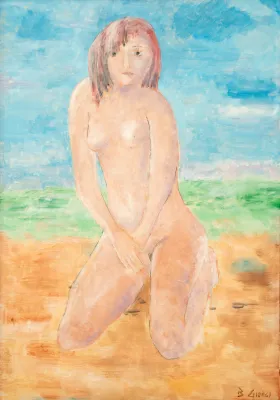
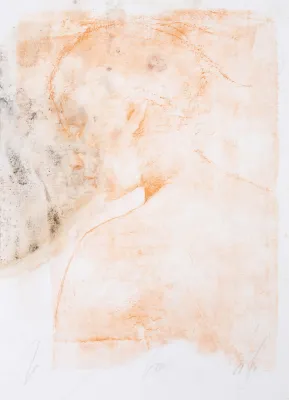
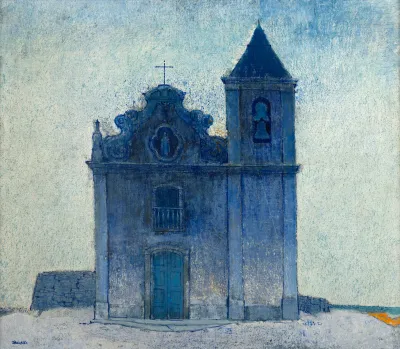
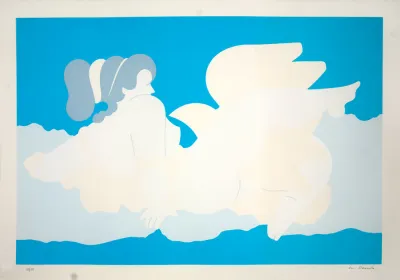
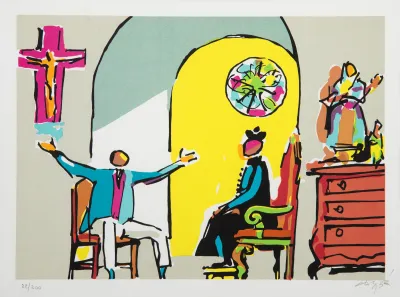
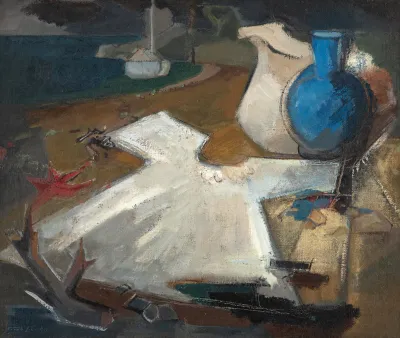
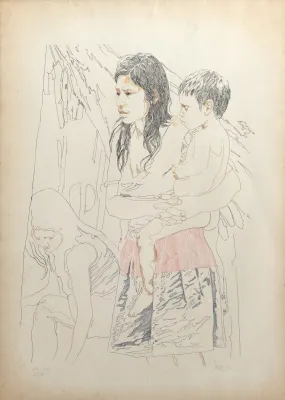
Sepp Baendereck's work draws on multiple references. A certain Cézannian touch can be seen in works from the 1940s, such as Paisagem de Zagreb [Zagreb Landscape] (1946). The 1950s, already in Brazil, brought geometricized landscapes such as Leblon (1956) and Regata no Flamengo [Regatta at Flamengo] (1952). He illustrated the book of poems Puro Canto by Tasso da Silveira, published in 1956. In these illustrations, the handling is spare, and the image is built with a thin, sinuous line.
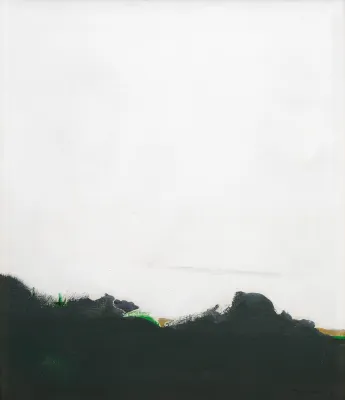
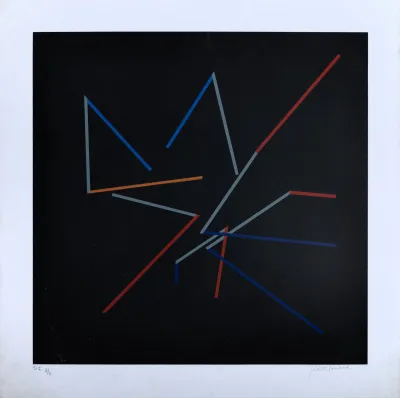
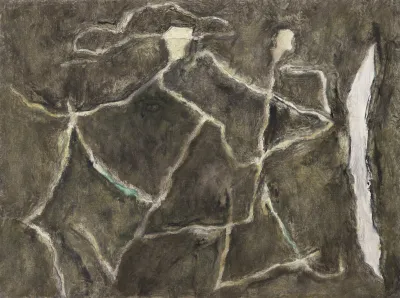
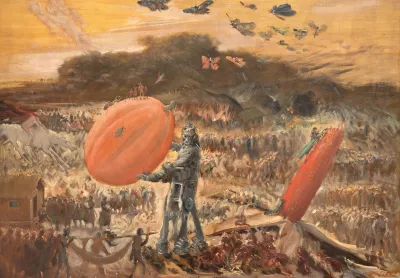
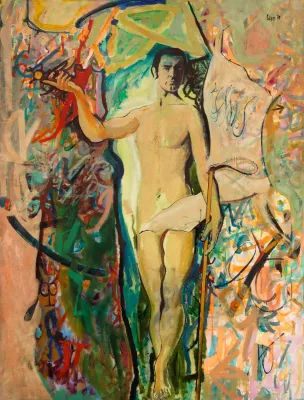
In the 1960s, Baendereck made paintings exploring graphic marks and symbols, as in Súplica de Paz [Plea for Peace] (1966) and Ponto e Contraponto Omega [Point and Counterpoint Omega] (1967). In these works, the artist creates and develops personal signs while combining Christian symbols with letters of the alphabet. In 1986, he organized the exhibition Brasil Natureza Morta [Brazil, Dead Nature] in São Paulo. On that occasion he showed drawings on the destruction of the Amazon rainforest. Works such as Dantesca [Dantesque] (1986), Apocalíptica [Apocalyptic] (1986) and Catastrófica [Catastrophic] (1985) speak of the forest fires the artist witnessed.
For this exhibition, Baendereck drew on the Rio Negro Manifesto of Integral Naturalism, which he signed with the critic Pierre Restany and the artist Frans Krajcberg in 1978. The manifesto sought to lay the conceptual foundations for a new environmental and existential awareness, integral naturalism. The idea is that art, like the human view of the environment, should be stripped of the pursuit of power in any sphere, in order to find a new, heightened sensibility, free of judgment and directly linked to perception.
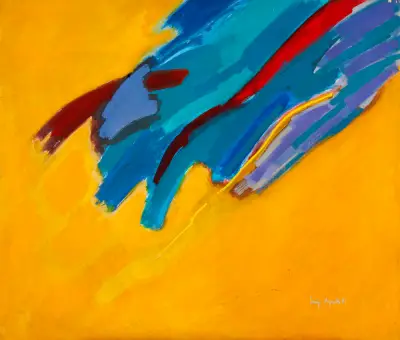
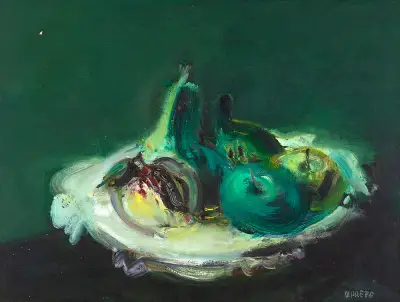
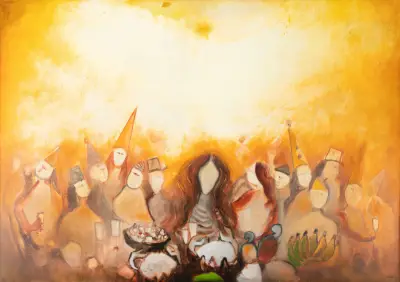
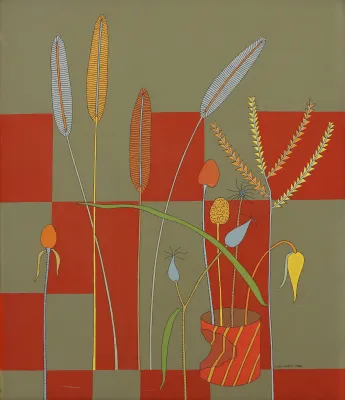
The exhibition Natureza Viva [Living Nature], held in 1987, marked a turning point in Baendereck's production. The artist abandoned the white and gray drawings of the previous year and showed paintings of chromatic richness, varied brushwork and a tendency toward abstraction, as in Allegro and Palmas II.
Critiques
"And we see in Sepp's painting, beyond its material and chromatic qualities organized in magmas of color, we see, we repeat, a mystical semiotics that can only be decoded, like parables, through ideoplastic analysis. And so we can no longer call acronyms, logos, logogriphs or ideograms the series of cabbalistic emblems that bursts from Sepp Baendereck's painting like the fibrillation of colors on the façade of a temple painted by an Impressionist. For it is not a matter of a façade. Nor of a nave. It is a matter of an altarpiece".
José Geraldo Vieira
PONTUAL, Roberto. Dicionário das artes plásticas no Brasil. Apresentação de Antônio Houaiss. Textos de Mário Barata et al. Rio de Janeiro: Civilização Brasileira, 1969.
"(...) For the artist and for the man, the Amazon was the beginning and the end. He identified so closely with the region, its beauty, mysteries, joys and tragedies, that his art became a direct reflection of the life and death that existed and still exist there. I remember writing that there was one Sepp before the Amazon and another after it. I said Sepp was our Rugendas, our contemporary Debret, unveiling and revealing the forest in all its fullness or decline. For the artist, the Amazonian universe came to take part in, to become integrated into, his mental, intellectual, emotional and psychological world. Painting, drawing and engraving the Amazon in vivid, brilliant colors or in the neutral tones of grays, charcoal shadows, graphite lead, earths and ochers seduced Sepp, taking him over completely. (...) When in his (...) exhibition he showed enormous drawings depicting the remains of the destroyed, burned, charred forest, he gave us a tragic preview of an atomic holocaust. (...) The colorist in Sepp emerges on canvases 'drawing like nature'. Baudelaire, from the height of his wisdom, also said that 'colorists are epic poets'. Sepp undoubtedly fits the definition. His flowers are poems in which he sings the beauty of life, the pleasure of being here, of existing. To see only flowers in these paintings is a lack of vision, of imagination. Beyond the petals, corollas, stamens, pistils and branches, there is a celebration. Find it and join in. And live".
Carlos von Schmidt
LOUZADA, Júlio. Artes plásticas: seu mercado, seus leilões. São Paulo: J. Louzada, 1984-.
"In other words, the denunciation in Sepp's current work gives way to very fluent and accomplished drawing, with graphic values and a skillful economy of color. On the one hand, it is even a traditional drawing. On the other, it is the drawing of someone who has fully mastered the technique and uses it as an intermediary for an exercise of will. In earlier painting exhibitions also about the Amazon, Sepp had not managed to detach himself so effectively from the subject. Here he does - and that is good. The Amazon is merely the pretext for him to let his hand and mind roam over vast spaces, with evident ease and pleasure".
Olívio Tavares de Araújo
ARAÚJO, Olívio Tavares de. "Com naturalidade e prazer" [With Ease and Pleasure]. In: IstoÉ, São Paulo, 11 de junho de 1986.
Testimonials
"In my work, I want to show people, the land and things simply as they appear, to analyze them through the models I find and not through my mind... - as my friend Krajcberg says - 'human imagination is infinitely poorer than the prodigious creativity of nature (God)'... Photography is an important aid to my vision and memory. The camera sees with only one eye; my vision is binocular, which results in a double interpretation. What one sees in my painting is therefore essentially a double image, a reality twice interpreted, twice filtered, twice focused and lit. There is no risk of deception. It is a truthful painting. What I paint is not fantasy. ... This inexplicable compulsion of mine to paint is today closely linked to the world in which I have lived for almost 30 years, to this immense Amazon, to this Brazil that I love more than the land where I was born. This is my ambition: I want to be, humbly, a reporter of this Brazil, as Frans Post, Debret and Rugendas were. I have a commitment to Brazil".
Sepp Baendereck
BAENDERECK, Sepp. In: Novas Notícias do Brasil: catálogo. São Paulo, 1977.
"Today I look at Brazil with great excitement. A Brazil very different from the one I knew when I arrived, an immigrant without a profession, in 1948. Rio was a civilized, beautiful city, where there was poverty but not destitution. Today that has been reversed. It is a country in disharmony, aesthetics is the scarcest commodity, and we work only to pay debts. That is why every day it is more necessary to invent, to create. Brazilians can no longer live off imitation and the exploitation of their nature.... I am a free painter. I do only what I want, without worries, without depending on income from painting to live. But I live for painting".
Sepp Baendereck
BAENDERECK, Sepp. In: Gazeta Esportiva. São Paulo, 1986.
Solo Exhibitions
1947 - Graz (Austria) - Solo
1951 - Rio de Janeiro RJ - Solo, at MEC
1964 - São Paulo SP - Solo, at Seta Galeria de Arte
1965 - Belo Horizonte MG - Solo, at Galeria Guignard
1965 - Salvador BA - Solo, at Galeria Querino
1966 - Rio de Janeiro RJ - Solo, at Galeria Relevo
1969 - São Paulo SP - Solo, at Galeria Astreia
1970 - Munich (Germany) - Solo, at Brasilianische General Konsulat
1970 - Rio de Janeiro RJ - Solo, at Petite Galerie
1970 - Santos SP - Sepp Baendereck: pinturas [Sepp Baendereck: Paintings], at Centro Cultural Brasil-Estados Unidos
1970 - São Paulo SP - Sepp Baendereck: 25 anos de pintura [Sepp Baendereck: 25 Years of Painting], at MAM/SP
1971 - Alicante (Spain) - Solo, at Galeria Arrabal - Calosa de Ensarria
1971 - Rio de Janeiro RJ - Sepp Baendereck: 25 anos de pintura [Sepp Baendereck: 25 Years of Painting], at MAM/RJ
1971 - São Paulo SP - Solo, at Galeria Astreia
1972 - Guarujá SP - Solo, at Hotel Jequitimar
1972 - Rio de Janeiro RJ - Solo, at Galeria de Arte Ipanema
1972 - São Paulo SP - Solo, at Galeria de Arte Portal
1973 - Belo Horizonte MG - Solo, at Galeria Guignard
1974 - Guarujá SP - Solo, at Hotel Jequitimar
1974 - Rio de Janeiro RJ - Solo, at Petite Galerie
1974 - São Paulo SP - Solo, at Petite Galerie
1976 - Rio de Janeiro RJ - Brasil: terra e gente [Brazil: Land and People], at Petite Galerie
1976 - São Paulo SP - Brasil: terra e gente [Brazil: Land and People], at Masp
1976 - São Paulo SP - Pinturas de Sepp Baendereck [Paintings by Sepp Baendereck], at Petite Galerie
1977 - São Paulo SP - Novas Notícias do Brasil [New News from Brazil], at Galeria Arte Global
1981 - São Paulo SP - Imagens da Amazônia [Images of the Amazon], at Galeria de Arte São Paulo
1982 - New York (United States) - Solo, at Kouros Gallery
1984 - São Paulo SP - Solo, at Galeria Suzanna Sassoun
1985 - Manaus AM - Solo, at Teatro do Amazonas
1986 - São Paulo SP - Brasil Natureza Morta [Brazil, Dead Nature], at Paulo Figueiredo Galeria de Arte
1987 - São Paulo SP - Natureza Viva [Living Nature], at Galeria Múltipla de Arte
Group Exhibitions
1946 - Graz (Austria) - Exhibition with the Sezession Group
1951 - Rio de Janeiro RJ - 57th National Salon of Fine Arts, at MNBA
1951 - São Paulo SP - 1st São Paulo International Biennial, at Pavilhão do Trianon
1952 - Rio de Janeiro RJ - 1st National Salon of Modern Art, at MAM/RJ - honorable mention
1953 - Rio de Janeiro RJ - 2nd National Salon of Modern Art, at MNBA
1953 - São Paulo SP - 2nd São Paulo International Biennial, at Pavilhão dos Estados
1954 - São Paulo SP - 3rd São Paulo Salon of Modern Art, at Galeria Prestes Maia
1959 - São Paulo SP - 8th São Paulo Salon of Modern Art, at Galeria Prestes Maia
1963 - São Paulo SP - 12th São Paulo Salon of Modern Art, at Galeria Prestes Maia
1965 - São Paulo SP - 8th São Paulo International Biennial, at Fundação Bienal
1965 - São Paulo SP - 14th São Paulo Salon of Modern Art, at Galeria Prestes Maia - silver medal
1966 - São Paulo SP - 15th São Paulo Salon of Modern Art, at Galeria Prestes Maia
1967 - São Paulo SP - 1st Exhibition of the Advertising Visual Artist - best advertising painter prize
1967 - São Paulo SP - 9th São Paulo International Biennial, at Fundação Bienal
1968 - Brasília DF - Federal District Salon of Modern Art
1969 - Santo André SP - 2nd Santo André Contemporary Art Salon, at Paço Municipal
1969 - São Caetano do Sul SP - 3rd São Caetano do Sul Contemporary Art Salon - acquisition prize
1969 - São Paulo SP - 1st Panorama of Current Brazilian Art, at MAM/SP
1969 - São Paulo SP - 1st São Paulo Contemporary Art Salon, at Masp
1970 - Rio de Janeiro RJ - 19th National Salon of Modern Art, at MAM/RJ
1970 - Santo André SP - 3rd Santo André Contemporary Art Salon, at Paço Municipal
1970 - São Paulo SP - 2nd Panorama of Current Brazilian Art, at MAM/SP
1971 - Belo Horizonte MG - 8 Artistas Paulistas [8 São Paulo Artists], at A.M.I.
1971 - Paris (France) - Salon d'Automne
1971 - São Paulo SP - 3rd São Paulo Contemporary Art Salon
1971 - São Paulo SP - Galleries Group Show, at Hebraica
1971 - São Paulo SP - Inaugural, at Galeria Portal
1975 - São Paulo SP - 13th São Paulo International Biennial, at Fundação Bienal
1976 - São Paulo SP - 8th Panorama of Current Brazilian Art, at MAM/SP
1976 - São Paulo SP - 10th Art and Ecological Thought, at Viaduto Jacareí
1977 - São Paulo SP - Galleries Group Show, at Hebraica
1977 - São Paulo SP - 14th São Paulo International Biennial, at Fundação Bienal
1977 - São Paulo SP - 9th Panorama of Current Brazilian Art, at MAM/SP
1978 - São Paulo SP - 16th Art and Ecological Thought, at Cetesb
1979 - São Paulo SP - 11th Panorama of Current Brazilian Art, at MAM/SP
1984 - Rio de Janeiro RJ - Active Brazilian Painting, at Espaço Petrobras
1985 - Brasília DF - Active Brazilian Painting, at Fundação Cultural do Distrito Federal
1986 - São Paulo SP - Coleção Denison [Denison Collection], at Masp
1991 - São Paulo SP - Baendereck-Krajcberg, at Banco Santander
1992 - Rio de Janeiro RJ - Nature: Four Centuries of Art in Brazil, at Centro Cultural Banco do Brasil
Posthumous Exhibitions
1991 - São Paulo SP - Baendereck-Krajcberg, at Banco Real
1992 - Rio de Janeiro RJ - Nature: Four Centuries of Art in Brazil, at CCBB
Source: Itaú Cultural