
Maureen Bisilliat (Englefield Green, Surrey, Inglaterra 1931)
Maureen Bisilliat is a photographer. She studied painting in Paris and New York before settling permanently in Brazil, in the city of São Paulo, in 1957. In the early 1960s, she exchanged painting for photography, working for Editora Abril from 1964 to 1972 on the magazine Realidade. She is the author of photography books inspired by the works of great Brazilian writers: A João Guimarães Rosa [To João Guimarães Rosa] (1966); A Visita [The Visit] (1977), based on the poem of the same name by Carlos Drummond de Andrade (1902–1987); Sertão, Luz e Trevas [Backlands, Light and Darkness] (1983), inspired by the classic by Euclides da Cunha (1866–1909); O Cão sem Plumas [The Dog Without Feathers] (1984), based on the poem by João Cabral de Melo Neto (1920–1999); Chorinho Doce [Sweet Chorinho] (1995), with poems by Adélia Prado (1935); and Bahia Amada Amado [Beloved Bahia, Amado] (1996), with a selection of texts by Jorge Amado (1912–2001).
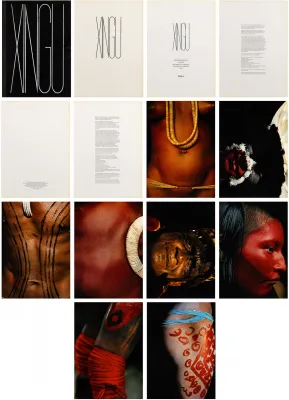
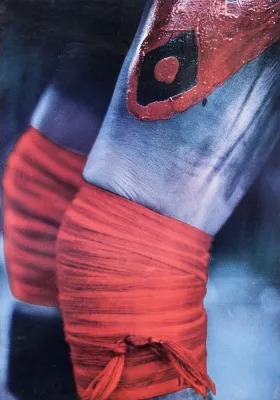
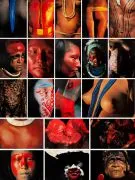
In 1985, in a special room at the 18th São Paulo International Biennial, she exhibited a photographic essay inspired by the book O Turista Aprendiz [The Apprentice Tourist], by Mário de Andrade (1893–1945). Also noteworthy are her own works Xingu Território Tribal [Xingu Tribal Territory] (1979) and Terras do Rio São Francisco [Lands of the São Francisco River] (1985). From the 1980s she devoted herself to video work, notably Xingu/Terra, a feature-length documentary shot with Lúcio Kodato in the Mehinaku village in the Upper Xingu.
In 1988, she was invited by the anthropologist Darcy Ribeiro (1922–1997), together with Jacques Bisilliat (her second husband) and Antônio Marcos Silva (her business partner), to assemble a collection of Latin American folk art for the Fundação Memorial da América Latina. She traveled with Jacques to Mexico, Guatemala, Ecuador, Peru and Paraguay to gather pieces for the permanent collection of the Pavilhão da Criatividade [Creativity Pavilion], of which she became curator.
Critical Commentary
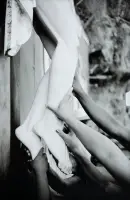
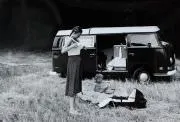
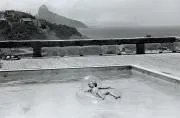
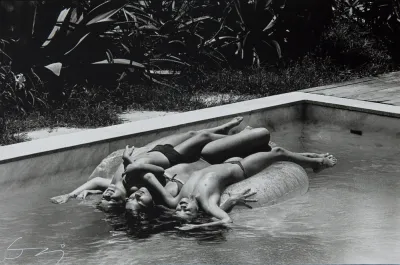
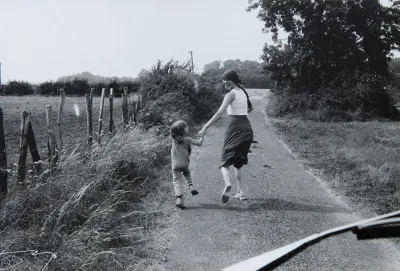
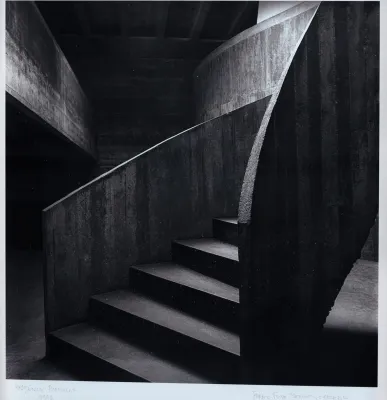
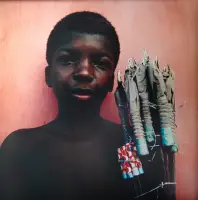
Maureen Bisilliat made her name in Brazil, where she has lived since the 1950s, working in the field of photography. Throughout her career, technique serves what seems to be a project of increasingly seeking ways to combine literary texts and images, which may perhaps be explained by her professional experience as a graphic designer in England. From the 1960s, she photographs Brazil as related (and imagined) in the work of renowned writers, among them Guimarães Rosa (1908 - 1967), Euclides da Cunha (1866 - 1909) and João Cabral de Melo Neto (1920 - 1999). In the books resulting from this photographic-literary project, the photo captions are replaced by excerpts from the works, which shows a concern, even at the start of her career as a photographer - the book A João Guimarães Rosa, for example, dates from 1966 - with making photography a kind of narrative element, whose subject sometimes suggests sequence, story and rhythm. Part of this may result from her work as a journalist: Bisilliat is a photographer for Editora Abril's Realidade magazine, for which she produces one of her best-known works, the essay Caranguejeiras [Crab Catchers]. In a mangrove swamp in Pernambuco, she records the work of women crab catchers, who plunge into the mud and are covered in it from head to toe. Far from denouncing the harsh living conditions of the crab catchers, Bisilliat shows their gestures and movements in the photos as a kind of dance. At times the painter seems to influence the photographer, at times exactly the opposite. Even after leaving photojournalism, this concern with recording and sometimes rescuing an "unknown" Brazil continues to guide much of her work.
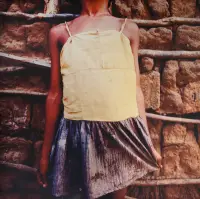
This interest in recording the backlands and the Northeast also seems to guide her photographic-literary works. After reading Grande Sertão: Veredas [The Devil to Pay in the Backlands], Bisilliat travels, at the suggestion of Guimarães Rosa himself,1 in search of the settings of the novel, in order to "bear witness to that world". The result is the book A João Guimarães Rosa, which combines excerpts from Grande Sertão with the photographer's images. Besides drawing parallels between writing and photography, the book - although it often relates subject and excerpt directly - is almost a poetic-visual rereading of Guimarães Rosa's work. If, to illustrate the sentence "Trabalhar é amassar as mãos... que isso é que sertanejo pode, mesmo na barra da velhice" [To work is to knead one's hands... that is what a backlander can do, even on the threshold of old age], she uses a rather literal image - an elderly woman working - the almost lyrical force of this image overrides any merely educational intention of showing the reader the world described by Guimarães Rosa, giving way to her own vision of Grande Sertão and, above all, of Brazil.
In the photograph illustrating the sentence "Eu sou donde eu nasci. Sou de outros lugares" [I am from where I was born. I am from other places], for example, Bisilliat practically creates a new character for the book, a taciturn man with a rigid gaze, standing on the boundary between fiction and reality. This boundary, it is worth recalling, is one of the things that draw Bisilliat to Guimarães Rosa's work: in order to discover what was real in the book, she paradoxically captures images that hover between fiction and reality. Even in a typical scene, such as a cowhand driving a herd of cattle, the image seems to speak more of literature than of the real world. Even if the captions were journalistic in nature, the photographic essay would be more poetic than reportage. This explains why Bisilliat leaves photography and devotes herself to video. Her documentaries carry something of the poetic force of her photographic work.
Note
1 MENGOZZI, Federico. Brasilidade. Conversa com Maureen Bisilliat. Nossa América, Revista Memorial da América Latina, nº 21, 2004. Disponível em: [http://www.memorial.sp.gov.br/memorial/revistaNossaAmerica/21/port/64-brasilidade.htm]. Acesso em: março 2006.
Critiques
"The themes of a Brazil sometimes forgotten or still hidden in the bends of the road, the traces of popular festivals or the imposing figures of the Xingu Indigenous peoples turned Maureen Bisilliat into a pioneer who somehow reminded the people of this land of slices of reality they were forgetting to document. (...)
(...) Gestures and clothing are present from her earliest works, among them the rough figures discovered in her readings of Grande Sertão: Veredas or the photographic essays she published in the first phase of Realidade magazine, including the women at the edge of the mangrove - the Caranguejeiras - of Pernambuco (...)"
Casimiro Xavier de Mendonça
MENDONÇA, Casimiro Xavier de. Maureen. Jornal da Tarde, São Paulo, 15 jul. 1978. p. 30.
"Her photographs never set out to document crab catching (...), nor did the epic mural, solemn as a litany, of João Cabral de Melo Neto's incomparable text serve as her script. It was, as she confirms, an affinity: the poet decodes a reality and she deciphers it in another, coinciding language, in which the images evoke a tactile sense, the text is heard as music, and the words trace lines of color in the poem."
Leo Gilson Ribeiro
RIBEIRO, Leo Gilson. No mangue com dignidade. O Estado de S. Paulo, São Paulo, 05 dez. 1984.
"The magic of the O Turista Aprendiz space at the 18th São Paulo International Biennial was not born with a simple wave of a wand. That would be so easy. But it is not. The magicians (for there are several, brought together by the strength, charisma and magic of Maureen Bisilliat) worked, and worked hard. Into the space they put knowledge and passion, technique and faith, logic and emotion, competence and intuition. Ingredients which, fused together, set off an explosion of beauty and enchantment (...) How to explain, if not by an inexplicable force, the stamina that allowed Maureen to accomplish a feat of this scale (...)."
Stefania Bril
BRIL, Stefania. Leitura fotográfica do Turista Aprendiz. O Estado de S. Paulo, São Paulo, 06 out. 1985.
Collections
Coleção Pirelli/Masp de Fotografias - São Paulo SP
Solo Exhibitions
1965 - São Paulo SP - Solo, at Masp
Group Exhibitions
1971 - São Paulo SP - Fotógrafos de São Paulo [São Paulo Photographers], at MAC/USP
1975 - São Paulo SP - Xingu/Terra, Special Room at the 13th São Paulo International Biennial
1979 - New York (United States) - Xingu/Terra, Margaret Mead Film Festival, at Museum of Natural History
1982 - New York (United States) - Xingu/Terra, at Museum of Natural History
1985 - São Paulo SP - 1st Photography Quadrennial, at MAM/SP
1985 - São Paulo SP - O Turista Aprendiz - Viagem pelo Amazonas até o Peru/pelo Madeira até a Bolívia/por Marajó até Dizer Chega [The Apprentice Tourist - Journey along the Amazon to Peru/along the Madeira to Bolivia/through Marajó until Enough Is Enough], Special Room at the 18th São Paulo International Biennial
1987 - Paris (France) - O Turista Aprendiz [The Apprentice Tourist], Special Room at Salon de la Photographie de Paris/La Défense
1989 - São Paulo SP - Teatro do Presídio [Prison Theater], Special Room at the 20th São Paulo International Biennial, Theater Section
1991 - São Paulo SP - 2nd International Studio of Image Technologies, at Sesc/Pompeia
1991 - São Paulo SP - Coleção Pirelli/Masp de Fotografias [Pirelli/Masp Photography Collection], at Masp
1992 - Zurich (Switzerland) - Brasilien: Entdeckung und Selbstentdeckung [Brazil: Discovery and Self-Discovery], at Kunsthaus
1994 - San Francisco (United States) - Contemporary Brazilian Photography: A Selection of Photographs from the Collection of Joaquim Paiva, at Yerba Buena Center for the Arts
1995 - Rio de Janeiro RJ - Contemporary Brazilian Photography, at CCBB
1996 - Bogotá (Colombia) - Imágenes de Brasil. Coleção Pirelli/Masp de Fotografias [Images of Brazil. Pirelli/Masp Photography Collection], at Casa do Brasil
1996 - Buenos Aires (Argentina) - Imágenes de Brasil. Coleção Pirelli/Masp de Fotografias [Images of Brazil. Pirelli/Masp Photography Collection], at Museo Nacional de Bellas Artes
1996 - Caracas (Venezuela) - Imágenes de Brasil. Coleção Pirelli/Masp de Fotografias [Images of Brazil. Pirelli/Masp Photography Collection], at Museo de Arte Contemporáneo de Caracas Sofía Imber
1998 - Rio de Janeiro RJ - A Imagem do Som de Caetano Veloso [The Image of the Sound of Caetano Veloso], at Paço Imperial
1998 - São Paulo SP - Amazônicas [Amazonian Women], at Itaú Cultural
1999 - Wolfsburg (Germany) - Brasilianische Fotografie [Brazilian Photography], at Kunstmuseum Wolfsburg
2001 - São Paulo SP - Três Brasis [Three Brazils], at Galeria Marta Traba - Memorial da América Latina
2002 - São Paulo SP - Photographs in the Collection of the Museu de Arte Moderna de São Paulo, at MAM/SP
2002 - São Paulo SP - Visions and Illuminations: Contemporary Brazilian Photography from the Joaquim Paiva Collection, at Oca
2003 - São Paulo SP - MAM Photography Collectors Club, at MAM/SP
2003 - São Paulo SP - Labirintos e Identidades: a fotografia no Brasil de 1945 a 1998 [Labyrinths and Identities: Photography in Brazil from 1945 to 1998], at Centro Universitário Maria Antonia
2003 - São Paulo SP - MAC USP 40 Years: Contemporary Interfaces, at MAC/USP
2003 - São Paulo SP - Negras Memórias, Memórias de Negros: o imaginário luso-afro-brasileiro e a herança da escravidão [Black Memories, Memories of Black People: The Luso-Afro-Brazilian Imaginary and the Legacy of Slavery], at Galeria de Arte do Sesi
2004 - São Paulo SP - Brasileiro, Brasileiros [Brazilian, Brazilians], at Museu Afro-Brasil
2004 - São Paulo SP - Canção do Dia de Sempre [Song of Every Day], at Memorial da América Latina
2004 - São Paulo SP - Photography and Sculpture in the MAM Collection - 1995 to 2004, at MAM/SP
2004 - São Paulo SP - São Paulo 450 Years: the Image and Memory of the City in the Instituto Moreira Salles Collection, at Centro Cultural Fiesp
Source: Itaú Cultural