
Fernando Lemos (Lisboa, Portugal 1926 - 2019)
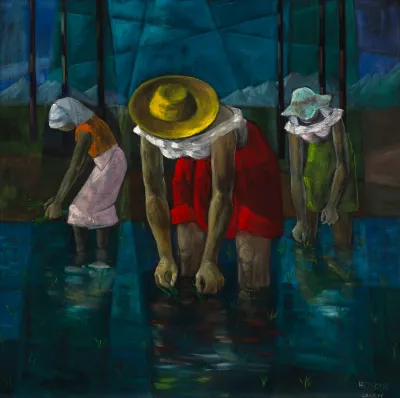
Fernando Lemos was a graphic designer, photographer, draftsman, painter, weaver, engraver, muralist and poet. After attending the Antonio Arroio School of Decorative Arts, between 1938 and 1943, he studied painting at the National Society of Fine Arts, in Lisbon. At the beginning of the 1950s, he began to dedicate himself more intensely to photography, recording images of intellectuals and artists linked to the surrealist movement, in addition to everyday scenes transformed by light effects. He acted as a draftsman in industrial lithographs and collaborated with poems and illustrations in the magazine Uni/Pentacórnio. In 1953, he moved to Brazil and settled in São Paulo, where he started to work with drawing and painting, developing a non-figurative production.
Luised Graphic Arts at the Faculty of Architecture and Urbanism of the University of São Paulo (FAU/USP). Between 1968 and 1970, he presided over the Brazilian Association of Industrial Design (ABDI), of which he was a founding member. As a writer and illustrator, he joined the newsroom of the newspaper Portugal Democratic, an organ of the Portuguese political exiles in Brazil, between 1955 and 1975. In 2003, he published the book Na Casca do Ovo, the principle of industrial design, with his Written on Design by Editora Rosari.
Critical Comment
Fernando Lemos works as a photographer in Portugal, in the early 1950s, and participates in an intellectual environment of resistance to the Salazar dictatorship. His production has an experimental character, of surrealist inspiration and is close to the work of Man Ray (1890 - 1976).
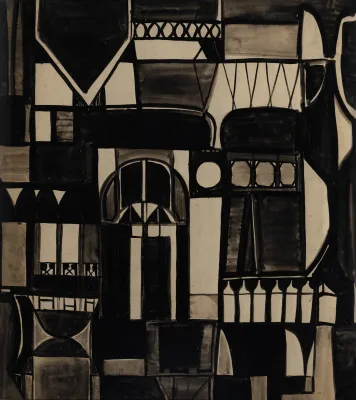
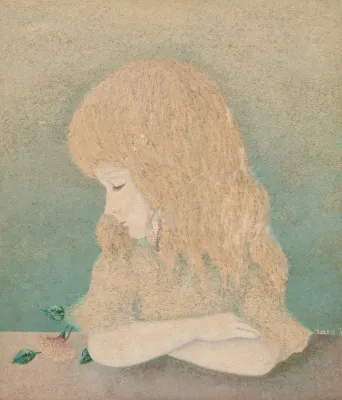
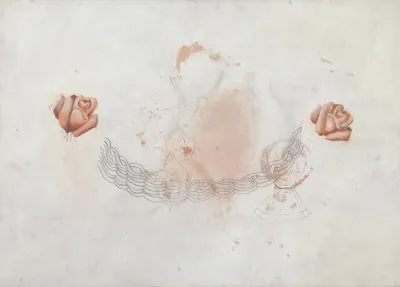
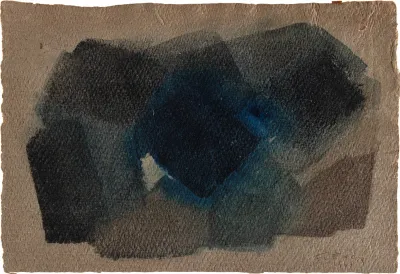
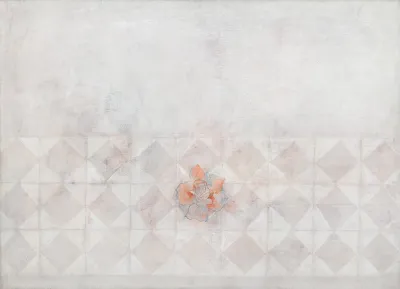
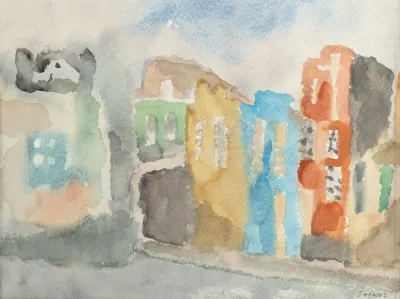
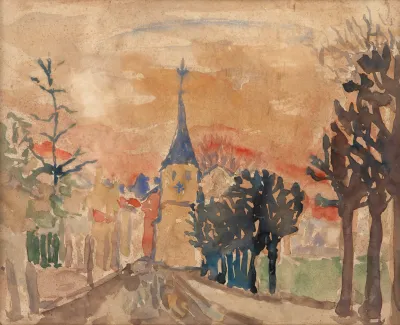
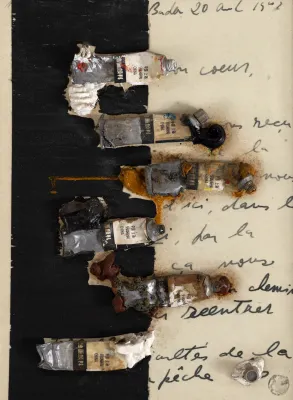
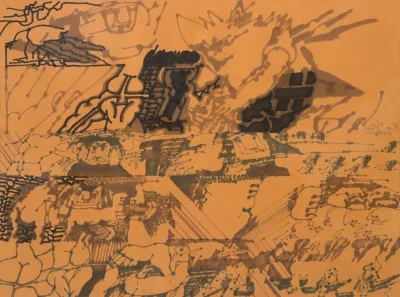
Come to Brazil and resides for some time at Pensão Mauá, in Rio de Janeiro, where he photographs writers and artists. In 1953, part of his photographs were exhibited at the Museum of Modern Art in São Paulo - MAM/SP and at the Museum of Modern Art in Rio de Janeiro - MAM/RJ. His production is close to that of modern Brazilian photographers active since the late 1940s, linked to Foto Cine Clube Bandeirante. 1951/1952, in which the luminosity is revealed in lines that subtly cut a closed environment. The short period in which he dedicates himself more intensely to photography ends soon after his transfer to Brazil. Then, he starts working with drawing and painting, and has a non-figurative production, initially using in the compositions cut out shapes of the background, which often approach graphic signs, in compositions structured mainly by the line, as in symbols, 1967. In other works, It uses geometry in an expressive way and, later, starts to create organic forms that also evoke symbols. It also explores the luminosity of the watercolor.
Lemos also works in the areas of visual communication and graphic planning, and as an illustrator for several publications. directs, with Décio Pignatari (1927), the creative studio Maitiry, in São Paulo. His production as a designer remains little known.
Cerves
Artificial and cultural collection of the palaces of the State of São Paulo - São Paulo SP
Collection of the Pinacoteca do Estado de São Paulo/Brazil - São Paulo SP
Centro Cultural São Paulo - CCSP - São Paulo SP
Bienal de São Paulo Foundation - São Paulo SP
Calouste Gulbenkian Foundation - Lisbon (Portugal)
Museum of Contemporary Art of the University of São Paulo - MAC/USP - São Paulo SP
Museum of Chiado - Lisbon (Portugal)
Criticism
"The initial trait of the painter Fernando Lemos is to present himself intellectually in the midst of the mass of artists who are not (and is really in practice as a poet and writer) (...) Proposition to the rhythm is made by the line that is not, however, animated by an internal force capable of renewing itself in progress, in an indeterminate direction, or even in a curve with a destiny. (...) Pictorial plot is characterized by a color scheme that approaches and that, by the superposition of shapes and marks, become toned areas, often on a cold scale, or areas defined by the contrast of warm tones, between the crossings of shapes, screen intervals not reached by the brush and on which the painter's attention is turned, who leaves them blank or reinforces them as bright spots, as signs."
Mário Pedrosa
CAVALCANTI, Carlos; Ayala, Walmir, ed. Brazilian Dictionary of Plastic Artists. Presentation by Maria Alice Barroso. Brasília: MEC/INL, 1973-1980. (Specialized Dictionaries, 5).
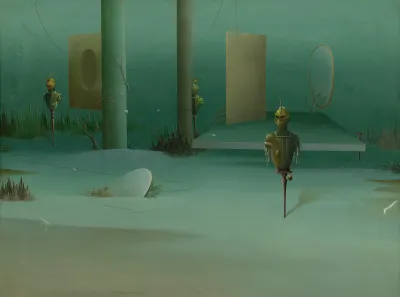
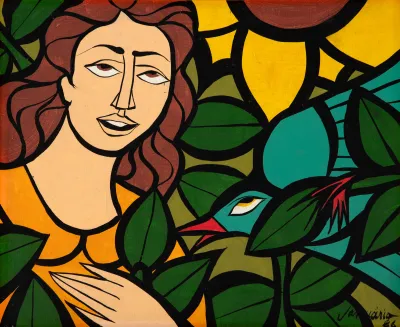
"Fifty years ago, Fernando Lemos participated in his first exhibition in Lisbon, where he was born; shortly afterwards, he emigrated to Brazil, due to his firm opposition to the Salazar dictatorship. (...) of work, it is inevitable that some different Fernandos exist within their production, both in terms of the varied techniques that they dominate and use - he is a designer, painter, photographer, visual programmer and eventually a poet - as well as stylistic changes. They will remember their language in the 1950s, when they participated in the São Paulo Biennials, since the second, receiving on Wednesday the award for best national designer (...). 70, an unorthodox geometric abstractionist, neither an heir nor an epigon of concretism, but a very organized and precise one; Aracy Amaral came to speak of his 'rigor'. It is, therefore, almost disconcerting to find a painting that cannot even be considered abstract - as it visibly dates the figure here and there and makes explicit -, and puts its roots in fantasy and lyricism. But baffling only means disconcerting; It is not a qualitative value judgment. The surprise ends, on the contrary, being positive, as it reveals the opening of the range of interests and expressive possibilities of a mature artist, but always willing to take a risk. To a closer observation, it also reveals its coherence, who knows a circular trajectory, a point of arrival that is linked to the starting point. In the paintings and watercolors of the last five years, organic forms reappear that seem to have developed with the freedom and strength of natural things, as well as a type of construction, of space composition, which has a lot to do with the work of the 1950s (...) another integrating element. Even the organized geometry of the 70s never ceased to be, in Fernando Lemos, of an intuitive and affective nature and with an expressive purpose, not merely a formalist one".
Olívio Tavares de Araújo
lemos, Fernando. Canvas and Watercolors. Presentation Olívio Tavares de Araújo. São Paulo : Multiple Art, 2000. [p. 3].
"From Fernando Lemos' photographs, it can be said, in the first analysis that they are close to a certain surrealist aesthetic. But will this be enough to clarify? In fact, when Fernando Lemos took his photographs, between 1949 and 1951, the great creative period of surrealism had passed long ago. We read this is not among its late epigones. More than a formal affiliation, it is undoubtedly a conjunction of profound intentions, or if you prefer, of fragments of common territories. One of these territories would perhaps be found in what Brassai beautifully called 'the perpetual incognito of photography', which allows him to 'penetrate phenomena, unravel his forms'. Around 1950, the history of photography was written mainly in Germany (with the 'subjective photography'), or in the USA (with Minor White or Harry Callaham, for example), with the concern of unmarking pictorialism, by the very modernist with an autonomy of the photographic form. It is evident that Fernando Lemos did not start from this concern. It does not seek to affirm a means in its language, but above all to enter an uncertain zone of phenomena and sensations, to which it will try to unravel forms instead of imposing a rule on them whose logic depends only on the environment itself. It is with this objective that it resorts to procedures identified as 'surrealists' (solarization, overlaps, negative and positive impressions), whose function is not to build a language but rather to open the way to appearances and unexpected encounters. It is undoubtedly also for this reason that elements are found in his work that serve to divide, to blur the image - fragmentation, networks, framings, everything that removes and fragments the image, as is frequent, for example, in Man Ray".
Regis Durand
Durand, Redis. Fernando Lemos or the lightness of the sign. In Avila, María Jesús. Surrealism in Portugal 1934-1952. Preface by E. Cuadrado Lisbon: Museu do Chiado; Badajoz: Museo Extremeño and Iberoamericano de Arte Contemporáneo, 2001. p. 143.
Testimations
"Why are you interested in photography?
There are several reasons. One is that I didn't have much information from foreign photographers - the photography that was taken in Portugal, at that time, was the sunset, the little boat from Nazaré, the landscape of Lisbon. I felt, not just in photography, but in the visual arts, that we didn't have an image. Portugal was a country without an image. The painters were good but we didn't have a painting. We don't have a face! Spain has! There was this dryness. With the inspiration of the surrealist thing, the imagination on the loose, we started to discuss a lot of what the image was.
At the time, how did you see it? Surrealist Photographer? Or just surrealist?
surrealist, painting, drawing, writing poetry. I began to assume the attitude of the unconscious of freedom of expression, which was a European wave. In fact, in Portugal - with the exception of the neo-realists - there was no movement that had constituted in the name of freedom. And surrealism filled a lot of holes. So I went to take a photograph after photography.
(...)
So why during those four years didn't you do anything other than photography? Is it four magical years?
Absolutely! What I wanted was to capture images of all those people, of our coexistence, which was from the opposition, who were my friends, older people, who were making my mind. Attention: Portugal was divided, we were from Portugal that did not exist. My position on photography was also to witness this and make photography as if I were painting. Many people made a mistake imagining that I took negatives and put them on top of the other. I never did that. There is no overlay of images. My machine was not automatic, it was a reflex, it had to turn. He worked an image as if he were drawing it or painting it - with some automatism, there is the surrealist side - and then he hid a certain reality and then added another one that merged. Without any lab trick but with a lot of rigor - as I do in my drawing: things were born without being fixed. With the precision of an electrocardiogram, without any retouching, it is not possible to cheat. Automatism also has no retouching - that is, it has to respect the images that appear and not manufacture them. I was a primitive in the matter of photography. I didn't go after great techniques. There is more: the great influences I had were not from photographers, but from painters - Max Ernst, the Cubist painters, German expressionism. . .
When did you come into contact with surrealist photographers?
In the 70s and such, with the book that came out in the flammarion, the camera dark - which is a collection of all surrealist photography in the world. It was a wonder for me to find things similar to those I did before..."
Fernando Lemos (2 Jan 2002)
Interview with Fernando Lemos at: http://www. Instituto-Camoes. PT/Noticiario/Arts/Flemos. htm. Accessed on 24. 05. 2002.
Individual exhibitions
1952 - Lisbon (Portugal) - Photos of various things, March Gallery
1953 - Rio de Janeiro RJ - Photos, at MAM/RJ
1953 - São Paulo SP - Photographs, at MAM/SP
1954 - Lisbon (Portugal) - Individual, at the Gallery of March
1954 - São Paulo SP - Individual, at MAM/SP
1956 - São Paulo SP - Individual, at MAM/SP
1958 - São Paulo SP - Individual, at MAM/SP
1960 - São Paulo SP - Individual, at the São Luís Art Gallery
1960 - Paris (France) - Individual, at Galerie 1900-2000
1962 - São Paulo SP - Individual, at the São Luís Art Gallery
1962 - Paris (France) - Individual, at the Galerie 1900-2000
1965 - São Paulo SP - Retrospective 1953/1965, at FAU/USP
1967 - São Paulo SP - Individual, at Galeria Cosme Velho
1969 - Rio de Janeiro RJ - Paintings, at the Bonino Galeria - Porto (Portugal) - Painting, at Galeria Dinástial
1973 - São Paulo SP - Individual, at the Multiple Art Gallery
1975 - Porto (Portugal) - Individual, in the Dinastial Gallery
1975 - Lisbon (Portugal) - Individual, at the Dynasial Gallery
1975 - Paris (France) - Individual, at Galeria Dinastial
1975 - São Paulo SP - Individual, at Galeria Arte Global
1984 - São Paulo SP - Individual, at Paulo Figueiredo Galeria
1985 - Lisbon (Portugal) - Individual, at the Calouste Gulbenkian Foundation
1987 - Paris (France) - L'Artiste du Monde: Dessins, at the Center Culturel Calouste Gulbenkian
1992 - Paris (France) - Individual, at Le Mois de la Photo
1994 - São Paulo SP - Drawing 3 Moments, at Masp
1994 - Lisbon (Portugal) - In the Shadow of Light, at the José de Azeredo Perdigão Modern Art Center
1995 - Salamanca (Spain) - In the shadow of light, at the University of Salamanca
1996 - Aix-en-Provence (France) - in the shadow of light, in the Fête du Livre
1997 - Lisbon (Portugal) - Painting, at Galeria 111
1997 - Porto (Portugal) 111
1998 - Hamburg (Germany) - Fernando Lemos: Fotografien, at Handelskammer
1998 - Toulouse (France) - Individual, at Galerie Municipale Du Chateau d'eau
1999 - Lisbon (Portugal) - The Organic Signs, at Casa Fernando Pessoa
2000 - São Paulo SP - Screens and Watercolors, at the Multiple Gallery
2004 - São Paulo SP - Individual, at the Pinacoteca do Estado
Collective exhibitions
1946 - Lisbon (Portugal) - 1st General Exhibition of Visual Arts, at the National Society of Fine Arts
1952 - Lisbon (Portugal) - Painting, drawing and photography, at Casa Jalco
1953 - Lisbon (Portugal) - Contemporary Portuguese painters at the March Gallery
1953 - Lisbon (Portugal) - Young painting award at the March
1953 - São Paulo SP - 2nd São Paulo International Biennial, at the State Pavilion - Acquisition Award
1954 - Salvador BA - 4th Bahian Fine Arts Salon, at Hotel Bahia
1954 - São Paulo SP - Salon of the IV Centenary of São Paulo, at the Prestes Maia Gallery - Executes Mural (destroyed in 1960) 1955 - São Paulo SP - 3rd São Paulo International Biennial, at the Pavilion of Nations - Travel Abroad Award
1956 - São Paulo SP - Leirner Contemporary Art Award, at the Folhas Art Gallery
1957 - São Paulo SP - 4th International Biennial of São Paulo, at the Ciccilo Matarazzo Sobrinho Pavilion - Best National Designer Award
1957 - Tokyo (Japan) - 4th Tokyo Biennial
1958 - Buenos Aires (Argentina) - 9 artists from San Pablo, at Galeria Antigona
1958 - São Paulo SP - 7th Salão Paulista de Arte Moderna, at Galeria Prestes Maia - Acquisition Award
1959 - Asunción (Paraguay) - Artists from the collection of MAM/SP
1959 - Lisbon (Portugal) - 50 independent artists, at the National Society of Fine Arts
1959 - Paris (France) - 1st Biennial de Paris
1959 - São Paulo SP - 5th São Paulo International Biennial, at the Ciccilo Matarazzo Sobrinho Pavilion - Acquisition Award
1959 - Washington (United States) - Contemporary Designers of Latin America, Pan-American Union
1960 - Jerusalem (Israel) - 12 Brazilian artists at the Bezalel Museum Jerusalem Maia
1961 - Curitiba PR - 2nd Paraná Modern Art Salon - Gold Medal and Acquisition Award
1961 - Rio de Janeiro RJ - 15 designers, at the IBEU Copacabana Gallery
1961 - São Paulo SP - 6th São Paulo International Biennial, at the Ciccilo Matarazzo Sobrinho Pavilion
1962 - Belo Horizonte MG - Brazilian modern designers, at MAP
1962 - Lisbon (Portugal) - 2nd Visual Arts Exhibition of the Calouste Gulbenkian Foundation
1962 - São Paulo SP - Selection of Brazilian works of art from the Ernesto Wolf collection, at MAM/SP
1963 - São Paulo SP - 2nd International Biennial of Graphic Art - Awards Best Book Cover and Best Graphic Presentation with the Children's Book Televisão da Bicharada
1964 - Rio de Janeiro RJ - 2nd The Face and the Work, at the Ibeu Copacabana Gallery
1965 - London (England) - Brazilian Art Today, at the Royal Academy of Arts
1965 - São Paulo SP - 8th International Biennial of São Paulo, at Fundação Bienal
1965 - Vienna (Austria) - Brazilian Art Today
1966 - Rio de Janeiro RJ - The artist and the machine, at MAM/RJ
1966 - São Paulo SP -  o Artist e a Máquina, at MASP
1967 - São Paulo SP - 9th São Paulo International Biennial, at the Bienal Foundation - Itamaraty Award
1968 - São Paulo SP - Photographic exhibition: Fernando Lemos, George Took and Jorge Bodansky, at the Gallery Astrorea  
1968 - Rio de Janeiro RJ - 1st International Biennial of Industrial Design, at MAM/RJ
1970 - Rio de Janeiro RJ - 2nd International Biennial of Industrial Design, MAM/RJ 
1970 - São Paulo SP - 2nd Panorama of Current Brazilian Art, at MAM/SP
1970 - Warsaw (Poland) - 3rd Poster Biennial
1970 - Rio de Janeiro RJ - 2nd International Biennial of Industrial Design, at MAM/RJ
1972 - São Paulo SP - Brazilian multiplied art, in the multiple art
1972 - São Paulo SP - Multiple Brazilians, Multiple Art Gallery
1973 - Paris (France) - 5 Peintres Portugais, at the Mony Galatchi Gallery
1973 - São Paulo SP - 5th Panorama of Current Brazilian Art, MAM/SP
1975 - Rio de Janeiro RJ - Communication according to plastic artists
1976 - Paris (France) - Portuguese artists Contemporains, at the Musée d'Art Moderne de la Ville de Paris
1976 - Rome (Italy) - Contemporary Portoghese Art, at the Galleria Nazionale d'Arte Moderna
1976 - São Paulo SP - Brazilian art in the 20th century: paths and trends, at the Global Art Gallery
1977 - Brasília DF - Contemporary Portuguese Art, at the Ministry of Foreign Affairs
1977 - Porto (Portugal) - Photography in Portuguese Modern Art, at the Center for Contemporary Art  
1977 - Rio de Janeiro RJ - Portuguese Art Contemporary, at MAM/RJ
1977 - São Paulo SP - Contemporary Portuguese Art, at MASP&NSP;
1977 - São Paulo SP - Collage, at Eucat Expo
1977 - Porto (Portugal) - A Photography in Portuguese Modern Art, at the Center for Contemporary Art
1978 - São Paulo SP - The Biennials and Abstraction: The 50's, at the Lasar Segall Museum
1979 - São Paulo SP - 11th Panorama of Current Art Brazilian, at MAM/SP
1979 - São Paulo SP - 15th Internacioanl Biennial of São Paulo, at the Bienal Foundation
1982 - São Paulo SP - Design in Brazil: History and Reality, at SESC Pompeii
1982 - Lisbon (Portugal) - Refotos of the 1940s, at the National Society of Fine Arts
1983 - Montreal (Canada) - Le Surrealisme Portugais, at the Galerie de L'UQAM
1984 - São Paulo SP - Tradition and rupture, synthesis of Brazilian art and culture, at Fundação Bienal
1987 - Lisbon (Portugal) - 80 years of Portuguese modern art, at the Galeria de São Bento
1987 - São Paulo SP - The biennials in the MAC collection: 1951 to 1985, at MAC/USP
1987 - São Paulo SP - Brazilian Art Project - 50's, in the MAB/FAAP
1989 - Paris (France) - Peinture Portugal Contemporaine Dans UNE Collection Privée, at the Center Culturel Calouste Gulbenkian
1989 - São Paulo SP - Trip to paper in the Brazilian biennials, at MAM/SP
1991 - São Paulo SP - Citizenship: 200 years of the Declaration of Human Rights, at Sesc Pompéia
1992 - Lisbon (Portugal) - Portuguese Art in the years 50, at the Calouste Gulbenkian Foundation
1992 - Paris (France) - Aspects de la Photographien Portugai, at the Center Culturel Calouste Gulbenkian
1993 - São Paulo SP - Those who stayed at the Pinacoteca do Estado were Brazilians
1993 - São Paulo SP - Exhibition Luso-Nippo-Brasileira, at MAB/FAAP
1993 - São Paulo SP - Works for illustration of the literary supplement: 1956 - 1967, at MAM/SP
1994 - São Paulo SP - Bienal Brasil Século 20th, at the Bienal Foundation
1994 - Lisbon (Portugal) - The face of the mask, at the Centro Cultural do Belém
1995 - Curitiba PR - Greenpeace: 50 years of atomic bomb
1995 - Kobe (Japan), - Greenpeace: 50 years of atomic bomb, at the Kobe
1995 - Rio Grande do Sul - Greenpeace: 50 years of atomic bomb
1995 - São Paulo SP - 1st United Artists, at Casa das Rosas
1995 - São Paulo SP - Greenpeace: 50 years of atomic bomb
1995 - São Paulo SP - Projeto Contacto, at the SESC Paulista gallery
1995 - São Paulo SP - Opera Prima, at Galeria Mário Schenberg
1995 - Tokyo (Japan) - Greenpeace: 50 years of atomic bomb, at the Tokyo National Museum
1997 - Lisbon (Portugal) - Travel book: Portuguese photography From 1854 to 1997, at the Centro Cultural de Belém
1998 - Lisbon (Portugal) - Universal Declaration of the Rights of Man. 50 years, at the Assembly of the Republic
1998 - Lisbon (Portugal) - What is Portuguese in Portuguese Modern Art, at Palácio Foz
1998 - São Paulo SP - Impressions: the art of Brazilian engraving, in the Espanço Cultural Banespa
1999 - Lisbon (Portugal) - Self-portraits in the CAM collection, at the José de Azeredo Perdigão Modern Art Center
1999 - Lisbon (Portugal) - Shadow lines, José de Azeredo Perdigão Modern Art Center
1999 - São Paulo SP - Daily life/Art: Consumption, at Itaú Cultural
2000 - Rio de Janeiro RJ - Brazil + 500 Rediscovery Exhibition. Letter from Pero Vaz de Caminha, at the National Historical Museum
2000 - São Paulo SP - Brazil + 500 Rediscovery Exhibition, at the Bienal Foundation
2001 - Badajoz (Spain) - Surrealism in Portugal: 1934/1952, at the Museo Extremeño and Iberoamerican Contemporary Art
2001 - Lisbon (Portugal) - Surrealism in Portugal: 1934/1952, at the Museum of Chiado
2002 - Madrid (Spain) - Surrealism in Portugal: 1934/1952, in the Circle of Bellas Artes
2002 - São Paulo SP - Imaginary Mexico: The look of the Brazilian artist, at Casa das Rosas
2002 - São Paulo SP - Who makes the biennials, at the Multiple Art Gallery
2003 - São Paulo SP - Israel and Palestine: two states for two peoples, at Sesc Pompeii
2004 - São Paulo SP - Paper Office, at CCSP
2005 - São Paulo SP - Small large works, at Cultural Blue Life
Source: Itaú Cultural