Farnese de Andrade Neto (Araguari MG 1926 - Rio de Janeiro RJ 1996)
Farnese de Andrade Neto was a painter, sculptor, draftsman, engraver and illustrator. In 1942, he moved to Belo Horizonte, where, between 1945 and 1948, he studied Drawing with Guignard (1896-1962) at Escola do Parque. In 1948, he moved to Rio de Janeiro to treat pulmonary tuberculosis. Between 1950 and 1960, he worked as an illustrator for the literary supplement of Diário de Notícias, Correio da Manhã, Jornal de Letras, in addition to the magazines Rio Magazine, Sombra, O Cruzeiro, Revista Branca and Manchete. In 1959, he began to attend the engraving studio of the Museum of Modern Art of Rio de Janeiro (MAM/RJ), where he specialized in engraving in metal under the guidance of Johnny Friedlaender (1912-1992).
During this period, he lived with several artists, including Rossini Perez (1932), with whom he developed works from 1959 to 1961. In 1964, he began to create works from discarded materials, collected on the beaches and landfills. Later, he began to use cabinets, oratories, troughs, ex-votos acquired in antique shops and deposits of used materials. Old photographs also became part of their production. Since 1967, he started to use polyester resin, incorporating perishable materials in his works. At the 1970s National Salon of Modern Art, he received the award for travel abroad, which took him to Spain, where he installed a studio in Barcelona, remaining until 1975.
Critical Comment
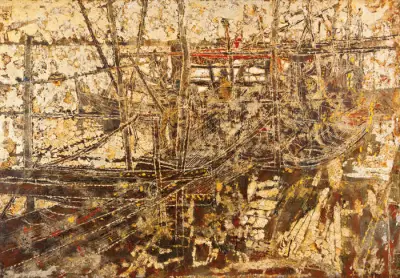
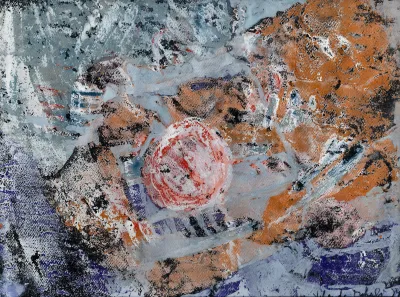
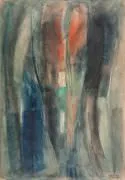
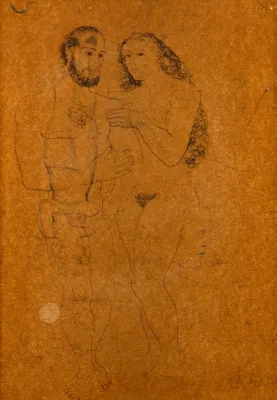
Farnese de Andrade Estudá Drawing, between 1945 and 1948, with Guignard (1896 - 1962) at Escola do Parque, current Guignard school, with Mary Vieira (1927 - 2001), Amilcar de Castro (1920 - 2002), Mário Silésio (1913 - 1990) and others. In 1950, in Rio de Janeiro, he held the first individual exhibition of his drawings. Until 1960, it illustrates numerous newspapers and magazines, such as Rio Magazine, Sombra, O Cruzeiro, Manchete and Revista Branca, in addition to the literary supplement of the Diário de Notícias, Correio da Manhã and Jornal de Letras. From 1959 to 1961, he studies metal engraving with Johnny Friedlaender (1912 - 1992) and Rossini Perez (1932) at the Museum of Modern Art in Rio de Janeiro - MAM/RJ. Makes abstract engravings, working with regular shapes and strong colors. To create the matrices, it uses materials found on the beaches, such as pieces of wood full of grooves. In 1965, he made the series of erotic drawings and started the obsessives.
Since 1964, he has created objects or assemblages with the heads and bodies of dolls, plaster saints and plastics, all corroded by the sea, collected on beaches and landfills. He starts to buy materials such as glass domes, cabinets, oratories, niches, boxes and religious images in used object stores, antiques and demolition deposits. He also often uses old family portraits, inherited from a photographer uncle, and postcards.
In 1967, he began to work with polyester resin, being considered a pioneer of the technique in Brazil. The polyester, translucent and malleable, serves to involve and thus, according to the artist, immortalize perishable materials such as plaster figures. It also involves photographs in resin capsules, making them three-dimensional like other materials. In the 1970s, he uses troughs as a support for the works and former ex-votos, which begins to collect. Farnese does not design his works, which arise spontaneously, between manual gesture and mental elaboration. Loaded with eroticism, sensuality and religiosity, they seem impregnated with an oppressive atmosphere. contain personal references such as in Mater (1990); Patêr (1992/1995); Memories of Recife (1993/1995), The Happy Days (1976/1994) and Araguary - 1/26/1926 (1975/1984). Its most constant themes are related to the notion of life, fertilization, germination, birth and also of death, indicated by the fragmentation of bodies, as in Hiroshima 1966-1972 (1970), or by the juxtaposition of several dolls. Calcinated by the heat of a candle, symbolizing the dead by the atomic bomb.
Away from the art medium, the artist collects his own works, which accumulate in his studio, and are constantly recreated, which is due to the alteration of the pieces or by the revisiting certain themes, such as the Annunciation to the Virgin Mary. For the critic Frederico Morais, his objects are object-trouves [objects found] that act in our unconscious and seem to be associated with some memories, but above all they are part of an autobiography that the artist built. Thus, they are closer to surrealism and metaphysical painting, than to Dadaism.
The singularity of his work, for the historian Rodrigo Naves, is in the affective load, generated both by the presence of ancient and rudimentary objects, with highly personal, marked by use and time, aged, as well as containing biographical references. Instead of assembling objects and images, his work can be seen as a collage of times, referring to a past that no longer belongs to us and still weighs on the present. Ampoule, could be interpreted as a representation of the unconscious and the maternal body, something that encloses and separates from the world what is precious or fragile. For researcher Helouise Costa, photography can be included among these materials as a constitutive element and symbolic receptacle of the artist's concerns. Inverted, fragmented, unlinked from its context, subverted from its original function of preserving memory, photography serves in this way to reinvent the past. The artist breaks the boundaries between visual arts and photography and builds with it other narratives, as it suits him.
The poetics of Farnese de Andrade (1926 - 1996), based on the unconscious, contrasts with those of other trends in the period, such as constructive. The artist was isolated by the generation of the 1960s, considered politically alienated and too subjective. However, his work is close to the production of the 1980s and 1990s, mainly due to the weight of individuality and self-expressiveness that it conveys. It has produced the figurative elements it uses: it does not model, does not sculpt, although it may eventually re-elaborate certain natural forms, such as, very recently, by excavating the convexity of canoes to suggest gigantic vaginas. A kind of present archaeologist, or of the recent past, which exhumes an unusual and rich collection. To the beaches and marine garbage have been added, over the years, several other 'suppliers': demolitions, collections of ex-votos, Antique shops (where Farnese supplies everything: oratories, troughs, furniture, cabinets, rarities, cannonballs, luxurious boxes of liqueurs, table boxes, ivory pieces, crystal weights, images, and what else You can imagine), and even an incredible collection of old photographs inherited from an uncle who was, in his time, the most illustrious photographer in the region. For a long time, sometimes many years - and the dating of the works reveals this -, Farnese will slowly germinate each piece, working and reworking ad infinitum, creates nuclei of assemblages that are exchanged, until one day the work reveals itself in its entirety. (And that, for him, is a kind of discovery). Farnese lets the forms coexist with each other, decides everything very intuitively, by mistake and success, by juxtaposition; by comparison - with and by the eye".
OLÍVIO TAVARES DE ARAÚJO
ARAÚJO, Olívio Tavares de. Andrade, Farnese de. Farnese de Andrade. P.
"To create your objects, Farnese collects objects on the beaches and on the streets or acquires them in demolitioners of houses and antique shops, then accumulating them in their studio house. His interest in eroded and time-carried objects has a lot to do with the strange personality of Farnese, in which introspection, loneliness, hypochondria, depression, obsessiveness and a certain morbidity that slides often into a wounded and corrosive humor. These traits of his personality plus his mining origin favor a more attentive and time-consuming observation of objects, stimulating in him an ability to scrutinize their obscure meanings, to impregnate them with a magical and mysterious aura, thus transforming them into receptacles of your desires and premonitions. with its objects, exorcises ghosts and exercises memory, thus performing a kind of existential archeology".
Frederico Morais
MORAIS, Frederico. Farnese de Andrade. Arte, São Paulo, N. 29, P. 54.
"Farnese de Andrade is one of those artists who escape the rage of professional classifiers and labelers. In his family tree we can see famous ancestors such as Joseph Cornell and Kurt Schwitters or, if we want, some close relatives like Gastão Manoel Henrique (RJ) or even Jeanete Musatti (SP). But with all of them the only point of affinity is to share the same compulsion to keep, contain and retain things. The world of Farnese is more complex. (...) Such disparate influences make the work of Farnese de Andrade a very complex reading universe. The keynote of his reasoning may lie in the constant attempt to bring opposing elements closer together: the doll's head (fetishized and eroticized as Ophelia) and the ex-voto's head; the oratory, the toolbox or the closet in contrast to the troughs and pans. It is a game of hiding and revealing, an invitation to participate in an accomplice participation of the spectator. The ideal would be for the gallery to keep the oratories, boxes and cabinets closed, as the first contact with the intricate system of apparently absurd associations suggested by the artist has a flavor of revelation, sometimes perverse surprise."
Arlindo Daibert
Daibert, Arlindo. Farnese de Andrade, The Formation of Thought. 126.
"(...) For Farnese de Andrade, the MAM/RJ studio opens numerous paths to metal engraving, which multiply in the 1970s. figurativeness. In radicalization, Farnese de Andrade, in 1960, produces reliefs in his engravings, as he works the plate with deep bites. There are, in their abstraction, object assumptions that affect motives. Seeking, as he says, a new visual expression for his engraving, Farnese collects objects dropped by the ebb tide. Left on the beach, the object is found, garbage. elevates waste to art; By transposition, he elaborates engravings, not without a drawing or concept, as in an abstract composition, from 1960. The garbage on the edge becomes a random set that, as an instant, stages life and death in Farnese. Consumed object, dropped, is an index or what life or life itself was, because, metaphorically, vegetation cultivated by the industry. Thus, there is not in his engravings or his objects also built with critical waste, since Farnese sees garbage as art, at a glance in which the set appears aestheticized". engraving: Brazilian art of the 20th century. 19.
"Caixa has a fundamental presence in the poetics of Farnese de Andrade. It always appears, even if it is dressed in oratories, cabinets, drawers, troughs, bells or ampoules. Each of these forms refers to the same symbolic matrix as a continent element. In this sense, even photography can be included in this listing, because for Andrede's Farnese it does not place itself as proof of whatever it is, but as a symbolic receptacle of the artist's multiple concerns. Imprisoned, frozen and decontextualized, the photographic image loses the direct relationship with its referent and becomes liable to compose the most diverse fictions. And it is precisely because he assumes the fictional character of photography that Farnese does not hesitate to kidnap portraits of strangers to build his personal narratives, when it suits him best".
Helouise Costa
Costa, Helouise. In: ANDRADE, Farnese de. Imprisoned images: the photo-object in Farnese de Andrade. Curated by Helouise Costa. São Paulo: Espaço Porto Seguro de Fotografia, 2000. p.15.
"Farnese, in turn, has an aversion to the void. Everything that came to pass remains. and weighs on the present. Nothing can be forgotten or forgiven. His works, instead of being a montage of objects and images, are actually a collage of times, which however tend to always to settle in a region of the past to which we will no longer have access. The world of childhood, the prohibitions of adults, the immemorial bans come together in one space, merge, unify in such a way that they can never be unraveled. It remains to suffer. I wander endlessly these faults without expiation, these faults because we are not responsible but that bend us under his weight."
Rodrigo Naves
NAVES, Rodrigo. de Andrade. São Paulo: Cosac & Naify, 2002. p.19.
Testimations
"I was very young when I suffered an impact when I saw the works of Giorgio Morandi exposed in a special room of the 2nd International Biennial of São Paulo. I spent the whole day seeing that silence, that purity, that perfection come out of all its works. So, I believe that this emotional shock, suffered by me in the face of Morandi's works, each and every creative artist must provide himself first. (...) I know, for example, that my works, through which I insinuate a constant between life and death, cause many people a certain repulsion, even though they recognize their aesthetic content and the originality of their creation. Therefore, by creating my works, I look for myself, first of all, that impact that some artists have already given me the works of. I believe that every creative artist has this intention: to suffer the impact that his work causes him - the final result of his act of creation. because it is only when the impact is suffered that the work of art is felt completed. Furthermore, artistic creation is a highly personal phenomenon, which is why I admire colleagues who manage to unite sensitivity to culture. In art there are no rules or defined dogmas (...). The aesthetic object is independent of the nature and origin of the materials, as long as it is coated with dignity".
Farnese de Andrade
engraving: Brazilian art from the 20th century. Presentation Ricardo Ribenboim; Text Leon KOSSOVITCH, Mayra Laudanna, Ricardo Resende São Paulo: Itaú Cultural: Cosac & Naify, 2000. p. 124. [A Hugo Auler (October 14, 1976).
"In 1950, in Rio, I met Ivan Serpa, an artist I admire deeply, Almir Mavignier and others from the Concreto Group led by a well-known critic. The theory that they poured out (mainly Almir) disoriented me in such a way (I truly believed that concretism was the only valid path in art) that I spent several years disoriented, without developing or materializing myself... Aesthetic theories, I was scalded, and I increasingly believe that only the result of a research speaks the truth, and never the theory about its paths or possibilities".
Farnese de Andrade
Andrade, Farnese de. Farnese de Andrade. São Paulo: Cosac & Naify, 2002. p.19 [Testimony given to Walmir Ayala, Rio de Janeiro, 1999].
Cerves
Latin American Art Collection of the University of Essex
London Institute of Contemporary Art - London (England) RJ
Museum of Modern Art of New York - MOMA - New York (United States)
Museum of Modern Art of Rio de Janeiro - MAM/RJ - Rio de Janeiro RJ
National Museum of Fine Arts of Rio de Janeiro - MNBA - Rio de Janeiro RJ
Individual exhibitions
1950 - Rio de Janeiro RJ - Farnese de Andrade: Drawings, at Galeria Le Connaisseur
1966 - Rio de Janeiro RJ - Farnese de Andrade: Objects, at Petite Galerie
1971 - Rio de Janeiro RJ - Individual, at the Ipanema Art Gallery
1973 - Barcelona (Spain) - Individual, at Sala Gaudí
1976 - Rio de Janeiro RJ - Farnese de Andrade: Objects, at the Ipanema Art Gallery
1978 - Rio de Janeiro RJ - Farnese de Andrade: Objects, at the Ipanema Art Gallery
1978 - São Paulo SP - Farnese de Andrade: Objects, at Christina Faria de Paula Art Gallery
1985 - São Paulo SP - Individual, at the São Paulo Art Gallery
1986 - Rio de Janeiro RJ - Farnese de Andrade: Objects and sculptures, at the Anna Maria Niemeyer Gallery
1989 - Rio de Janeiro RJ - Farnese de Andrade: engravings, in the MNBA
1991 - Curitiba PR - Farnese de Andrade: engravings, at the Engraving Museum
1992 - Rio de Janeiro RJ - Farnese de Andrade: Objects, at Galeria Anna Maria Niemeyer
1996 - Belo Horizonte MG - Individual, at the Pace Art Gallery
Collective exhibitions
1946 - Rio de Janeiro RJ - Mostra, at ABI
1952 - Rio de Janeiro RJ - 1st National Salon of Modern Art, at MAM/RJ
1953 - Rio de Janeiro RJ - 4th Salão de Naturetos Mortas, at Theatro Municipal
1961 - São Paulo SP - 6th Bienal São Paulo International, at the Ciccilo Matarazzo Sobrinho Pavilion
1962 - Amsterdam (Holland) - Art of América y España
1962 - Barcelona (Spain) - Art of America y España
1962 - Belo Horizonte MG - Two mining recorders, at UFMG. Faculty of Letters
1962 - Bern (Switzerland) - Arte de América y España
1962 - Brussels (Belgium) - Art of America y España
1962 - Carrara (Italy) - International Marble Biennial
1962 - Curitiba PR - Paraná Salon, at the Paraná Public Library - Engraving Award
1962 - Madrid (Spain) - Arte de América y España
1962 - Milan (Italy) - Art of America y España
1962 - Munich (Germany) - Art of America y España
1962 - Paris (France) - Arte de América y España
1962 - Rio de Janeiro RJ - 11th National Salon of Modern Art
1963 - Lagos (Nigeria) - Contemporary Brazilian artists, at the Lagos Museum
1963 - Rio de Janeiro RJ - O Nu as a theme, at Galeria Ibeu Copacabana
1963 - Santiago (Chile) - 1st American Engraving Biennial
1963 - São Paulo SP - 7th São Paulo International Biennial, at the Biennial Foundation
1964 - Rio de Janeiro RJ - 13th National Salon of Modern Art - Engraving Award
1964 - Rio de Janeiro RJ - 2nd The face and the work, at the Ibeu Copacabana Gallery
1964 - Rio de Janeiro RJ - O Nu na Arte Contemporary, at Galeria Ibeu Copacabana
1964 - Tokyo (Japan) - 4th International Biennial Exhibition of Prints
1965 - Brussels (Belgium) - Brazilian Today
1965 - London (England) - Brazilian Art Today, at the Royal Academy of Arts
1965 - Santiago (Chile) - 2nd American Engraving Biennial, at the Art Museum Contemporáneo
1965 - São Paulo SP - 8th São Paulo International Biennial, at the Biennial Foundation
1965 - Vienna (Austria) - Brazilian Art Today, at Angewandt Kunst
1966 - Bonn (Germany) - Brazilian Art Today, in the Beethovenhalle Room
1966 - Brasília DF - 3rd Federal District Modern Art Salon - 1st Prize in Drawing
1966 - Buenos Aires (Argentina) - Contemporary Brazilian artists, at the Museo de Arte Moderno
1966 - Mendoza (Argentina) - three Brazilian recorders, at the Spilimbergo Gallery
1966 - Ouro Preto MG - 1st Salon of Ouro Preto - 1st Brazilian Design Award
1966 - Rio de Janeiro RJ - 4th Summary of Art JB, at MAM/RJ
1966 - Rio de Janeiro RJ - Exhibition, at Galeria Cantu
1967 - Rio de Janeiro RJ - Salão das Caixas, at Petite Galerie
1967 - São Paulo SP - 9th International Biennial of São Paulo, at the Bienal Foundation - International Jury Award and Best Work B&B
1968 - Philadelphia (United States) - Brazilian engraving, at Cornell University
1968 - Recife PE - Exhibition, at Ranulpho Art Gallery
1968 - Rio de Janeiro RJ - 17th National Salon of Modern Art MAM/RJ
1968 - Venice (Italy) - 34th Venice Biennale
1968 - Venice (Italy) - Two Brazilians in Venice, at the Italian Institute of Culture. Piccolla Galeria
1969 - New York (United States) - Brazilian recorders, at Art Gallery
1969 - Rio de Janeiro RJ - 18th National Salon of Modern Art - Travel to the Country Award
1969 - Rio de Janeiro January RJ - 7th Summary of Art JB, at MAM/RJ
1970 - Rio de Janeiro RJ - 19th National Salon of Modern Art, at MAM/RJ - Travel Award abroad
1971 - Rio de Janeiro RJ - 20th National Salon of Modern Art
1971 - Rio de Janeiro RJ - Exhibition, at the Mayline Gallery
1972 - São Paulo SP - Art/Brazil/Today: 50 years later, at Galeria Collectio
1973 - Carrara (Italy) - International Marble Biennale
1974 - Barcelona (Spain) - South American artists, at the Gaudí Sala
1975 - Porto Alegre RS - Exhibition, at the IAB/RS Gallery
1975 - São Paulo SP - 7th Panorama of Current Brazilian Art, at MAM/SP
1976 - Brasília DF - Exhibition, at the Oscar Seraphico Gallery
1978 - São Paulo SP - 1st Bienal Latino-Americana de São Paulo, at the Bienal Foundation
1978 - São Paulo SP - The object in the art: Brazil 60s, at MAB/FAAP
1982 - Penápolis SP - 5th Salon of Plastic Arts of the Northwest, at the Educational Foundation of Penápolis. Faculty of Philosophy, Sciences and Letters of Penápolis
1983 - Rio de Janeiro RJ - 6th National Salon of Plastic Arts, at MAM/RJ
1984 - Rio de Janeiro RJ - Recent donations 82-84, MNBA
1984 - Rio de Janeiro RJ - Madeira, Matter of Art, at MAM/RJ
1984 - São Paulo SP - Gilberto Chateaubriand Collection: Portrait and Self-Portrait of Brazilian Art, at MAM/SP
1984 - São Paulo SP - Tradition and Rupture: Synthesis of Brazilian Art and Culture, at Fundação Bienal
1985 - Brasília DF - Brasilidade e Independência, at the National Theater of Cláudio Santoro
1985 - Rio de Janeiro RJ - Gallery Ibeu Copacabana 25 years old: 1960-1985, at the Instituto Brasil-Estados Unido
1985 - São Paulo SP - 16th Panorama of Current Brazilian Art, at MAM/SP
1985 - São Paulo SP - Highlights of Brazilian Contemporary Art, at MAM/SP
1987 - Rio de Janeiro RJ - To the collector: Homage to Gilberto Chateaubriand, at MAM/RJ
1990 - Curitiba PR - 9th Engraving Exhibition of the City from Curitiba, at the Engraving Museum
1991 - Curitiba PR - Municipal Museum of Art: Collection, at the Municipal Museum of Art
1992 - Belo Horizonte MG - Icons of Utopia, at the Palácio das Artes Foundation
1992 - Rio de Janeiro RJ - 1st on the way to Niterói: João Sattamini Collection, at Paço Imperial
1992 - Rio de Janeiro RJ - Brazilian Contemporary Art, at EAV/Parque Lage
1992 - São Paulo SP - 60's/70's: Gilberto Chateaubriand Collection - MAM/RJ, at the SESI Art Gallery
1993 - Rio de Janeiro RJ - Erotic Art, at MAM/RJ
1993 - São Paulo SP - The modern design In Brazil: Gilberto Chateaubriand Collection, at the Sesi Art Gallery
1994 - Lisbon (Portugal) - In addition to Taprobana: the human figure in the fine arts of Portuguese-speaking countries, at the National Society of Fine Arts
1994 - Rio de Janeiro RJ - The modern design in Brazil: Gilberto Chateaubriand Collection, at MAM/RJ
1995 - Erfurt (Germany) - Configura 2
1995 - Lausanne (Switzerland) - Rio: Mysteries and Frontiers, in the Musée de Pully
1995 - Rio de Janeiro RJ - In addition to Taprobana: the human figure in the visual arts of Portuguese-speaking countries, at MAM/RJ
1995 - Rio de Janeiro RJ - Rio: Mysteries and Frontiers, at MAM/RJ
1996 - Belo Horizonte MG - Consolidation of Modernity in Belo Horizonte, at MAP
1996 - Rio de Janeiro RJ - Rio: Mysteries and Frontiers, at MAM/RJ
Posthumous exhibitions
1997 - Curitiba PR - The Contemporary Art of Engraving, at the Metropolitan Museum of Art of Curitiba
1997 - Goiânia GO - Brazilianness: Collection of Brazilian Artists, at the Art Gallery Marina Potrich
1997 - Porto Alegre RS - Exhibition of the Caixa Collection, at the Caixa Cultural Complex
1997 - Porto Alegre RS - Parallel Exhibition, at the Caixa Econômica Federal Museum
1997 - Rio de Janeiro RJ - The house and the intelligence de Farnese, at Rua Paulo de Frontin, 575
1997 - São Paulo SP - Exhibition of the CAIXA collection, in the Caixa Cultural Complex
1997 - São Paulo SP - Three-dimensionality in Brazilian art of the 20th century, in Itaú cultural
1998 - Belo Horizonte MG - Three-dimensionality in Brazilian art of the 20th century, at Itaú Cultural
1998 - Brasília DF - Three-dimensionality in Brazilian art of the 20th century, at the Itaú Cultural Gallery
1998 - Curitiba PR - Exhibition of the Caixa collection, at the Caixa Cultural Complex
1998 - Niterói RJ - Espelho da Bienal, at MAC/Niterói
1998 - Penápolis SP - Three-dimensionality in Brazilian art of the 20th century, at Galeria Itaú cultural
1998 - Rio de Janeiro RJ - Brazilian art in the collection of the Museum of Modern Art of São Paulo: recent donations 1996 - 1998, at CCBB
1998 - Rio de Janeiro RJ - Exhibition of the Caixa collection, in the Cultural da Caixa
1998 - São Paulo SP - Brazilian art in the collection of the Museum of Modern Art of São Paulo: recent donations 1996 - 1998, at MAM/SP
1998 - São Paulo SP - Fronteiras, in Itaú Cultural
1998 - São Paulo SP - Individual, in the new gallery
1998 - São Paulo SP - The modern and the contemporary in Brazilian art: Gilberto Chateaubriand Collection - MAM/RJ, at MASP
1999 - Rio de Janeiro RJ - Daily life/art. Object 60s/90s, at MAM/RJ
1999 - Rio de Janeiro RJ - Exhibition Rio Engraving. Brazilian modern engraving: Collection National Museum of Fine Arts, in the MNBA
1999 - Salvador BA - 60 years of Brazilian art, at the Cultural Space of Caixa Econômica Federal
1999 - São Paulo SP - daily life/art. Objects 60/90, at Itaú Cultural
2000 - Belo Horizonte MG - Ars Brasilis, at Minas Tênis Clube. Art Gallery
2000 - Colchester (England) - Other 500: Highlights of Brazilian Contemporary Art in Ueclaa, at Art Gallery - University of Essex
2000 - Niterói RJ - Sattamini Collection: from materials to internal differences, at MAC/Niterói
2000 - Rio de Janeiro RJ - Brasilidades, at the Light Cultural Center
2000 - São Paulo SP - The human figure in the Itaú collection, in Itaú Cultural
2000 - São Paulo SP - Ars Erotic: Sex and Eroticism in Brazilian Art, at MAM/SP
2000 - São Paulo SP - Art and Eroticism, at the Nara Roesler Gallery
2000 - São Paulo SP - Between Art and Design: MAM Collection, at MAM/SP
2000 - São Paulo SP - Imprisoned Images: the photo/object in Farnese de Andrade, at Espaço Seguro Photography
2000 - São Paulo SP - Investigations. The Brazilian engraving, at Itaú Cultural
2000 - São Paulo SP - Os Anjos are back, at the Pinacoteca do Estado
2000 - São Paulo SP - Psychoanalysis and Modernism, at MAM/SP
2001 - Brasília DF - Investigations. The Brazilian engraving, at Galeria Itaú Cultural
2001 - Penápolis SP - Investigations. The Brazilian engraving, at Galeria Itaú Cultural
2001 - Porto Alegre RS - Liba and Rubem Knijnik Collection: contemporary Brazilian art, at Margs
2001 - São Paulo SP - Caminhos da Forma, at the Art Gallery of SESI
2002 - Brasília DF - Individual
2002 - Brasília DF - JK - An aesthetic adventure, in the cultural complex of the box
2002 - Niterói RJ - The recent MAC collection, in the MAC/Niterói
2002 - Niterói RJ - Sattamini Collection: sculptures and objects, at MAC/Niterói
2002 - Niterói RJ - Dialogue, antagonism and replication in the collection Sattamini, at Mac/Niterói
2002 - Porto Alegre RS - Appropriations and Collections, at Santander Cultural
2002 - Rio de Janeiro RJ - Andar com Fé..., at the SESC Copacabana Gallery
2002 - Rio de Janeiro RJ - Caminhos do Contemporânea 1952-2002, at Paço Imperial
2002 - São Paulo SP - Unusual, at MAM/SP
2002 - São Paulo SP - Map of Now: recent Brazilian art in the João Sattamini Collection of the Museum of Contemporary Art of Niterói, at the Instituto Tomie Ohtake
2002 - São Paulo SP - The genres of art: still life in contemporary art, at MAM/SP
2003 - Niterói RJ - Appropriations: Short circuit of participatory experiences, at MAC/Niterói
2003 - São Paulo SP - MAC USP 40 years: Contemporary interfaces, at MAC/USP
2004 - São Paulo SP - Photography and sculpture in the MAM collection - 1995 to 2004, at MAM/SP
2004 - São Paulo SP - New acquisitions: 1995 - 2003, no MAB/FAAP
2005 - Rio de Janeiro RJ - Objects, at CCBB
2005 - São Paulo SP - Objects, at CCBB
Source: Itaú Cultural