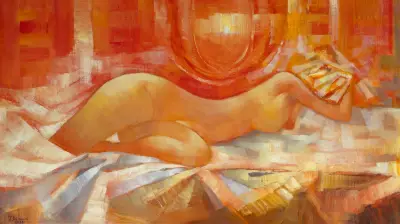
Décio Vieira (Petrópolis RJ 1922 - Rio de Janeiro RJ 1988)
Painter, draftsman.
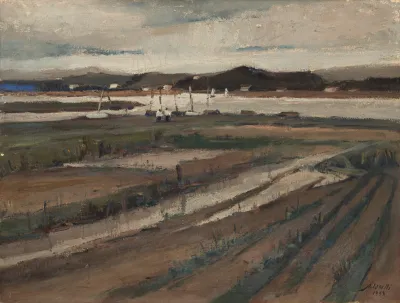
Décio Luiz Monteiro Vieira studied drawing and painting with Axl Leskoschek (1889 - 1975) at the Fundação Getúlio Vargas - FGV in Rio de Janeiro in 1948. From that year on, he came into contact with the printmaker Fayga Ostrower (1920 - 2001) and took classes with the painter Ivan Serpa (1923 - 1973) at the Museu de Arte Moderna do Rio de Janeiro - MAM/RJ. In the 1950s, he joined the Grupo Frente [Frente Group], with Lygia Pape (1927 - 2004), Lygia Clark (1920 - 1988), Hélio Oiticica (1937 - 1980) and others. He took part in the Neoconcrete Group, the Rio dissidence of the concrete group. Between 1954 and 1962, he produced fabric prints with Fayga Ostrower. In 1966, in São Paulo, he worked with Alfredo Volpi (1896 - 1988) on the fresco Dom Bosco for the Palácio dos Arcos in Brasília, and with him studied the tempera technique and began presenting an abstract production. In the 1970s, he returned to figuration, devoting himself mainly to landscape painting, and taught at MAM/RJ in courses coordinated by the critic Frederico Morais. Under the guidance of Ivan Serpa, he created, with Dulce Vieira, an art school for children of the Rocinha favela community in Rio de Janeiro. A retrospective of his production, titled Décio Vieira: Resumo de uma Trajetória [Décio Vieira: Summary of a Career], was held at the Galeria Rodrigo de Mello Franco of Funarte in Rio de Janeiro in 1992.
Critical Commentary
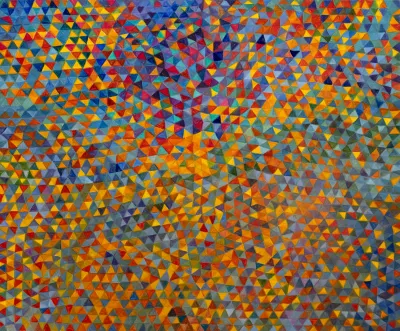
In the 1950s, Décio Vieira took part in the Grupo Frente, made up of artists with constructive-geometric tendencies. At that time, he articulated space through variations of forms and colors and through distortions of perspective, as in Espaço Construído [Constructed Space], 1954. In his paintings, he reconciles geometric construction with the research of chromatic nuances and the use of sfumato, thus creating a play between the defined and the undefined.
The artist learned the tempera painting technique from Alfredo Volpi (1896 - 1988), which gives his work a more lyrical character within abstraction. He produced works that tend toward monochrome. In Quadrados, Retângulos e Linhas [Squares, Rectangles and Lines], 1961, the pictorial space is divided into regular modules and the artist uses a minimum of tonal variations to build the structure, which is highly balanced. From the mid-1960s on, his works reveal greater freedom in the use of color and texture. In dialogue with Volpi's production, Décio Vieira made an economical painting, with subtle use of light, in constructions that predominantly use white. In the 1970s, the artist played an important role as a teacher at the Museu de Arte Moderna do Rio de Janeiro - MAM/RJ, also creating an art school for children from the Rocinha favela.
Critiques
"Among the neoconcretists, he stood out for his radicalism regarding forms and for his choice of monochromes, at times working only with white. The neoconcrete period coincides with the moment of greatest synthesis in his work. Around 1966 there was a parenthesis in his ascetic stance, when he began to work color and texture in a more lyrical way, a period that coincides with his joint work with Volpi on the panels for Navegação Costeira and at the Palácio dos Arcos. It was with Volpi that he learned the tempera technique and took a liking to the possibilities offered by this means of expression".
Maria Izabel Branco Ribeiro
EM busca da essência: elementos de redução na arte brasileira. São Paulo: Fundação Bienal de São Paulo, 1987.
"He was always a lover of the craft of painting. With Volpi he developed a taste for painting as a craft and not as the illustration of an aesthetic or philosophical ideology. He prepares his own canvases and paints, and the act of painting gives him enormous pleasure. He is not the type who goes around giving explanations, who knows the picture even before finishing it, sometimes even before starting. On the contrary, he is the type who savors the picture, discovering things, comparing it with others, waiting for the meanings to appear little by little. Looking at his pictures, anyone can conclude that painting is, for him, something sensual that gives him enormous pleasure. And it is in this sensuality, manifested especially in color and texture, both generators of space, that the Rio artists differ from those of São Paulo, since the polemical, and now historic, times of concretism-neoconcretism".
Frederico Morais
EM busca da essência: elementos de redução na arte brasileira. São Paulo: Fundação Bienal de São Paulo, 1987.
Solo Exhibitions
1987 - Rio de Janeiro RJ - Solo, at Galeria Thomas Cohn
Group Exhibitions
1953 - Petrópolis RJ - 1ª Exposição Nacional de Arte Abstrata [1st National Exhibition of Abstract Art], at Hotel Quitandinha
1953 - São Paulo SP - 2ª Bienal Internacional de São Paulo [2nd São Paulo International Biennial], at MAM/SP
1954 - Rio de Janeiro RJ - Grupo Frente [Frente Group], at Galeria Ibeu Copacabana
1954 - Rio de Janeiro RJ - Salão Preto e Branco [Black and White Salon]
1955 - Rio de Janeiro RJ - Grupo Frente [Frente Group], at MAM/RJ
1955 - São Paulo SP - 3ª Bienal Internacional de São Paulo [3rd São Paulo International Biennial], at Pavilhão das Nações
1956 - Resende RJ - Grupo Frente [Frente Group], at Itatiaia Country Club
1956 - São Paulo SP - 1ª Exposição Nacional de Arte Concreta [1st National Exhibition of Concrete Art], at MAM/SP
1957 - Rio de Janeiro RJ - 1ª Exposição Nacional de Arte Concreta [1st National Exhibition of Concrete Art], at MAM/RJ
1959 - Leverkusen (Germany) - Primeira Exposição Coletiva de Artistas Brasileiros na Europa [First Group Exhibition of Brazilian Artists in Europe]
1959 - Munich (Germany) - Primeira Exposição Coletiva de Artistas Brasileiros na Europa [First Group Exhibition of Brazilian Artists in Europe], at Kunsthaus
1959 - Rio de Janeiro RJ - Primeira Exposição de Arte Neoconcreta [First Neoconcrete Art Exhibition], at MAM/RJ
1959 - Salvador BA - 1ª Exposição de Arte Neoconcreta [1st Neoconcrete Art Exhibition], at Galeria Belvedere da Sé
1959 - Vienna (Austria) - Primeira Exposição Coletiva de Artistas Brasileiros na Europa [First Group Exhibition of Brazilian Artists in Europe]
1960 - Hamburg (Germany) - Primeira Exposição Coletiva de Artistas Brasileiros na Europa [First Group Exhibition of Brazilian Artists in Europe]
1960 - Lisbon (Portugal) - Primeira Exposição Coletiva de Artistas Brasileiros na Europa [First Group Exhibition of Brazilian Artists in Europe]
1960 - Madrid (Spain) - Primeira Exposição Coletiva de Artistas Brasileiros na Europa [First Group Exhibition of Brazilian Artists in Europe]
1960 - Paris (France) - Primeira Exposição Coletiva de Artistas Brasileiros na Europa [First Group Exhibition of Brazilian Artists in Europe]
1960 - Rio de Janeiro RJ - 2ª Exposição de Arte Neoconcreta [2nd Neoconcrete Art Exhibition], at MEC
1960 - Utrecht (Netherlands) - Primeira Exposição Coletiva de Artistas Brasileiros na Europa [First Group Exhibition of Brazilian Artists in Europe]
1960 - Zurich (Switzerland) - Konkrete Kunst, at Helmhaus
1961 - Rio de Janeiro RJ - O Rosto e a Obra [The Face and the Work], at Galeria Ibeu Copacabana
1961 - São Paulo SP - 6ª Bienal Internacional de São Paulo [6th São Paulo International Biennial], at MAM/SP
1965 - São Paulo SP - 8ª Bienal Internacional de São Paulo [8th São Paulo International Biennial], at Fundação Bienal
1967 - São Paulo SP - 9ª Bienal Internacional de São Paulo [9th São Paulo International Biennial], at Fundação Bienal
1968 - Rio de Janeiro RJ - 17º Salão Nacional de Arte Moderna [17th National Salon of Modern Art], at MAM/RJ
1977 - Rio de Janeiro RJ - Projeto Construtivo Brasileiro na Arte: 1950-1962 [Brazilian Constructive Project in Art: 1950-1962], at MAM/RJ
1977 - São Paulo SP - Projeto Construtivo Brasileiro na Arte: 1950-1962 [Brazilian Constructive Project in Art: 1950-1962], at Pinacoteca do Estado
1981 - Rio de Janeiro RJ - Coletiva Nuchy [Nuchy Group Show], at Nuchy Galeria de Arte
1984 - Rio de Janeiro RJ - Grupo Frente 1954-1956 [Frente Group 1954-1956], at Galeria de Arte Banerj
1984 - Rio de Janeiro RJ - Neoconcretismo 1959-1961 [Neoconcretism 1959-1961], at Galeria de Arte Banerj
1984 - Volta Redonda RJ - Grupo Frente 1954-1956 [Frente Group 1954-1956]
1985 - Rio de Janeiro RJ - 8º Salão Nacional de Artes Plásticas [8th National Visual Arts Salon], at MAM/RJ
1985 - Rio de Janeiro RJ - Axl Leskoschek e seus Alunos: Brasil/1940-1948 [Axl Leskoschek and His Students: Brazil/1940-1948], at Galeria de Arte Banerj
1985 - São Paulo SP - Axl Leskoschek e seus Alunos: Brasil/1940-1948 [Axl Leskoschek and His Students: Brazil/1940-1948], at MAM/SP
1986 - Resende RJ - Grupo Frente 1954-1956 [Frente Group 1954-1956]
1987 - Rio de Janeiro RJ - Abstração Geométrica 1: concretismo e neoconcretismo [Geometric Abstraction 1: Concretism and Neoconcretism], at Funarte
1987 - São Paulo SP - 19ª Bienal Internacional de São Paulo [19th São Paulo International Biennial], at Fundação Bienal
1987 - São Paulo SP - Abstração Geométrica: concretismo e neoconcretismo [Geometric Abstraction: Concretism and Neo-Concretism], at MAB/Faap
Posthumous Exhibitions
1989 - Rio de Janeiro RJ - Pequenas Grandezas dos Anos 50 [Small Greatnesses of the 1950s], at Gabinete de Arte Cleide Wanderley
1992 - Rio de Janeiro RJ - 1º A Caminho de Niterói: Coleção João Sattamini [1st On the Way to Niterói: João Sattamini Collection], at Paço Imperial
1992 - Rio de Janeiro RJ - Décio Vieira: resumo de uma trajetória [Décio Vieira: Summary of a Career], at Funarte - Galeria Rodrigo Mello Franco de Andrade
1994 - São Paulo SP - Bienal Brasil Século XX [20th-Century Brazil Biennial], at Fundação Bienal
1996 - São Paulo SP - Desexp(l)os(ign)ição, at Casa das Rosas
1998 - São Paulo SP - Arte Construtiva no Brasil: Coleção Adolpho Leirner [Constructive Art in Brazil: Adolpho Leirner Collection], at MAM/SP
1999 - Rio de Janeiro RJ - Arte Construtiva no Brasil: Coleção Adolpho Leirner [Constructive Art in Brazil: Adolpho Leirner Collection], at MAM/RJ
2000 - Lisbon (Portugal) - Século 20: arte do Brasil [20th Century: Art of Brazil], at Centro de Arte Moderna José de Azeredo Perdigão
2000 - Rio de Janeiro RJ - Quando o Brasil era Moderno: artes plásticas no Rio de Janeiro de 1905 a 1960 [When Brazil Was Modern: Visual Arts in Rio de Janeiro from 1905 to 1960], at Paço Imperial
2000 - São Paulo SP - Brasil + 500 Mostra do Redescobrimento [Brazil + 500 Rediscovery Exhibition], at Fundação Bienal
2000 - Lisbon (Portugal) - Brasil + 500 Mostra do Redescobrimento [Brazil + 500 Rediscovery Exhibition], at Fundação Calouste Gulbekian
2001 - São Paulo SP - Trajetória da Luz na Arte Brasileira [Trajectory of Light in Brazilian Art], at Itaú Cultural
2002 - Rio de Janeiro RJ - Arte Brasileira na Coleção Fadel: da inquietação do moderno à autonomia da linguagem [Brazilian Art in the Fadel Collection: From the Restlessness of the Modern to the Autonomy of Language], at CCBB
2002 - Rio de Janeiro RJ - Caminhos do Contemporâneo 1952-2002 [Paths of the Contemporary 1952-2002], at Paço Imperial
2002 - São Paulo SP - Arte Brasileira na Coleção Fadel: da inquietação do moderno à autonomia da linguagem [Brazilian Art in the Fadel Collection: From the Restlessness of the Modern to the Autonomy of Language], at CCBB
2003 - Brasília DF - Arte Brasileira na Coleção Fadel: da inquietação do moderno à autonomia da linguagem [Brazilian Art in the Fadel Collection: From the Restlessness of the Modern to the Autonomy of Language], at CCBB
2003 - Rio de Janeiro RJ - Ordem x Liberdade [Order x Freedom], at MAM/RJ
2005 - Petrópolis RJ - Expresso Abstrato [Abstract Express], at Museu Imperial
Source: Itaú Cultural