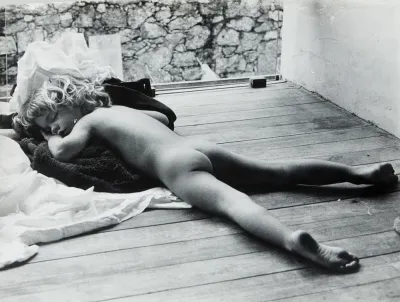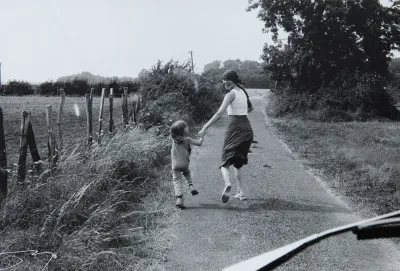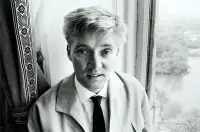
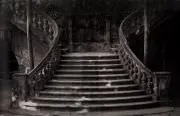
Cristiano Mascaro (Catanduva SP 1944)
Cristiano Mascaro is a photographer, architect and teacher. Graduated in Architecture from the Faculty of Architecture and Urbanism of the University of São Paulo (FAU/USP), Cristiano Alckmin Mascaro is one of the most renowned photographers in the capital of São Paulo, being especially recognized for his work documenting the architecture of the city, an area that dedicates more than two decades of his career. Among his most significant works, there are records from the interior of São Paulo and historical heritage in different regions of Brazil. His photographic trajectory begins in 1968, when he is invited to join the first team of Veja magazine, where he remains for four years. He was a professor of photojournalism at Enfoco Escola de Fotografia between 1972 and 1975, directed the Audio-Visual Resources Laboratory at FAU/USP from 1974 to 1988 and taught visual communication at the Faculty of Architecture and Urbanism of Santos, from 1976 to 1986.
He obtained the title of Master in 1986, with the dissertation The use of photography in the interpretation of urban space, and was doctoral in 1995, with the thesis A photograph and a Architecture, by FAU/USP. He is the author of several books, among them A Cidade (1979), Cristiano Mascaro, The Best Photos (1989), Lights of the City (1996), São Paulo (2000) and the Built Heritage - The 100 most beautiful buildings in Brazil (2003). He received the Eugène Atget International Photography Award in 1984 and the Vitae Photography Scholarship in 1989.
Critical Comment
Cristiano Mascaro begins his academic career at the Faculty of Architecture and Urbanism of the University of São Paulo - FAU/USP. In 1968, the year in which he completed his graduation, he was invited to join the first team of Veja magazine, in which he remained as a photo reporter until 1972. His first book, The City, 1979, combines the objectivity of photojournalism with the Architect, and captures buildings, squares and monuments not in order to isolate them from their inhabitants, but to insert them in the context of the profusion of landscapes that constitutes a big city. The same thing happens, in a more pronounced way, in Luzes da Cidade, from 1996. Mascaro uses everyday scenes and characters from São Paulo to populate the architectural universe of the metropolis. The objective seems to be to capture the fleeting, the instantaneous, and oppose it to what is built, what remains. There is also something of historical documentation at work, a record of the transformation of landscapes. This interest in modern buildings and changes in urban spaces leads him to hold, in 1994, the exhibition Brasil: Recent Architecture, at the Deutsches Architektur Museum [German Architecture Museum], in Frankfurt, Germany. During this period, he concludes a master's degree with the dissertation A Photography in the Interpretation of Urban Space, in 1986, and a PhD, defending the thesis, photography and architecture, in 1995.
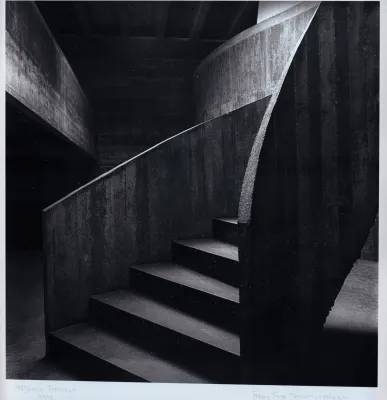
Formally, both the city and city lights are permeated by the look Mascaro geometrizing. It accentuates the lines and curves of its objects with games of light and shadow that, on the one hand, bring out the architectural element of their photographs and, on the other hand, reveal a kind of cultural relationship between the inhabitants and the urban spaces in which they live and who attend. There is a photo of Avenida Marginal do Rio Pinheiros, in São Paulo, which shows, among dozens of cables and power towers and inside the structure of an empty billboard, two people working on what seems to be a repair. They are on their backs, and they stretch from a ladder to affix a cable to the metallic structure. There is in the portrait a temporal suspension, a moment that brakes the impulse of modernization to which the entire industrial tone of the image refers.
With the launch of São Paulo, in 2002, this facet of day-to-day registration becomes even more evident. These are small events, common scenes at birthday parties and amusement parks, captured both in the capital and in cities in the interior and coast of the state of São Paulo. Geometric shapes are still present, although sometimes more suggested than in previous works. The landscapes reinforce the character of a travel book. What appears, however, is the photographer's ability to immerse in the daily life of countless cities. Whether due to the expressive use of light and shadow resources, or by the continuous improvement in emphasizing singular moments and gestures, Mascaro creates scenes that, in his lack of grandeur, express relationships between people, and their connection with their cities.
In 2003, Participates as a photographer of the book The Heritage Built - The 100 most beautiful buildings in Brazil, in which it registers monuments listed by the historical heritage throughout the country. The accented lines return, and also the determination of the images by the lines and architectural curves of the photographed buildings. Buildings dating from the 16th century combine with relatively recent buildings, such as the Municipal Theater of São Paulo, a fact that, in addition to the important historical document that the book represents, shows Mascaro's ability to harmonize disparate elements by his geometric relations. At the 6th International Architecture Biennial of São Paulo, in 2005, it presents the Show Brasil XYZ. In a white cube, images of Brazilian cities in the light of their architectural styles confirm Mascaro's vocation as both a photographer of the forms and the people who inhabit them.
Critiques
"(...) Mascaro has With São Paulo, an almost submission relationship: he lets himself be penetrated by the mass of concrete, by the cement strips, by the slices of heaven. With the people, the relationship changes: the photographer becomes the director of a play. And the inhabitants of the city disconnect, for a moment, from their day-to-day, looking at the camera with a look inward. That look that does not depend on the moment and that generates archetypes, like those of Sander.
São Paulo de Cristiano is not a metropolis of crowds or rhythm unbridled. She lets herself be impregnated by the 'footprints' of the hurried world and the photographer captures them, blurred traces that cross the image and try to drag the inhabitant into the throbbing, urban life".
Stefania Bril
BRIL, Stefania. The images of three urban loves. O Estado de S. Paulo, São Paulo, 06 Sep. 1984. p. 19.
"(...) Cristiano Mascaro's work is marked by a romanticism and an absolutely brilliant atmosphere. profusion of images as a great spectacle of urban life, a mass of individual activities that generalize the life and energy of the city and that make the real look magical and strange, in any city in the country. Permanent disorder, where everything - people, automobiles, architecture, clouds, sun - is in a terrible mismatch, where each element belongs to different mechanisms, over which we have no control. of Cristiano Mascaro, he manages, in a fraction of a second, to build a form of veracity".
Rubens Fernandes Junior
FERNANDES JUNIOR, Rubens. the end and the imponderable. In: MASCARO, Cristiano. City lights. São Paulo: DBA, 1996.
Carves
Pinacoteca do Estado de São Paulo/Brazil Collection
Paris National Library - Paris (France)
House of Culture Ecuadoriana - Quito (Ecuador)
Center d'Art et de Culture Georges Pompidou - Paris (France)
Collection Museum of Contemporary Art of the University of São Paulo - MAC/USP - São Paulo SP
Collection Museum of Modern Art of Rio de January - MAM/RJ - Rio de Janeiro RJ
Pirelli Collection/Masp of Photographs - São Paulo SP
International Museum of Photography at Georges Eastman - Rochester (United States)
São Paulo Assisi Museum of Art Chateaubriand - MASP - São Paulo SP
Individual exhibitions
1974 - São Paulo SP - Urban Landscape, at the Enfoco Gallery
1976 - São Paulo SP - Bom Retiro and Luz: a script, Pinacoteca do Estado
1976 - São Paulo SP - Vila Penteado, a trip to Art Nouveau, at FAU/USP
1977 - Washington (United States) - Urban Landscape, in the gallery of the United States Organization
1980 - Cuiabá MT - Urban Landscape, at UFMT
1980 - Cuiabá MT - Nobody teaches what they don't know, at UFMT
1981 - São Paulo SP - Nobody teaches what they don't know, in the Pinacoteca do Estado
1981 - Brasília DF - Nobody teaches what they don't know, at the Brasília Convention Center
1983 - Rochester (United States) - Brazil, at 28 Arlington Gallery
1983 - São Paulo SP - Landscape Paulistana, at FAU/USP
1986 - São Paulo SP - Avenida São João, at the Fotoptica Gallery
1986 - São Paulo SP - Avenida São João, at FAU/USP
1986 - São Paulo SP - Portraits Paulistanos, in the São Bento Metro
1986 - Salvador BA - Salvador, at the anarte gallery
1988 - São Paulo SP - Pano Sobe, regarding the renovation and restoration of the Municipal Theater
1989 - São Paulo SP - The best photos by Cristiano Mascaro, at MIS/SP
1990 - Manaus AM - The restoration of Teatro Amazonas, at Teatro Amazonas
1990 - Fortaleza CE - The restoration of the José de Alencar Theater, at the José de Alencar
1991 - Rio de Janeiro RJ - The cities of São Paulo and Rio de Janeiro, at Galeria Cândido Mendes
1991 - Curitiba PR - Urban Landscapes, at Casa Romário Martins
1993 - Curitiba PR - Week of Curitiba: Individual Room, at the Cultural Foundation of Curitiba
1994 - Frankfurt (Germany) - Brazil: Recent architecture, at Deutsches Architektur Museum
1994 - Curitiba PR - Casas Brasileiras, at the Cultural Foundation of Curitiba
1995 - São Paulo SP - Rua Florêncio de Abreu, at the Banespa Museum
1996 - São Paulo SP - City Lights, at Masp
1997 - Rio de Janeiro RJ - Urban Records, in Paço Imperial
1999 - São Paulo SP - Retrospective, at the Faculty of Photography of Senac Lapa
2002 - Ribeirão Preto SP - São Paulo, at the University of Ribeirão Preto
2004 - São Paulo SP - São Paulo contemporary, at the Moreira Salles Institute
Collective exhibitions
1971 - São Paulo SP - 9 photographers from São Paulo, at MAC/USP
1971 - São Paulo SP - five photographers IAB/SP
1972 - São Paulo SP - 6 photographers, at Galeria Eucatexpo; 22 Week 72, in celebration of the fiftieth anniversary of the Week of Modern Art, at FGV
1974 - São Paulo SP - five photographer architects, at IAB/SP
1979 - São Paulo SP - Brás: a documentation photographic, joint exhibition with Pedro Martinelli, at MIS/SP
1979 - São Paulo SP - Collective Photography at FAU/USP
1981 - São Paulo SP - Exhibition of the Four - Portraits of Madalena Schwarte, Cristiano Mascaro, Mario Cravo Neto and João Sócrates, at the Fotoptica Gallery
1981 - Zurich (Switzerland) - Photographie Lateinamerika, von 1860 bis heute
1983 - London (England) - Brazilian Photography, at The Photographer's Gallery
1983 - Paris (France) - Brésil des Brésiliens, at the Center Georges Pompidou
1984 - Rio de Janeiro RJ - Urban Visions, at the Funarte Photography Institute
1984 - Rio de Janeiro RJ - Urban Visions, at MNBA
1984 - São Paulo SP - Visions Urbanas, at the Fuji salon
1984 - São Paulo SP - Brazilian self-portrait: city and countryside, at Bienal Tradição e rupture
1985 - Paris (France) - Exhibition of international photographers winners of the Eugène Award Atget, at the Musée d'art Moderne de la Ville de Paris
1985 - São Paulo SP - The work of the architect Vilanova Artigas, at the CCSP
1986 - Havana (Cuba) - 2nd Havana Biennial
1986 - Quito (Ecuador) - Brazil, at the House of Ecuadorian Culture
1988 - Milan (Italy) - 17th Milan Triennale: Images of São Paulo
1988 - New York (United States) - Brazil Projects, at the Institute for Art and Urban Resources, PS-1
1990 - São Paulo SP - 10 years of celebration, at the FotoPtica Gallery
1990 - São Paulo SP - Images of São Paulo, at Citibank
1990 - São Paulo SP - Memória Paulistana: Homage to Benedito Calixto, at the Pinacoteca do Estado
1991 - São Paulo SP - 1st Collection Pirelli/Masp of Photographs, at MASP
1992 - Curitiba PR - 10th Engraving Exhibition City of Curitiba/Mostra América, at the Engraving Museum
1992 - Zurich (Switzerland) - Brasilien: Entdeckung und selbstentdeckung, at the Kunsthaus Zürich
1993 - Curitiba PR - Joaquim Paiva Collection, at the Curitiba Arts Museum
1994 - Curitiba PR - 4th week of Photography, at the Cultural Foundation of Curitiba
1995 - São Paulo SP - 2nd International Month of Photography: Contemporary Portraits, at FAAP
1995 - São Paulo SP - Brazilian collective of portraits in the 80s and 90s, at Espaço Cultural FAAP
1996 - Bogotá (Colombia) - Images of Brazil. Pirelli/Masp Photo Collection, at Casa do Brasil
1996 - Buenos Aires (Argentina) - Imagenes de Brasil. Pirelli/Masp Photography Collection, at the Museo Nacional de Bellas Artes
1996 - Caracas (Venezuela) - Images from Brazil. Pirelli/Masp Collection of Photographs, at the Contemporary Art Museo of Caracas Sofía Imber
1997 - São Paulo SP - Art City: The City and Its Stories
1998 - Rio de Janeiro RJ - A Image of the sound of Caetano Veloso, at Paço Imperial
1999 - Rio de Janeiro RJ - The image of the sound of Chico Buarque, in the Imperial Palace
1999 - Wolfsburg (Germany) - Brasilianische Photographie 1946 bis 1998, at the Kunstmuseum Wolfsburg
2001 - São Paulo SP - Trajectory of light in Brazilian art, at Itaú Cultural
2002 - São Paulo sp Modern Art of São Paulo, at MAM/SP
2002 - São Paulo SP - Visions and Alumbraments: Brazilian contemporary photography from the Joaquim Paiva collection, at OCA
2003 - São Paulo SP - CLUBE DE PHOTOGRAÇA DO MAM, at MAM/SP
2003 - São Paulo SP - Compressors and Condensers, at MAM/SP Space
2003 - São Paulo SP - MAC USP 40 years: Contemporary interfaces, at MAC/USP
2003 - São Paulo SP - Olhares Cruzados, at the Pinacoteca do Estado
2004 - São Paulo SP - (Des)Construindo São Paulo, at MIS/SP
2004 - São Paulo SP - Cubanaimã, on the photo gallery
2004 - São Paulo SP - Photography and sculpture in the MAM collection - 1995 to 2004, at MAM/SP
2004 - São Paulo SP - Inspiration, at Galeria Luisa Strina
2004 - São Paulo SP - São Paulo 450 years: the image and memory of the city in the collection of the Instituto Moreira Salles, at the Fiesp Cultural Center
Source: Itaú Cultural