Chang Dai Chien (Neijiang, 1899 - Taipei, 1983)
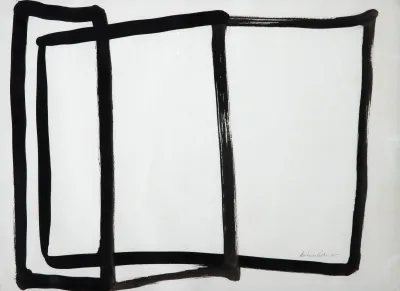
Chang Dai-Chien is regarded as the Chinese Picasso, was one of the largest and most versatile painters in China. Some claim that he can have his place among the greatest painters in the world. He was also a great collector and forger of works of art. Originally known as a Guohua (traditionalist), by the year 1960 he was reconsidered as a modern impressionist and expressionist painter. Chang is remembered as one of the most awarded painters of the 20th century.
Life and Work
Born in a family of artists in Neijiang, Sichuan, China, he studied techniques to dye fabrics in Kyoto, Japan and He returned to establish a famous career by selling his paintings in Shanghai.
The general of the Chinese Muslims and governor of Qinghai, Ma Bufang sent Chang to a Tibetan chapel to look for helpers able to analyze and copy the Buddhist art.
Admirer of Mestre Shitao, he painted several paintings that were sold for high values because they believed to be paintings from the 17th century. Until 1941, the works of Zhang Daqian were based mainly on the "four great monk painters of the Qing dynasty" (Hong Ren, Kun Can, Bada Sharen and Shitao), the four masters of the Wu School of the Dynasty Ming (Shen Zhou, Wen Zhengming, Tang Yin, Qiu Ying) and landscapers from the Yuan Dynasty (Huang Gongwang, Wu Zhen, Ni Zan and Wang Meng). In 1941, Chang took a trip to the unexplored caves of Dunhuang, an artistic paradise with thousands of millenary paintings, with 2,415 painted statues, sculptures, about 50,000 Buddhist scriptures historical documents, Other valuable items that were hidden from civilization until the year 1900. There, he studied the Chinese colorful paintings and changed his style, adopting techniques and colors used in historical paintings little known and abandoned by Chinese culture. Kuomintang, left China in 1948 and, after the Second Chinese Revolution, moved successively to Hong Kong, Darjeeling (India), Argentina and, finally, in 1953, settled in Mogi das Cruzes, where he remained until 1970 and their children still reside. In Brazil, Chang builds his ideal residence thanks to the funds gathered by the sale, to the Chinese government, of two precious old paintings. He created the famous Garden of the Eight Virtues (Bade Yuan) and dug an ornate lake of five pavilions (Wu Ting Hu). In the early 1960s, Chang abandons the Guohua style of painted contoured painting, returns to that of the Xieyi: painting with ink of personal expression and finally develops an expressive style of sneezed ink that differentiates it from all other painters. When leaving Brazil, Chang moves to Carmel (USA), before his permanent residence in Taipei, Taiwan.
A meeting between Chang and Picasso in Antibes (France) in 1953 was seen as the meeting of the prominent Masters of Art from the East and West. The two masters exchanged several paintings during this meeting.
Falsifications
As a forger, Chang created works so perfect that they arrived and sold for thousands of dollars. Unlike common counterfeits, his works, even after being recognized as falsifications, remained in museums to be admired.