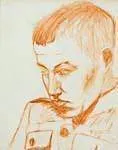
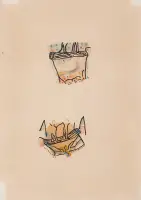
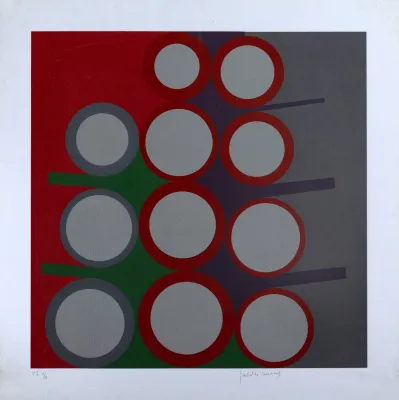
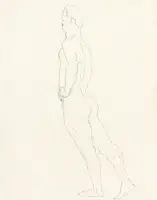
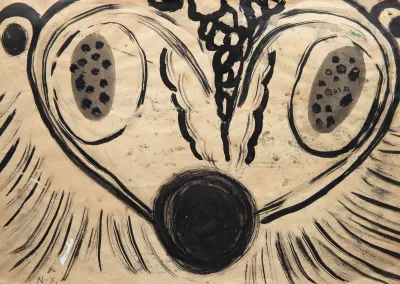
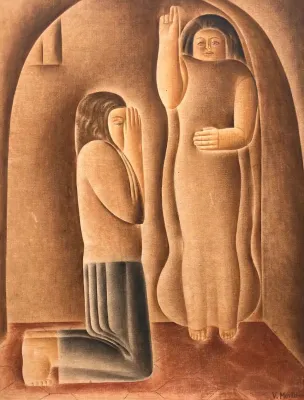
Arthur Nísio (Curitiba PR 1906 - Idem 1974)
Pintor, designer, recorder and teacher.
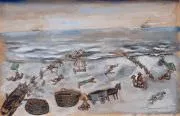
The stories of some artists are closely linked to their lands. From origins, that we are not sure what is most important, the place that gave rise to the work, or the work that eternalized the place. It seems that for an ethical or even ideal, it is impossible to unravel some artist/place associations. Arthur Nísio and Paraná are one of those pleasant symbiosis. When he delves into the history of one, he ends up inexorably unraveling the history of the other.
regardless of the latent vein of regionality that emanates from the work of Arthur Nísio, we are kind of caught up by the whole of his work. She is so sincere and real that we seem to divide those places in some hidden corner of our memory. A backyard corner that keeps a childhood smell, the routine work of its characters, which seem to be our own work... Everything, everything represented there with so much energy and vigor, that it is impossible not to get involved by his work. Paraná, on May 15, 1906. This interrelationship that was mentioned above, by the artist and his land, already had antecedents that would prevent things from forming in another way. Not only its history, but that of its entire family, has a close connection with the history of Paraná. His paternal grandfather, an Italian mechanic, and his maternal grandfather, a German blacksmith, arrived in Brazil hired by the French company in charge of the construction of the Curitiba-Paranaguá railway. In the uproar of what was one of the most important engineering works in the history of the State, the ties of the Nísio and Reimann families were strengthened. Jélio Reginato Nísio and Reimann Nísio, Arthur's parents, had six children. In the difficult times of the first two decades of the 20th century, they moved to Porto Alegre, in 1918, but already in 1923, they returned to Curitiba.
The natural aptitude to the design granted the young artist a scholarship. At the age of 17, he is going to the Institute of Fine Arts, in Porto Alegre. was Just the beginning of the trajectory of one of the greatest artists in the state of Paraná. In 1924, returning to Curitiba, Nísio became a student of the studio of Lange de Morretes, a temperamental artist, but very intelligent and technically prepared. Between 1925 and 1927, he also frequented João Turin's studio, to specialize in sculpture and modeling.
His first exhibition took place between the 1st and 16th of May 1928, where he presented drawings, woodcuts and landscapes. Despite being well received, the works did not sell. Nísio was discouraged, and when everything seemed lost, he received a visit from a couple who soon bought two canvases. Looking at the signature book, he found that it was Dr. Afonso Camargos, governor of the state, and his wife. A beautiful incentive, which brought him good future fruits.
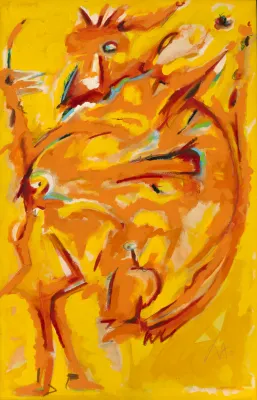
At 22 years old, seeking to evolve in his studies, he leaves for Germany. Many visits to museums and galleries were a constant part of their routine. But it was with Max Bergmann, from the Munich Academy of Fine Arts, who inherited an unmistakable trait in animal painting, so much so that Arthur Nísio is known worldwide as one of the most precious talents of animalist painting. He also studied during this period: figures, naked, landscapes and dead natures. In 1934, in the Rhineland Palatinate, he attended conferences on “The Figure in the Landscape”, given by Homeisen and Eugen Osvald.
Arthur Nísio was in Germany at the height of the Second World War. It wasn't easy moments. He had to send 5 works for analysis by the Gestapo and received authorization so that he could continue his work. Unlike the social and political crisis that reigned on the European continent, he began to succeed with his work. He participated in several exhibitions in several German cities and in 1938, he received the invitation to participate in an exhibition organized by the new City Hall of Landau Rhein-Pfalz, where he even received a special room. With only 1 hour of exposure, I had already sold all 5 canvases. A great success, after all, more than 2,000 works were on display. Even in an apparent state of social tension, through the war that was increasingly intensified, he lived a very productive period, selling as much as he executed and never being able to fulfill so many requests. He married in 1940 with Katharina Nísio. The horrors began more severely in 1942. Bombings forced their departures from Munich. In the midst of all this chaos, Gudrun, the couple's daughter, is born. In 1943 he was forced to abandon art and work on the fields, after all, all labor was necessary, to feed the fronts of the war. After 1944, he fled to near Munich, in a locality named Haimhausen. He had lost everything he had accumulated in his 18 years of Europe. From Germany they were sent to a refugee camp in France, from where they would be transferred to South America. The desire to continue with the art was such that it even sold its overcoat in Paris, to buy paints and brushes. He designed and painted everything, even works for jewelry stores. But he wanted immensely to return to Brazil.
Back to Brazil in 1946, he hardly resumes in Curitiba. A family was the anchor at the moment he needed it most. He lost all the material he had conquered, but he returned with a bag of knowledge that he would never have achieved, without the experiences in European terrain. He didn't lack admirers. His work was already consolidated with an insurmountable force. He returned to definitely mark the history of the visual arts in Paraná. He participated in the foundation of the School of Music and Fine Arts of Paraná and held several teaching chairs at that institution. He has always dreamed of his own and cohesive art from Paraná for all the artists of his generation. He died on April 26, 1974, after several months of hospitalization. His brushes were only abandoned two weeks before his death.
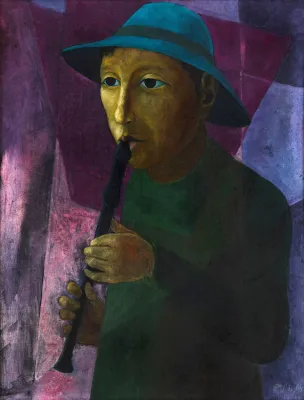
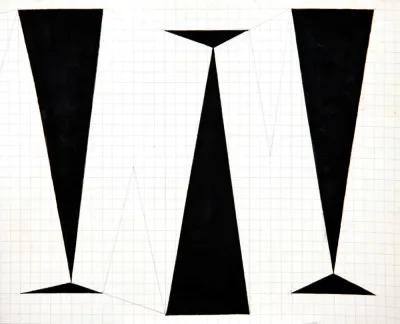
Owner of an unmistakable brushstroke and of extreme good taste for the colors, Nísio combined a technique with expression. He is certainly one of the biggest names in the art in this country.
Book on biography and work of the artist.
Launched by Posigraf Editora Ltda, in 2003, with texts by Angela Wank.
Collective exhibitions
s.d. - Keiserslanter, Landau, Luduwigs, Hafen and Baden-Baden (Germany) - Major Exhibition of the Max Bergmann General School
1931 - Munich (Germany) - Glass Palace of Munich
1947 - Curitiba PR - 4th Salão Paranaense de Belas Artes, in the Orfeão building of the Normal School of Curitiba - Gold Medal
1950 - Curitiba PR - 7th Salão Paranaense de Belas Artes, at the Institute of Education do Paraná Professor Erasmo Pilotto
1951 - Curitiba PR - Spring Hall
1953 - Curitiba PR - 10th Salão Paranaense de Belas Artes, at the International Coffee Exhibition and Feira de Curitiba - Tarumã
1954 - Curitiba PR - Salão Paranaense de Belas Artes - Travel Award
1955 - Curitiba PR - 8th Salon of Fine Arts of Spring, at Clube Concórdia - Prosdócimo Award
1956 - Curitiba PR - Salão Paranaense de Belas Artes - Acquisition Award
1957 - Curitiba PR - Salão Paranaense de Belas Artes - Acquisition Award
1958 - Curitiba PR - 10th Salon of Fine Arts of Spring, at Clube Concordia
1960 - Curitiba PR - 12th Salon of Fine Arts of Spring, at Clube Concórdia
1968 - Paraná - 5 Masters of Painting in Paraná
1972 - Curitiba PR - Artist's collective Paranaenses, at Galeria Cocaco
1973 - Paraná - Traveling Exhibition of the Paraná Painting
Posthumous exhibitions
1976 - Curitiba PR - Retrospective Arthur Nísio, Badep Exhibition Hall
1986 - Curitiba PR - Tradition/Contradiction, at MAC/PR
1987 - Curitiba PR - Summer Art, at Galeria Acaiaca
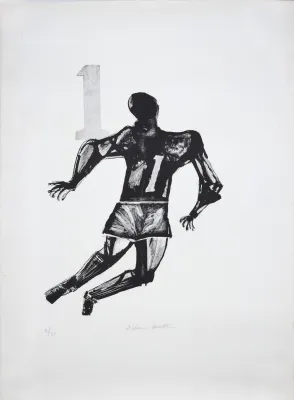
1988 - Curitiba PR - 8th Engraving Exhibition, in the FCC
1988 - Curitiba PR - 8th Paraná recorders from the 50's/60's, at the Municipal Museum of Art
1989 - Curitiba PR - A singular art Arthur Nísio, at MAC/PR
1991 - Curitiba PR - Municipal Museum of Art: Collection, at the Municipal Museum of Art
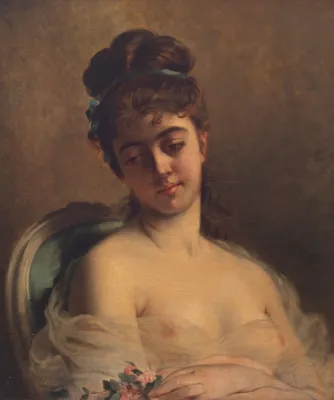
1999 - Curitiba PR - Portraits, in EMBAP
2004 - Curitiba PR - The landscape of Paraná and its painters, at Casa Andrade Muricy