Antônio Souza Pinto (Porto, Portugal 1846 - Rio de Janeiro RJ 1921)
Painter, teacher, caricaturist and lithographer.
Brother of the painter José Júlio de Souza Pinto (1856 - 1939), Antônio Alves Vale de Souza Pinto arrived in Brazil around 1862.1 It is assumed that he studied at the Academia Imperial de Belas Artes (Aiba), but no records of him are found in the institution's enrollment books.
Still during the Empire, he takes part in the Exposições Gerais de Belas Artes [General Exhibitions of Fine Arts] of 1876, 1879 and 1884. In 1876, he receives an honorable mention; in 1879, a silver medal; in 1884, the second gold medal. In 1882, he takes part in the Exhibition of the Liceu de Artes e Ofícios do Rio de Janeiro. During the Republic, he shows works in ten editions of the Exposições Gerais de Belas Artes, between 1890 and 1919. In 1900, he takes part in the Exposição Artístico-Industrial Fluminense [Rio de Janeiro Artistic-Industrial Exhibition]. In 1870, he founds, directs and illustrates the magazine O Lobisomem. In 1871, the magazine is absorbed by O Mosquito, where he then begins to contribute. That same year he also begins contributing to Vida Fluminense, by Augusto de Castro and Antônio de Almeida, where Angelo Agostini (1843 - 1910) works.
During the 1870s, he becomes a teacher at the Liceu, remaining there for decades. Between 1890 and 1893, he is vice-director of the institution. Between 1875 and 1893, he contributes illustrations to the magazine O Mequetrefe, alongside the illustrators Cândido Faria, Pereira Neto and Joseph Mill, and the writers Olavo Bilac (1865 - 1918), Artur Azevedo (1855 - 1908), Lopes de Mendonça and Filinto de Almeida (1857 - 1945), among others. He alternates this work with his work at O Mosquito. Between 1889 and 1890, he founds with Teixeira Rocha and Hilarião the short-lived magazine O Monóculo. In 1911, he contributes to the new edition of the magazine Brazil Artístico, of the Sociedade Propagadora das Belas Artes, linked to the Liceu. Throughout his career, until his death, he gives private drawing and painting lessons.
Critical Commentary
Antônio Souza Pinto is an exemplary case of how little known some 19th-century Brazilian artists are, despite their assiduous participation in the national scene.
An artist active for more than 40 years in Rio de Janeiro, Souza Pinto not only takes part in almost all the Exposições Gerais de Belas Artes between 1876 and 1919 (spanning several years of the Empire and of the Republic), but also bears responsibility for the consolidation of the illustrated press in Brazil and for the teaching of graphic arts, training professionals to work in these publications.
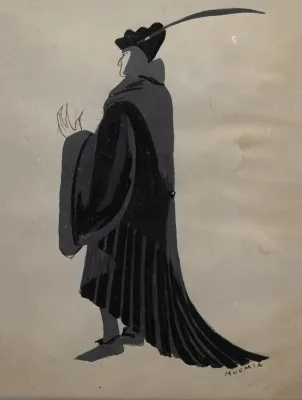
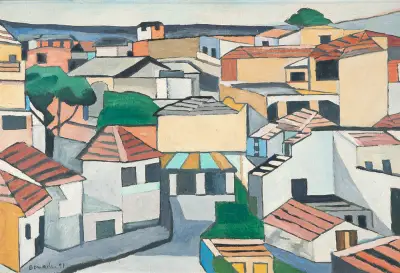
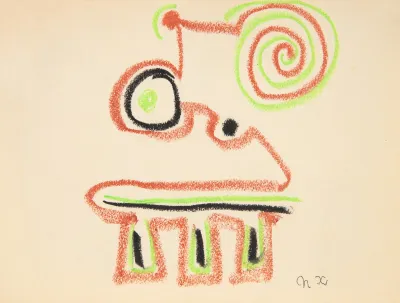
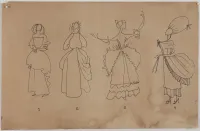
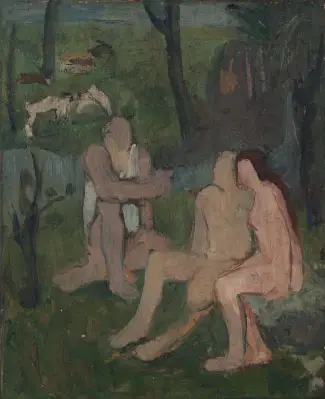
His production stands out for countless portraits made in pencil, pastel (his specialties) and oil, alongside the countless caricatures published in magazines such as O Lobisomem, O Mosquito, O Mequetrefe and A Vida Fluminense.
His work attracts little attention from Rio critics, who were more focused on history painting, genre painting and, at the end of the 19th century, landscape. The few comments on Souza Pinto throughout his career deal with his mastery in executing his works. For the critic Gonzaga Duque (1863 - 1911), "endowed with a true vocation for art, it is always with care and consummate taste that [Vale] finishes his paintings"2. For another critic, Félix Ferreira (1841 - 1891), the artist, in his works, "prefers likeness and movement to that refinement which artists call licked drawing"3.
If Souza Pinto's importance seems to lie more in his contribution to the visual culture of his time than specifically in the debate on the "fine" arts, one should not forget that, in the 19th century, this same debate recurrently appears in the sphere of visual culture through the dissemination of those illustrated magazines. Hence his important participation, directly or indirectly, in fostering the Brazilian art scene of the period.
Notes
1 As suggested by the press notices about his death. This information contradicts the current bibliography, which gives 1859 as the year of the artist's arrival in Brazil.
2 DUQUE, Gonzaga. Arte Brasileira. Introdução e Notas: Tadeu Chiarelli. Campinas: Mercado de Letras, 1995. p. 220.
3 FERREIRA, Félix. Belas artes: estudos e apreciações. Introdução e notas de Tadeu Chiarelli. Porto Alegre: Zouk, 2012. p. 119.
Group Exhibitions
1876 - Rio de Janeiro RJ - 24ª Exposição Geral de Belas Artes [24th General Exhibition of Fine Arts], at Aiba
1879 - Rio de Janeiro RJ - 25ª Exposição Geral de Belas Artes [25th General Exhibition of Fine Arts], at Aiba
1884 - Rio de Janeiro RJ - 26ª Exposição Geral de Belas Artes [26th General Exhibition of Fine Arts], at Aiba
1890 - Rio de Janeiro RJ - Exposição Geral de Belas Artes [General Exhibition of Fine Arts], at Enba
1894 - Rio de Janeiro RJ - 1ª Exposição Geral de Belas Artes [1st General Exhibition of Fine Arts], at Enba
1895 - Rio de Janeiro RJ - 2ª Exposição Geral de Belas Artes [2nd General Exhibition of Fine Arts], at Enba
1902 - Rio de Janeiro RJ - 9ª Exposição Geral de Belas Artes [9th General Exhibition of Fine Arts], at Enba
1907 - Rio de Janeiro RJ - 14ª Exposição Geral de Belas Artes [14th General Exhibition of Fine Arts], at Enba
1911 - Rio de Janeiro RJ - 18ª Exposição Geral de Belas Artes [18th General Exhibition of Fine Arts], at Enba
1913 - Rio de Janeiro RJ - 20ª Exposição Geral de Belas Artes [20th General Exhibition of Fine Arts], at Enba
1916 - Rio de Janeiro RJ - 23ª Exposição Geral de Belas Artes [23rd General Exhibition of Fine Arts], at Enba
1917 - Rio de Janeiro RJ - 24ª Exposição Geral de Belas Artes [24th General Exhibition of Fine Arts], at Enba
1919 - Rio de Janeiro RJ - 26ª Exposição Geral de Belas Artes [26th General Exhibition of Fine Arts], at Enba
Posthumous Exhibitions
1946 - São Paulo SP - 12º Salão Paulista de Belas Artes [12th São Paulo Fine Arts Salon], at Galeria Prestes Maia
1959 - Rio de Janeiro RJ - Group show, at Pinacoteca do Museu Imperial
Source: Itaú Cultural