Rufino Tamayo (1899)
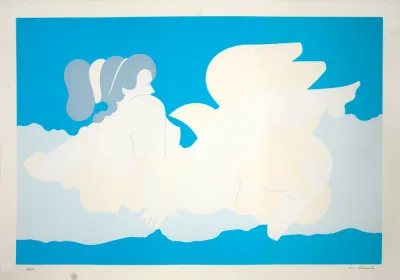
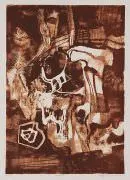
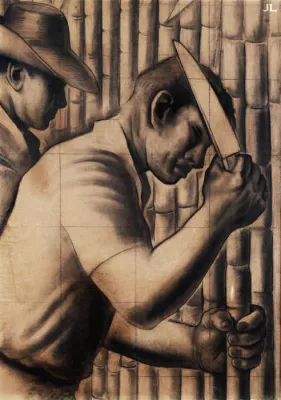
Rufino Tamayo reached a very deep poetic dimension in his painting. In the intonations and expressive resources, it appears as an elaborate and inner revival of the old myth, more markedly nurtured, however, by the experiences of modern art.
Tamayo was born in Oaxaca, Mexico, in 1899. India (Zapoteca), moved to Mexico City in 1911 to live with an aunt of hers after losing her parents. Four years later he began taking drawing classes.
He attended the School of Visual Arts (Academy of San Carlos), Mexico City, between 1917 and 1921. He was appointed director of the Department of Ethnographic Drawings of the National Museum of Archeology, Mexico City. The influence, in his works, of Mexican and pre-Columbian popular art, is noted.
He spent two years in New York, 1926 to 1928, from where he saw European art in museums and galleries. He met Stuart Davis and saw the exhibition of Henri Matisse at the Brooklin Museum in 1928.
Back to Mexico gave painting classes at the School of Visual Arts (San Carlos Academy), between 1928 and 1929. Like Maria Izquierdo, with whom she shared a studio from 1929 to 1934, she produced figurative works and dead nature, sometimes based on tropical fruits, whose chromatic records were broad and intense. At a time when the committed art of muralists was celebrated, Tamayo's modernist sensibility, as well as its non-utilitarian aesthetics, its political neutralism and international perspective, went against the current. In 1929 he exhibited at the Gallery of Modern Art of the National Theater, Mexico City. Three years later he was appointed director of the Department of Fine Arts of the Department of Education. In 1933 he painted a mural at the National School of Music and then at the Museum of Anthropology in Mexico City. In these murals he develops the themes of the homeland history in an interpretation of a mind-blowing atmosphere, in which disquieting shapes and colors stir, stretches in a luminous nightmare matter, reaching the most secret tones, deep fusions of the figures in the enigmatic cry. extinct of the color.
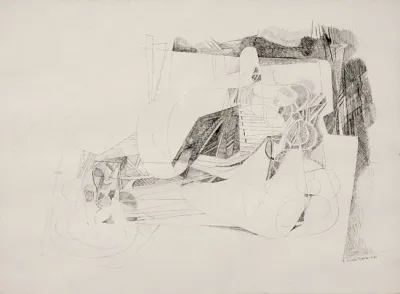
Returned to New York in 1936 as delegate of the League of Revolutionary Writers and Artists at the Congress of American Artists. He stayed in the United States for about twelve years, teaching at the Dalton School, from 1938 to 1947. Picasso's exhibition at the Museum of Modern Art, New York, in 1939, left him very impressed. A series of paintings about violent animals in the mid-forties had their roots in Mexican folk art, but they still reflected the concerns caused by the Second World War. He painted a mural at the Smith College Northampton, Massachusetts, in 1943. He established the Tamayo Taller at the Brooklin Museum School of Art in 1946. His 1948 retrospective exhibition at the Palacio de Bellas Arts, Mexico City, was attacked in the press by David Alfaro Siqueiros, for its high degree of abstraction. At the end of the forties and early fifties, he painted a series of paintings in which human figures face each other with infinite celestial spaces.
She moved to Paris in 1949. He exhibited at the Biennial of Venice that year and in the 1968. He exhibited at the Institute of Modern Art in Buenos Aires in 1951. The following year he made a mural at the Palace of Fine Arts, Mexico City. He exhibited at the São Paulo Biennials of 1953 and 1977. He made another mural, already in the UNESCO building in Paris, in 1958. In the fifties his figures were flatter and schematic while his colors tended to explore the intense harmonies of a single tone.
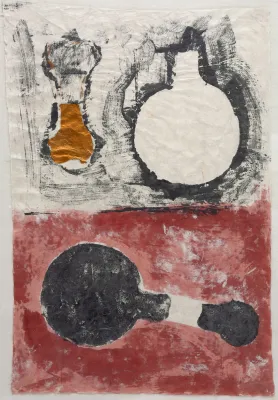
He returned to Mexico in 1964 and painted a mural at the new National Museum of Anthropology in Mexico City. Retrospective exhibitions of his work were celebrated at the Palace of Fine Arts of the Capital of Mexico in 1967 and 1987, at the Phoenix Art Museum in 1968 and the same year, at the National Museum of Art in Belgrado. In 1973 he began to work on mixography, a new technique of engraving in relief. The following year, he duped his collection of pre-Columbian art to the city of Oaxaca, as a background for the prehispanic art museum of Mexico &ldquorufino tamayo&rdquo. He had exhibited at the Museum of Modern Art in Paris, 1974 at the Museum of Modern Art in Mexico City, at the Museum of Modern Art, Tokyo, 1976 at the Museum of Bellas Arts Foundation, Caracas, 1977 at The Phillips Collection, Washington, D.C., 1978 and at The Solomon R. Guggenheim Museum, New York, 1979. At the Museum of International Contemporary Art &LDQuarufino Tamayo&Amp;rdquo was inaugurated In 1981 in Mexico City, they celebrated a retrospective exhibition of this artist's work in 1987, and another at the Centro de Arte Reina Sofia de Madrid in 1988. The ardor of a complete and acute imagination, the mysterious deities, the warriors, the nocturnal echoes, the musicians, the shadows of men and places of their land, expressing above all an immense loneliness, as if it fell on the domains and on The Sovereigns of the People of the Sun The darkness of a desperate melancholy.
Tamayo continued to work until the last days of his life, dying on June 24, 1991 of an attack cardiac, in Mexico City.
Awards
Tamayo is considered one of the main artists in the history of Mexico on an equal footing with men, such as Diego Rivera and José Clemente Orozco, although his work does not a political approach, such as these. In addition to the Faculdade Honors mentioned above, Tamayo has already received several awards and honors, mentioning among them:
2 nd prize of the Pittsburgh International Exhibition
Grand Prix of Painting at the São Paulo Biennial II
National Arts Award 1964 in Mexico.
Colouste Gulbenkian Prize Instituto de Artes de Paris
Official of the Order of the Legion of Honor of France
Commander of the Italian Republic
Name of the Son by the Government of Oaxaca
Florence Gold Cup
Albert Einstein Medal Technion Israel Institute
Medal of Merit in Fine Arts of King Juan Carlos I of Spain
Belisario Medal of the Senate of the Domínguez Republic 1991.
Source:
Sullivan, Edward J. Madrid. Latin American artists del siglo XX. ed. NEREA, 1992.
ROBLES, Luiz G. FEZI, Elda. American painters. In: Delta Gallery of Universal Painting. Rio de Janeiro: Ed. Delta S.A., 1972
Emaxilab