José Resende (São Paulo SP 1945)
Sculptor.
José de Moura Resende Filho studied engraving at the Armando Álvares Penteado Foundation - FAAP, in 1963. same year, he joined the Faculty of Architecture and Urbanism at Universidade Mackenzie. He begins studying drawing with Wesley Duke Lee (1931). In 1964, he did an internship at the office of the architect Paulo Mendes da Rocha. In 1966, founded, with Wesley Duke Lee, Nelson Leirner (1932), Geraldo de Barros (1923 - 1998), Frederico Nasser (1945) and Carlos Fajardo (1941) The Rex Group. He graduates in Architecture and is one of the founders of Escola Brasil:, together with Luiz Paulo Baravelli (1942), Frederico Nasser and Carlos Fajardo. In the 1970s, he is a professor at the Institute of Arts and Decoration at the Faculty of Communication and Art at Mackenzie University, and at the Department of Sculpture at the Faculty of Plastic Arts of FAAP. In 1975, he is co-editor of the magazine Malasartes, in which he publishes articles. Between 1976 and 1986, he is a full professor of architectural language and head of department at the Faculty of Architecture and Urbanism of the Pontifical Catholic University of Campinas. Between 1984 and 1985, he resides in New York as a fellow at the John Simon Guggenheim Foundation. In his works, he explores the expressive potential of the materials used, revealing the dialogue with Arte Povera and with North American post-minimalism. It works with a diversity of materials such as stones, copper tubes, lead blades, steel cables, plates and glass ampoules. It also uses liquids such as mercury, water and sepia ink. In more recent works, he also uses leather and paraffin.
Critical Comment
In the early 1960s, José Resende studies drawing with Wesley Duke Lee (1931) and takes an engraving course at the Fundação Armando Álvares Penteado - FAAP, São Paulo. In 1967, he graduated in Architecture from Universidade Presbiteriana Mackenzie. At that time, he works as an intern at the office of the architect Paulo Mendes da Rocha (1928). With Nelson Leirner (1932), Wesley Duke Lee, Geraldo de Barros (1923-1998), Carlos Fajardo (1941) and Frederico Nasser (1945), creates the Rex group in 1966. In 1970, José Resende participated in the foundation of the Centro de Experimentação Artística Escola Brasil:, which values different methods of traditional teaching in visual arts. He teaches at several institutions in São Paulo, including the School of Communications and Arts of the University of São Paulo - ECA/USP. From 1979 to 1981, he takes a postgraduate course in the Department of History of the Faculty of Philosophy, Letters and Human Sciences at USP - FFLCH/USP.
In the 1960s, his work, as pointed out by the scholar Daisy Peccinini, presents evocations of a "magical" atmosphere, probably arising from the study with Wesley Duke Lee, as in honor of the distant horizon (1967). In the works Portrait of My Father (1965), Liaisons Dangereuses (Dangerous Liaisons, 1966) and Nuptias on the Magic Carpet (1967), the character of an evocative fantasy evocative of an ironic tone of origin is noted. Pop.
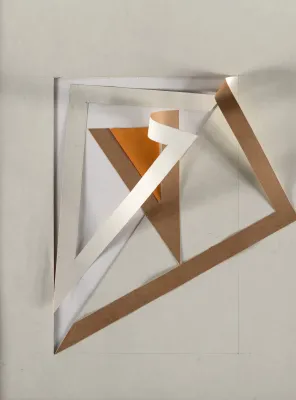
Later, his works acquire a more literal characteristic, taking advantage of the expressive potentialities of the materials used, in line with the concerns of art and North American post-minimalism. Thus, the diversity of materials chosen by the artist is understood: copper tubes, lead blades, steel cables, plates and glass ampoules. It often uses the most diverse liquids: mercury, water and sepia ink. In later works he also uses leather and paraffin. The artist highly values the choice of materials, which have an expressive character. The use of paraffin, for example, because it is a material that is easily solidified, allows the viewer to observe the sculptor's gesture and the crystallization of this action, in the final form. In some sculptures from the 1990s, it uses metal hubcaps as modules for various articulations.
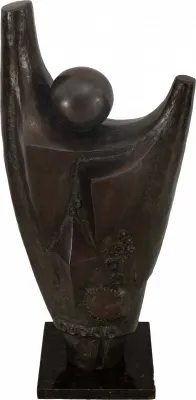
In summary, the artist's most characteristic production seeks to give relevance to the elements employed and their relations with the space, instead of just using them as a support for conventional forms. It explores the spatial reality by creating sculptures that incorporate or dialogue with the empty spaces. His works are distinguished by tense plastic joints: twists, curves and knots, which suggest precarious balance, sensation of movement or displacement.
Criticism
"He has already worked with copper tubes, blades of Leads, velvet curtains, pressed liquids between glass sheets, mercury ampoules and now, in the most recent works, it has used the metal but also the leather and paraffin. With paraffin, for example, it is a material that quickly solidifies, It creates objects in which the way it is made appears, that is, the gesture, and then the crystallization of this action, in the final form. by José Resende, nothing is orthodox, nor is he faithful to this or that theoretical segment. This is why his work still holds such a vitality that rare artists of the 70s managed to preserve".
Casimiro Xavier de Mendonça
MENDONÇA, Casimiro Xavier de. José Resende: Action on the matter. Gallery: Art Magazine, São Paulo, n. 9, p. 62-69, 1988.
"Resende's work is not hermetic. It is a work that easily expresses the physical and mental process of its construction, the mishaps of the coherent final resolutions and the physical and ment of the result. They are gigantic glass ampoules combining various liquids, such as chloroform, water, sepia ink, oil, mercury; and rectangular or square glass plates (used on the floor and wall) that press plaster, rubber or pave the way to thin tin bands.
Saved one or another piece, this is a work that still falls short of the old 'manufacture' of conventional sculptural objects, to the formal compositional qualities of hierarchical organization and - despite of rejecting their condition as 'pedestal' objects - retain that solid, striking and unephemeral presence that these objects have. They refer more naturally to the tradition represented by the constructivists or kinetics, for example, than to the most recent movements of the sculptural vanguard that antagonized the tradition. Within the resumption of the eternal values of the artistic object and the questioning of the contemporary values that this object assumed - often in a hasty and incomplete way -, they can be inserted in what is called post-minimalism. In other words, the synthesis of the radical 'disinfecting' moments of the minimalist mysticism, which is, rather, of course, the libertarian antithesis of its dogmas". Sheila. José Resende and the faithful portrait of an action. In: ______. Art and its time. São Paulo: Perspectiva, 1991. p. 360-361. (Debates, 237).
"(...) Each sculpture by José Resende is a company that decides on its own: the singular evidence intact is what sustains and eventually resizes the 'uncertain' intelligence of the set. Its initial impact derives exactly from the impression of shaping the unstable and the contingent. or rather, in more accurate terms, to display them so fluently as factors of structural cohesion.
The reason, the reason for each piece, would be to carry out a test. Test to verify the relevance of the unit, whatever it may be, in the midst of seriality, automatism and generalized dispersion. Also test to investigate the cultural reach of a strictly plastic language in the face of the growing demand for a 'social speech' of art images. No matter how transitory, 'simulacros' are intended, images record, represent and fix something - in short, images remain and, as such, available. The plastic phenomenon, conversely, is not subject to a similar appropriation: it will discover and name it where it may appear; After all, it summarizes a variable, intermittent, controversial experience.
of an almost volatile or almost amorphous aspect, José Resende's sculpture resists the presentation through images. Light, instantaneous, or thick and truncated, at the very limit of individuation, such pieces do not require contemplation: observing and feeling them requires to experiment with them, to pass on their constructive articulations on their own. Criticizing them, in turn, consists of a large measure of knowing how to follow multiple initiatives, of disparate syntaxes, which restore the actuality of the plastic adventure".
Ronaldo Brito
RESENDE, José. Resende. Texto Ronaldo Brito. Rio de Janeiro: Centro Cultural Banco do Brasil, 1994. p. 6.
"José Resende, deepening his conception of art as a specific form of thought, demanding a specialized reading, would be responsible for the of new materials in the field of sculpture such as paraffin, glass, rubber, leather, lead, felt, copper, fabrics, pitch and even liquid elements, exerting, as a consequence, a considerable influence on the new Brazilian sculptors. In recent text, Ronaldo Brito highlights 'the blind clashes, with materials notoriously refractory to any regular formalization', 'exploring frictions, aversions and exclusively material impregnations', and, as these materials are, in general, common, heavy and industrial, 'favoring free associations with construction processes'".
Frederico Morais
morals, Frederico. The three-dimensional field: sculptures, reliefs, objects and installations. In: Three-dimensionality: Brazilian Art of the 20th century. 2. Ed. São Paulo: Itaú Cultural: Cosac & Naify, 1999. p. 236.
Testimations
"In the April Salon (Rio - '65) I've participated with objects. They were objects very distant from each other as they did. There was even a box that would be well-dadaistic or surrealistic roots: a tiny, precious box, a little exquisite, covered in velvet with a glass of mercury inside. You saw yourself inside. In the same set of work there was an acrylic box that contained a photograph of my father; Although he had this slightly intimate nature, he already broke with this traditional support thing, with the curiosity of producing something with acrylic.
In the first Rex exhibition, I exposed pieces that added to those with which he had participated in the April salon. With Rex's constant exposures, there was a very large acceleration of production. They were already constructions, with very different materials between the different pieces. There was a very big leap in my work. I believe it culminated in larger pieces, when we sent work to Bienal 67. Until then, we had kept away from these salons. With the end of Rex, finally, in a way, we capitulated, entering the Bienal. Already in 65, at that April exhibition, it was where these object manifestations appeared, when they won the Roberto Magalhães Award, which was traditionally a graphic artist, of drawing.
There were already several activities in Rio de Janeiro, revolving around this object name, which must even come from the theory of non-object. Trying to raise the appearance of objects not linked to the aesthetic proposal of neoconcretes is difficult to do. Because, when in Rio de Janeiro, Antonio Dias, Gerchman, Vergara began to participate, there was a great approximation of these with, for example, Hélio Oiticica, Lygia Clark, Ferreira Gullar, who saw in them a certain revival of the issue of art production, a A certain expectation for a strengthening of the manifestation of art here.
We in São Paulo did not participate in this process at all. This popcrete activity by Waldemar Cordeiro is not an opening. We consider a appropriation of POP in a very superficial way. Our position against this popcrete exhibition, at the time, was to find it an appropriation that seemed to us an extremely simplistic understanding of pop. Thing by the way, which I think until today". Alvarado, Daisy Valle Machado Peccinini de (Coord. ) Object in the art: Brasil 60s. Presentation Daisy Valle Machado Peccinini de Alvarado. São Paulo: FAAP, 1978. p. 203.
Individual exhibitions
1970 - Rio de Janeiro RJ - Individual, at MAM/RJ
1970 - São Paulo SP - Individual, at MAC/USP
1972 - Assumption (Paraguay) - Individual, at the Brazilian Cultural Mission Gallery
1974 - São Paulo SP - Individual, at MASP
1975 - Rio de Janeiro RJ - Individual, at MAM/RJ
1980 - Rio de Janeiro RJ - Contemporary Brazilian Art, at Funarte
1980 - Rio de Janeiro RJ - Individual, at Parque da Catacumba
1981 - São Paulo SP - Individual, at the Raquel Arnaud Art Office
1983 - São Paulo SP - Individual, at the Art Office Raquel Arnaud
1985 - São Paulo SP - Individual, at the Art Office Raquel Arnaud
1988 - Rio de Janeiro RJ - Individual, at Funarte. Sérgio Milliet Gallery
1988 - São Paulo SP - Individual, in the commercial sub-district of art
1989 - Rio de Janeiro RJ - Individual, at the Sérgio Milliet Gallery
1989 - São Paulo SP - Individual, in the sub-district Commercial Art
1990 - São Paulo SP - Individual, at MAC/USP
1991 - Hartford (United States) - Individual, at the University of Hartford. Joseloff Gallery
1991 - São Paulo SP - Individual, at the Art Office Raquel Arnaud
1991 - Vitória ES - Individual, at UFES
1992 - São Paulo SP - Individual, in the Chapel of Morumbi
1993 - Assunção (Paraguay) - Individual, at Galeria Lívio Abramo
1993 - Rio de Janeiro RJ - Individual, at the Paulo Fernandes Gallery
1994 - Rio de Janeiro RJ - Individual, CCBB
1994 - São Paulo SP - Individual, at USP. Polytechnic School
1995 - New York (United States) - Individual, at Robert Miller Gallery
1995 - Rio de Janeiro RJ - Individual, at the Paulo Fernandes gallery
1995 - São Paulo SP - José Resende: Sculptures, at the Art Cabinet Raquel Arnaud
1996 - Largo da Carioca RJ - Passenger, in Largo da Carioca
1997 - Rio de Janeiro RJ - Individual, at the Paulo Fernandes Gallery
1997 - São Paulo SP - individual, in the State Archive
1997 - São Paulo SP - Individual, at the Hotel Renaissance
1997 - Volta Redonda RJ - Marco dos 100 million tons, at CSN
1998 - Rio de Janeiro RJ - Individual, at the Hélio Oiticica Arts Center
1999 - Recife PE - Individual, at MAMAM
1999 - São Paulo SP - Individual, at the Camargo Vilaça Gallery
2002 - Rio de Janeiro RJ - Academia dos SELECTOS, at Paço Imperial
2002 - São Paulo SP - Individual, at the Art Office Raquel Arnaud
2003 - São Paulo SP - Individual, at the CCSP
2005 - São Paulo SP - Individual, at the Centro Cultural Maria Antonia
Collective exhibitions
1965 - São Paulo SP - 2nd National Youth Drawing Exhibition, at MAC/USP
1966 - Rio de Janeiro RJ - Young Art of the Americas MAM/RJ
1966 - Rio de Janeiro RJ - 1st April Salon, at MAM/RJ
1966 - São Paulo SP - Discovery of America, at Rex Gallery & Sounds
1966 - São Paulo SP - Flash Back, at Rex Gallery & Sounds
1966 - São Paulo SP - Rex Gallery: Inaugural Exhibition, at Rex Gallery & Sons
1967 - Brasília DF - 4th Salon of Modern Art of the Federal District, at the Cláudio Santoro National Theater - Acquisition
1967 - São Paulo SP - 9th São Paulo International Biennial, at the Bienal Foundation - Prize Acquisition
1967 - São Paulo SP - 1st Young Contemporary Art, at MAC/USP - Acquisition Award
1968 - Rio de Janeiro RJ - Baravelli, Fajardo, Nasser, Resende, at Petite Galerie
1968 - São Paulo SP - Baravelli, Fajardo, Nasser, Resende, at the Art-Art Gallery
1970 - Rio de Janeiro RJ - Baravelli, Fajardo, Nasser, Resende, at MAM/RJ
1970 - São Paulo SP - Baravelli, Fajardo, Nasser, Resende, at MAC/USP
1972 - Assunção (Paraguay) - Luiz Paulo Baravelli, Frederico Nasser, José Resende and Carlos Fajardo, at the Brazilian Cultural Mission Gallery
1972 - São Paulo SP - Art/Brazil/Today: 50 years later, at the Collectio Gallery
1972 - São Paulo SP - São Paulo National Biennial, at the Bienal
1972 - São Paulo SP - Sesquicentennial Art Exhibition of Independence and Plastic Brazil - 72, at Fundação Bienal
1972 - São Paulo SP - 4th Panorama of Current Brazilian Art, at MAM/SP - Honorable Mention
1973 - Brussels (Belgium) - Image of Brazil, at the Manhattan Center
1974 - São Paulo SP - Galeria Luisa Strina: Inaugural Exhibition, at Galeria Luisa Strina
1975 - Campinas SP - Waltercio Caldas, Rubens Gerchman, Carlos Vergara, José Resende, at MacC
1975 - São Paulo SP - 7th Panorama of Current Brazilian Art, at MAM/SP - Sculpture Award
1978 - São Paulo SP - The object in art: Brazil 60s, at MAB/FAAP
1980 - Paris (France) - 11th Bienal de Paris - Honorable Mention
1981 - São Paulo SP - Arte Pesquisa, at MAC/USP
1981 - São Paulo SP - Brazilian contemporary artists, at the São Paulo Art Office
1983 - Rio de Janeiro RJ - 13 Artists/13 Works, at Thomas Cohn Contemporary Art
1983 - Rio de Janeiro RJ - 3000 cubic meters, at the Sérgio Porto Cultural Space
1983 - São Paulo SP - 17th São Paulo International Biennial, at the Biennial Foundation
1983 - São Paulo SP - Imagine the gift, at the Art Office Raquel Arnaud
1984 - Rio de Janeiro RJ - Madeira, Art Matter, at MAM/RJ
1984 - São Paulo SP - Gilberto Chateaubriand Collection: portrait and self-portrait of Brazilian Art, at MAM/SP
1984 - São Paulo SP - Tradition and Rupture: Synthesis of Brazilian Art and Culture, at the Biennial Foundation
1985 - Hakone (Japan) - The Fourth Henry Moore Grand Prize Exhibition, at the Hakone Open-Air Museum - Acquisition Award
1985 - Rio de Janeiro RJ - 8th National Salon of Plastic Arts, at MAM/RJ
1985 - Santo Domingo (Dominican Republic) - 1st Sculpture Symposium
1985 - São Paulo SP - Seven Artists, at the Art Office Raquel Arnaud
1985 - São Paulo SP - Trends of the Artist Book in Brazil, at the CCSP
1986 - Fortaleza CE - 1st International Exhibition of Ephemeral Sculptures, at Fundação Demócrito Rocha
1986 - Niterói RJ - 1083º, at UFF. Documentation Center
1986 - Porto Alegre RS - Rubem Knijnik Collection: Brazilian Arts 60/70/80, at Margs
1986 - São Paulo SP - The new dimension of the object, at MAC/USP
1986 - São Paulo SP - The turn of the century, at the Pinacoteca do Estado
1987 - Paris (France) - Modernity: Brazilian art of the 20th century, at the Musée d'art Moderne de la Ville de Paris
1988 - Ribeirão Preto SP - Art Hoje 88, at the Casa da Cultura de Ribeirão Preto
1988 - Rio de Janeiro RJ - A sculpture for the sea of Angra, at EAV/Parque Lage
1988 - São Paulo SP - 63/66 Figure and object, at the Millan Gallery
1988 - São Paulo SP - Modernity: 20th century Brazilian art, at MAM/SP
1988 - Seoul (South Korea) - Olympic Park Sculpture Exhibition
1988 - Venice (Italy) - 43rd Venice Biennale
1989 - São Paulo SP - 10 sculptors, at the Art Cabinet Raquel Arnaud
1989 - São Paulo SP - 20th São Paulo International Biennial, at the Bienal Foundation
1990 - Atami (Japan) - 9th Brazil-Japan Contemporary Art Exhibition
1990 - Brasília DF - 9th Brazil-Japan Contemporary Art Exhibition
1990 - Rio de Janeiro RJ - 9th Brazil-Japan Contemporary Art Exhibition
1990 - São Paulo SP - 9th Brazil-Japan Contemporary Art Exhibition, at the Brazil-Japan
1990 - Sapporo (Japan) - 9th Brazil-Japan Contemporary Art Exhibition
1990 - Tokyo (Japan) - 9th Brazil-Japan Contemporary Art Exhibition
1991 - Stockholm (Sweden) - Viva Brasil Viva, at Konstavdelningen Och Liljevalchs Konsthall
1991 - São Paulo SP - National x International in Brazilian Art, at the Paço das Artes
1991 - São Paulo SP - What Are You Now Generation 60?: Young Contemporary Art from the 60s revisited, at MAC/USP
1991 - São Paulo SP - Fine Arts Exhibition Program, at CCSP
1992 - Curitiba PR - 10th Engraving Exhibition City of Curitiba/Mostra América, at the Engraving Museum
1992 - Kassel (Germany) - 9th Documenta, at the Fridericianum Museum
1992 - Paris (France) - Latin American Artists of the Twentieth Century, at the Center Georges Pompidou
1992 - Rio de Janeiro RJ - 1st on the way to Niterói: João Collection Sattamini, at Paço Imperial
1992 - São Paulo SP - The Seduction of Volumes: The Three-Dimensionals of MAC, at MAC/USP
1992 - São Paulo SP - White Dominant, at the São Paulo Art Gallery
1992 - São Paulo SP - Annual Visual Arts Exhibition Program 91, at the Bienal Foundation
1992 - Seville (Spain) - Latin American Artists of the Twentieth Century, at Estación Plaza of Arms
1993 - Cologne (Germany) - Latin American Artists of the Twentieth Century, at Kunsthalle Cologne
1993 - New York (United States) - Latin American Artists of the Twentieth Century, at MoMA
1993 - New York (United States) - Waltercio Caldas and José Resende, at John Gibson Gallery
1993 - Rio de Janeiro RJ - Brazil 100 years of art Moderna, in the MNBA
1993 - Rio de Janeiro RJ - Emblems of the body: the nude in Brazilian modern art, at CCBB
1993 - Santos SP - Santos Biennial
1993 - São Paulo SP - Brazilian art In the world, a trajectory: 24 Brazilian artists, at Dan Galeria
1993 - São Paulo SP - Exhibition Luso-Nippo-Brazilian, at MAB/FAAP
1994 - São Paulo SP - 1st Art City: Cities Without Windows, in the Municipal Slaughterhouse of Vila Mariana
1994 - São Paulo SP - Bienal Brasil Século 20th, at Fundação Bienal
1995 - Rio de Janeiro RJ - 24th Panorama of Brazilian Art, at MAM/RJ
1995 - São Paulo SP - Current Brazilian Art Panorama, at MAM/SP - Acquisition Award
1996 - Brasília DF - Art and Urban Space: Fifteen Proposals, at the Ministry of Foreign Affairs. Palácio do Itamaraty
1996 - Porto Alegre RS - 1st Sesc Sculpture: International Exhibition of Outdoor Sculptures, at Sesc Campestre
1996 - São Paulo SP - Brazilian Art: 50 years of history in the collection MAC/USP: 1920-1970, at MAC/USP
1996 - São Paulo SP - 2nd United Artists: Utopia, at Casa das Rosas
1997 - São Paulo SP - Diversity of contemporary Brazilian sculpture, On Avenida Paulista - Realization Ministry of Culture/Itaú Cultural
1997 - São Paulo SP - Brazilian sculpture: profile of an identity, at Banco Safra
1997 - São Paulo SP - Intervals, at Paço das Artes
1997 - São Paulo SP - Three-dimensionality in 20th Century Brazilian Art, at Itaú Cultural
1997 - Washington (United States) - Brazilian sculpture: profile of an identity, in the cultural center of the IDB
1998 - Belo Horizonte MG - three-dimensionality in Brazilian art of the 20th century, in the Itaú Cultural
1998 - Brasília DF - Three-dimensionality in Brazilian art of the 20th century, at the Itaú Cultural Gallery
1998 - Penápolis SP - Three-dimensionality in Brazilian art of the 20th century, at the Itaú Cultural Gallery
1998 - Ribeirão Preto SP - The dimensions of contemporary art, at the Art Museum of Ribeirão Preto Pedro Manuel-Gistondi
1998 - Ribeirão Preto SP - João Carlos Figueiredo Ferraz Collection, at MAC/Ribeirão Preto
1998 - Rio de Janeiro RJ - Beijo, at the Paço Imperial
1998 - São Paulo SP - 24th São Paulo International Biennial, at the Bienal Foundation
1998 - São Paulo SP - 1970s, at the São Paulo Gallery Paulo
1998 - São Paulo SP - Transitive Forms: Brazilian Art, Construction and Invention 1970/1998, at the Art Office Raquel Arnaud
1998 - São Paulo SP - Fronteiras, at Itaú Cultural
1998 - Sydney (Australia) - 11th Sydney Biennial
1999 - Liverpool (England) - 1st Liverpool Biennial of Contemporary Art at Compton House
1999 - São Paulo SP - 26th Panorama of Brazilian Art, at MAM/SP
2000 - Belo Horizonte MG - Investigations: They are or are not engravings, at Itaú Cultural
2000 - Belo Horizonte MG - 26th Belo Horizonte Modern Art Salon. Brazil Tomorrow
2000 - Brasília DF - Investigations: They are or are not engravings, at Galeria Itaú Cultural
2000 - Curitiba PR - 12th Exhibition of Engraving of Curitiba. body marks, folds of the soul
2000 - Fortaleza CE - 26th panorama of Brazilian art, at the Dragão do Mar Center of Art and Culture
2000 - Lisbon (Portugal) - 20th century: Art of Brazil, at the Centro de Arte Moderna José de Azeredo Perdigão
2000 - Niterói RJ - 26th Panorama of Brazilian Art, at MAC/Niterói
2000 - Rio de Janeiro RJ - Situations: Brazilian Arts 70's, at Fundação Casa France-Brazil
2000 - São Paulo SP - Brazil + 500 Rediscovery Exhibition, at the Bienal Foundation
2000 - São Paulo SP - Brazilian sculpture: from the Pinacoteca to Jardim da Luz, at the Pinacoteca do State
2001 - Oxford (United Kingdom) - Experiment Experience: Art in Brazil 1958-2000, at the Museum of Modern Art
2001 - Porto Alegre RS - 3rd Visual Arts Biennial of the Mercosul
2001 - Porto Alegre RS - Liba Collection and Rubem Knijnik: Contemporary Brazilian Art, at Margs
2001 - Rio de Janeiro RJ - The spirit of our time, at MAM/RJ
2001 - São Paulo SP - 70s: Trajectories, at Itaú Cultural
2001 - São Paulo SP - The spirit of our time, at MAM/SP
2001 - São Paulo SP - Trajectory of light in Brazilian art, at Itaú Cultural
2002 - Brasília DF - Fragments to its magnet, in the contemporary cultural space Venâncio
2002 - Fortaleza CE - Ceará rediscovered Brazil, at the Centro Dragão do Mar de Arte e Cultura
2002 - Londrina PR - São or Aren't they engravings?, at the Museum of Art of Londrina
2002 - Rio de Janeiro RJ - Caminhos do Contemporânea 1952-2002, at Paço Imperial
2002 - Rio de Janeiro RJ - Parallels: Brazilian art of the second half of the 20th century in context, Collección Cisneros, at MAM/RJ
2002 - São Paulo SP - 12 sculptures, in the Design Shed
2002 - São Paulo SP - 4th ArtecidadeZonadeZonhale Sesc
2002 - São Paulo SP - CidadeProjeto / CidadeExperiência, at MAM/SP
2002 - São Paulo SP - Parallels: Brazilian art from the second half of the 20th century in context, Colección Cisneros, in the MAM/SP
2003 - Madrid (Spain) - ARCO/2003, at Parque Ferial Juan Carlos I
2003 - Rio de Janeiro RJ - Grupo Rex/Escola Brasil, at MAM/RJ
2003 - Rio de Janeiro RJ - Twenty-five years: Art Gallery Cândido Mendes, at Galeria Candido Mendes
2003 - São Paulo SP - The Subversion of Media, at Itaú Cultural
2003 - São Paulo SP - Arco 2003, at the Art Office Raquel Arnaud
2003 - São Paulo SP - Fluid Aesthetics, at MAM/SP
2003 - São Paulo SP - My friends, at MAM/SP
2003 - São Paulo SP - A difficult moment of balance, at MAM/SP
2003 - Vila Velha ES - O Sal da Terra, at the Vale do Rio Doce Museum
2004 - São Paulo SP - Contemporary Art: an open story, at the Raquel Art Office Arnaud
2004 - São Paulo SP - In time without time, at Paço das Artes
Source: Itaú Cultural