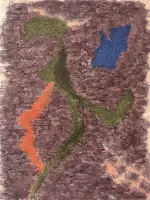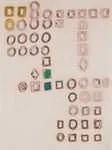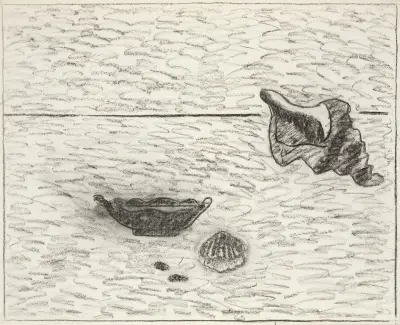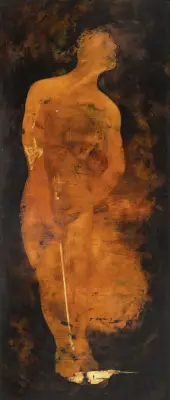
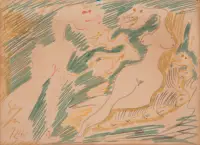
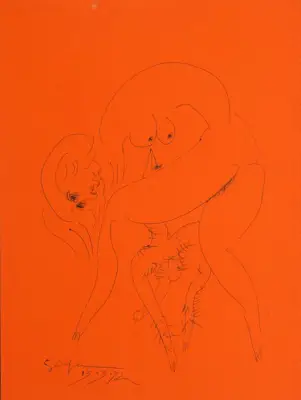
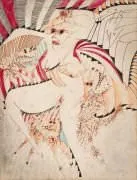
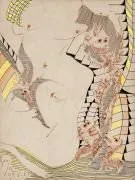

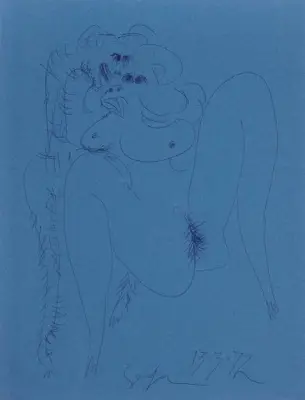
Ivan Serpa (Rio de Janeiro RJ 1923 - Idem 1973)
Ivan Serpa was a painter, engraver, designer, plastic artist and teacher, born in Rio de Janeiro in 1923. 1946, began his studies in art with the engraver Axel Leskoschek, and in 1947, he exhibited in the modern division of the National Salon of Fine Arts. At the beginning of the 1950s, his work was already identified with geometric abstraction, and his participation in the 1st São Paulo Biennial of 1951 reaffirms this option. On the occasion, he received the Young National Painter Award.
From 1952 onwards, he also began to dedicate himself to didactic activities with children in painting courses held at the Museum of Modern Art, an activity that accompanied him throughout his life. In 1953, he participated in the 1st National Exhibition of Abstract Art in Petrópolis and, in the following year, created the Frente Group, assuming its leadership throughout its two years of existence. In 1957, he participated in the I National Exhibition of Concrete Art in Rio de Janeiro and, in the same year, received the award for travel abroad from the National Salon of Modern Art. Between 1958 and 1959, he lived in Europe, returning to Brazil to participate in the I Exhibition of Neo-Concrete Art held in Rio de Janeiro. black", of expressionist tendency, developing in a period of political crisis that culminated in the military coup of 1964. From 1965, he returned to geometric abstractionism, introducing elements more linked to the sensuality of the forms, something absent in His concrete phase of the 1950s. He participated in important exhibitions throughout the 1960s, such as Opinion 65, Opinion 66 and Nova Objetividade Brasileira, which brought together great names in the emerging generation of visual arts. Still in the 1960s and early 1970s, he developed works with Lygia Pape, Antonio Manuel and Dionísio del Santo, who reproduced them in the serigraphy technique.
Serpa received several awards in Brazil and participated in several Biennials in São Paulo, in addition to Venice (1952, 1954 and 1962) and Zurich (1960), being equally awarded on these occasions. The Museum of Modern Art in Rio de Janeiro carried out some retrospectives of his work in the years 1965, 1971 and 1974.
An children's arts only
The young master left excited and with a head full of plans. He had just been hired by the Museum of Modern Art in Rio de Janeiro to give free painting classes to children who presented talent and interest in art.
For Ivan Serpa - the master we were talking about - was not everything he wanted, but it was already a good start. At the age of 29, he began his career by linking his name to an institution that was still new, but he was struggling to break with the academic tradition, creating a space for renewal.
In fact, MAM had, in 1952, only four years of existence. an existence more on paper than effective. Founded in 1948 by a group of collectors, it did not have its own collection or headquarters. A bank branch in Rio de Janeiro gave up space and the works on display were also borrowed by the men who led the enterprise.
In 1951, Mrs. Niomar Muniz Sodré Bittencourt, whose husband, Bittencourt, was director and owner of Correio da Manhã, one of the most prestigious newspapers in circulation in the city.
It was then that things began to change. The Minister of Education and Culture, Simões Filho, ceded a large open space, among the support columns of the Palácio da Cultura. Oscar Niemeyer took charge of the project that, in a few months, would transform the area into one of the most welcoming artistic environments in Rio.
The new museum was inaugurated on January 15, 1952 with a controversial exhibition, making public the which was best done in art inside and outside the country.
Among the works on display, those awarded the 1st Bienal de São Paulo were also awarded in the previous year. And among these, the painting Formas, by the painter Ivan Serpa, which motivated the invitation, promptly accepted by him, to teach at the museum. It must be remembered that, until the 1940s, modern art was touched in the chest and race, with many promising artists and others with a name already made, but no major institution that guided and coordinated the movements.
In 1948, industrialists from Rio de Janeiro and of São Paulo, took the lead to create this structure: in Rio de Janeiro, led by collector Raimundo Ottoni de Castro Maia in São Paulo, by Francisco Matarazzo Sobrinho (Don Ciccillo), assisted by Assis Chateaubriand Bandeira de Melo, who, as he had done with MASP, also gave shelter to MAM at the headquarters of the Diários Associados, in Centro Velho de São Paulo. The Museu Paulistano was inaugurated with the exhibition: from figorativism to abstractionism.
In Rio de Janeiro, the institution was searching for a long four years. São Paulo, in anticipation, took the first effective steps: in 1950 he selected a group of valiant artists and, for the first time, Brazil was represented at the Venice Biennale, with such success that the following year, at MAM-SP's own headquarters, it took place The 1st Bienal de São Paulo, the initial mark of other biennials that, in the course of time, spread throughout Brazil.
At this point, as we said, the MAM-RJ, already re-organized, inaugurated its new headquarters and held an exhibition, Including among the works on display, also those that had already been awarded at the Bienal de São Paulo.
The 1950s worked, because, as a watershed, in which the force of inertia was overcome. In this process, Ivan Serpa had an active participation, due to the multiplier effect originated from his performance in the teaching profession.
The master of the great masters
Ivan Serpa was born in the city of Rio de Janeiro in 1923 and, at the age of 23, began his studies with the Austrian engraver Axl Leskoschek. Assimilating the master's teachings well, the following year began to participate in the exhibitions held in the modern division of the National Salon of Fine Arts. In 1951, he signed up for the 1st Bienal de São Paulo and got his first prize, with the painting Formas. The project, organizing a free course for adults, also having, among its first students, Aluísio Carvão (1920) and Décio Vieira (1922-1988). that had to be removed to allow the advancement of the new painters who were beginning to emerge, some of them with enormous potential, within a small market. limits of the classrooms, seeking solutions to each other to the problems they faced.
Many meetings took place in the master's own house. Afterwards, the students began to take turns, giving up their own homes for meetings and debates. Finally, they concluded that the time had come to organize an official group, which would be in charge of promoting events and publicizing their work.
The Frente Group
Around 1954, several of their Students, for the creation of an art nucleus, called Grupo Frente», whose singular name is explained by the writer and poet Ferreira Gullar, also a participant:
I had a habit of writing poems on paper. He took several sheets cut in half, put on a cover of plain paper, wrapping, brown paper, and stapled everything. I used to walk with it in my hand, and as the cover was the same on both sides and I didn't want to write anything, I put the word on the front just to know which side it should open.
One day, I arrived with one of these notebooks in Ivan's course. There were his students and the writer Macedo Miranda. I put the notebook on the table, Ivan looked and said: What a cool thing. He opened it and asked: What does this mean? I replied: nothing. The word is there just to indicate where I should open it. Later Ivan told me: "You know, I'll name our group ".
The group accepted painters of all genres, including figuratives and, according to Ivan Serpa, the only condition was to break with the pasteurized formulas of the old woman. academy, willing to question the art and walk on its own feet.
Starting with Aluísio Carvão, Silvio Costa, Vincent Ibberson, Carlos Val, Décio Vieira and others, was receiving continuous adhesions such as those of Lígia Clark, Lígia Pape, Cesar Oiticica and Hélio Oiticica.
In her short two-year existence, she held four exhibitions: at the Galeria do Instituto Brasil-Estados Unidos (Praia do Flamengo) at the Museum of Modern Art in Rio de Janeiro in the Itatiaia Country Club de Resende and at the headquarters of Cia. Siderúrgica Nacional, in Rio de Janeiro.
The extinction of the «Frente Group» was a natural consequence of the prestige growth of many of its participants, who came to find conditions to continue in the Fight, each by his own way.
First the others, then himself
Ivan Serpa did not live long. He died in 1973, at the age of 49. His career, from his debut at the National Salon of Fine Arts to his death, lasted only 25 years. Working incessantly, he carried out a vast work, participated in a countless number of exhibitions and made clear his quality as an artist.
But it was in teaching, perhaps, that he carried out the most important part of the mission he had in life. As a professor of the Free Painting course at MAM-RJ, he trained numerous artists who projected themselves on the national scene and at least one of them, Aluísio Carvão, followed his steps, teaching at the same institution where he had learned, with the master, the foundations of modern painting.
Ivan Serpa, the teacher, was not a bureaucrat looking for a salary. He was a master, in the best sense of the word. Endowed with an experimental restlessness, it did not accept any result as the final word, but rather as the beginning of a new search. This restlessness, he transmitted it to the students, taught that they were always looking for new alternatives that would differentiate them from the others.
This multiplier effect was the great contribution left to the visual arts in Brazil. To an artist, it is consecrating to have been a disciple of Ivan Serpa. To the master, it is an extension of life itself in the art of those to whom he taught the first steps and, above all, in which he instilled the feeling of creative nonconformity, propelling great changes.
Critical Comment
Ivan Serpa begins Paint in the early 1940s. From 1946 onwards, he studies drawing, engraving and painting with the Austrian Axl Leskoschek. In this period, it produces a lot. He carries out figurative work with little thematic or literary concern. It takes distance from the approaches of academic painting and nationalist modernism, by artists such as Candido Portinari and Di Cavalcanti, it is interested in the structure of the composition and the rhythm of the forms. Not by chance, in 1947, he made his first abstract painting: a small gestural gouache, ordered geometrically. In the early years of the 1950s, the interest in abstraction becomes systematic. The artist recomposes the traditional themes of painting, such as still life, using pure colors and organic shapes. In other works, he decomposes figurative references into geometric patterns.
In 1951, he makes constructive painting forms, where he demonstrates his growing interest in geometric abstraction. The contact with the works of concrete artists such as Sophie Taeuber-ARP and Max Bill at the 1st International Biennial of São Paulo will reinforce these convictions. With forms, he wins the title of best young painter at this Bienal. He adheres to concretism in the same year. On the screens, references to the real world disappear, as well as the harmonious relationship between figure and background. The works are made with geometric and flat shapes, organized mathematically.
In the following year, he becomes a professor at the School of Arts of the Museum of Modern Art of Rio de Janeiro - MAM/RJ. According to the critic Reynaldo Roels, Serpa is "the soul of the institution's courses".1 teaches for children and adults. At the museum, helium form Hélio Oiticica, Décio Vieira, Aluísio Carvão and many others. According to the critic Mário Pedrosa, in these classes "complete freedom of expression is cultivated".2 Serpa works in the artistic world as a painter, teacher and cultural animator.
He brings together some of his students and other artists from Rio de Janeiro, such as Abraham Palatnik and Franz Weissmann, and founds the Frente Group, between 1953 and 1954. Despite not being a concrete group, strictu sensu, the collective houses the concrete production in Rio de Janeiro. However, like Serpa's painting, they do not take dogmatic sides in favor of concretism. In the group's exhibitions, in addition to the abstract artists of Rio, some naïve painters and even a student from the MAM/RJ children's classes participated: Carlos Val. Serpa leads the group until its dissolution, in 1956.
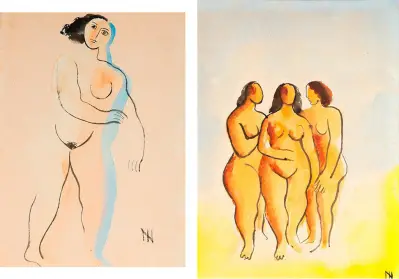
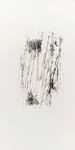
At this moment, his work follows the constructive principles to the letter. Its shapes are geometric and objective, made with industrial materials and neutral textures. The title of his series reveals the impersonality of the works. They are called rhythmic tracks and constructions. However, within this scheme, Serpa allows himself small boldness. More heterodox than concrete São Paulo, he, for example, uses "unobjective" colors, such as brown. Between the late 1950s and the beginning of the 1960s, the work takes on new contours. Serpa reviews its concrete position and starts to incorporate less determined elements: such as gestures, stains and ink splashes. In 1960, influenced by children's drawing,3 paints formless stains. With them, it builds images between abstraction and figuration. At that time, he acts as a book restorer in the National Library. The work serves as inspiration for the series of anobia, made between 1961 and 1962. In it, figures are suggested from small colored, dispersed and apparently random marks.
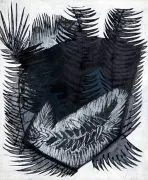
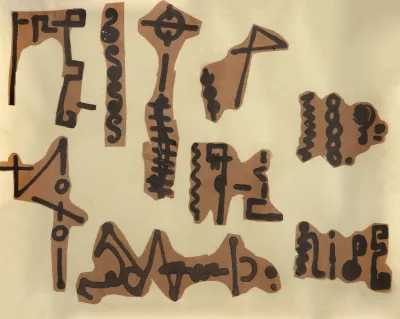
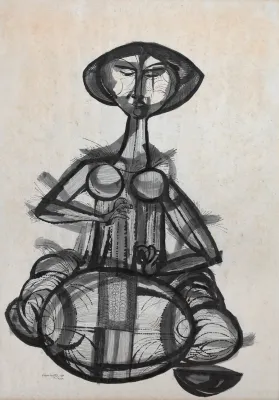
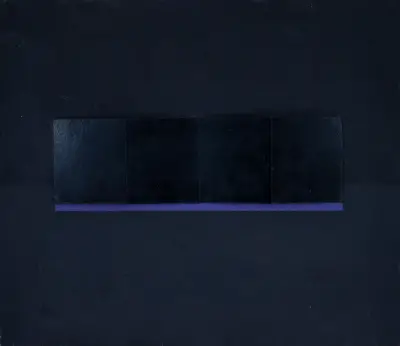
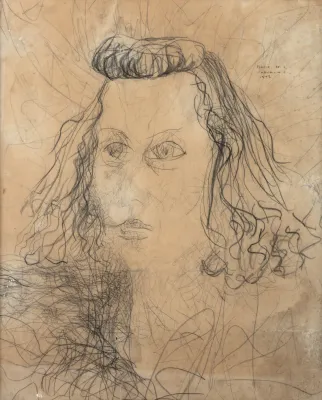
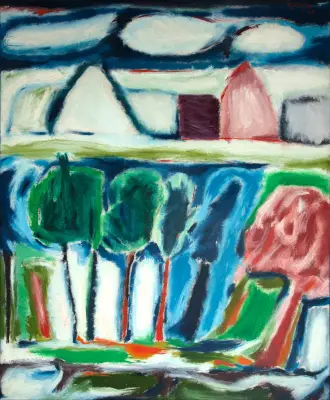
From 1963 onwards, it intensifies his interest in figuration. Ivan Serpa identifies himself with Expressionism and develops a gestural figuration, along the lines of the Cobra group. This production will bring it closer to the artists who would be grouped under the label of new Brazilian objectivity. Together with this new figuration, he performs works such as his black series, the series of animals and women with animals. Some works incorporate signs and the overlapping of geometric shapes. The production is exhibited in important exhibitions, such as Opinião 65, Opinião 66 and Nova Objetiva Brasileira.
In 1967, the artist begins his op erotic series. The work marks its return to constructive language. Interested in op art, he resumes the geometric construction and the well-defined elements. It develops other series with this characteristic, such as Mangueira and Amazonas. Constructive rigor is mitigated. The shapes become sinuous and sensual. The colors are soft. These works took him to the chests, furniture with white shapes inside. The work with OP plans will give rise to geomantic paintings, starting in 1969. He works in these paintings until 1973, when he dies, at just 49 years old.
Notes
1 SERPA, Ivan. Retrospective: 1947-1973. Rio de Janeiro: Centro Cultural Banco do Brasil, 1993. p.23.
2 PEDROSA, Mário. growth and creation. In: _____. Form and aesthetic perception: chosen texts II. São Paulo: Edusp, 1996. p.76.
3 SERPA, Ivan. Retrospective: 1947-1973. Rio de Janeiro: Centro Cultural Banco do Brasil, 1993. p.30.
Criticism
"Ivan Serpa is a symmetry in love, like so many modern artists from our country and other cultural environments young people, like ours. But, at the same time, is fascinated, like modern sensitivity, by movement. Once, he sought to balance these two concepts or fascinations opposed by whim, by chance, and above all by the taste that is almost infallible. rigorous grammar that is for the artist extraordinary work instrument and a fertile discipline, gave him arbitrary, less occasional means to overcome that antinomy. Through the various processes of repetition, progression and reversal, the painter manages to achieve an increasingly subtle dynamic balance and His last canvases, which are based like a decaling of inner planes, within a vast symmetrical scheme, breathe happily and soberly, without falling into the void or the insignificant in which the painter sometimes falls, when he limits himself, for the sake of simplicity, exposing the plastic problem you have in aim, on the screen or on the wall, without actually solving it".
Mario Pedrosa
Pedrosa, Mário. Serpa, show-off. In: _____. ARANTES, Otília Beatriz Fiori (Org.). Academics and Modern: Chosen Texts III. São Paulo: Edusp, 1998. 429 p., il. B&W. p. 303. [Text originally published in Jornal do Brasil, Rio de Janeiro, 08.04.1958].
"Certain artists demand the most numerous knowledge of their works, for the understanding of the work they propose, as well as the conduct that They cannot be measured and analyzed by a single example. For them, versatility corresponds, rather, to an effective participation of the feeling of contemporaneity, and this will be reflected in the path itself (...) Ivan Serpa's theme is the result of a process of intellectual curiosity. . . Seeking plastic values in the most diverse territories of human expressiveness (...) changing these spontaneous values for a conscious and rational plastic construction. He worked gesturally. . . a gesture that is the result of a whole life of painting, commanded by the wisdom of the artisan and the artist's emotionality".
Clarival do Prado Valladares
Valladares, Clarival do Prado. [Text for commemorative exhibition of the IV Centenary of the City, at MAM/RJ, March 1965.] In. LAKS, Sergio (coord.). Brazilian modern engraving: National Museum of Fine Arts Collection. Rio de Janeiro: MNBA, 1999. p. 30.
"Ivan Serpa's work has so far been, in fifteen years of work, a phenomenon of periodization. rather, the spiritual antinomies of his art provoked the greatest feeling of surprise by becoming, for those who easily forget his high category, merely a prototype of a contradictory artist, subject to the frequent impact of external inductions. antagonistic, to the opposite of the artist focused on the ideal and convergent problem, Serpa expresses a dissociative situation of the personality and the environment in his most dramatic options. emptiness to their reactions represented, were they inconsistent in relation to this past fascinated by the absolutist concepts". Brazilian Dictionary of Plastic Artists - Q - Z. Brasilia: MEC: INL, 1973. v. 4, (Specialized Dictionary, 5), p. 366.
"(...) As an artist, he situated his work at the ends of the crisis and construction, having been, at different stages, expressionist, informal and geometric. constructive, as well as merged, in a series of black-and-white drawings, the optical and the erotic. Awarded as the best Brazilian young artist at the 1st International Biennial of São Paulo, in 1951, he receives, there, the impact of Concretism Swiss, which leads him to exercise, in his painting, precise and linear rhythms whose intervals and variety resemble a musical agenda. of colors, contemplated with the trip to Europe at the National Salon of Modern Art, in 1957, it changed its course for the first time, under pressure from informalism, but little by little, however, dramatic figures emerge from the stains, remembering the critical and chaotic universe of European snakes. Its 'black phase', which precedes the political events of 1964, has, according to Hélio Pellegrino, 'an explosive power of denunciation and social contestation'. However, from 1967 onwards, with its Amazon phase, adding a Brazilian color and an organic or baroque sensuality, it resumes the constructive vein, from which it will no longer depart. Then, original solutions arise, of an optical or simply geometrical character that invariably result in a subtle game of poetic spatialities".
Frederico Morais
MORAIS, Frederico. São Paulo: Júlio Bogoricin, 1986, p. 132.
Individual exhibitions
1951 - Rio de Janeiro RJ - Individual, at the IBEU Copacabana gallery
1951 - Rio de Janeiro RJ - Individual, at MAM/RJ
1953 - Rio de Janeiro RJ - Individual, at the theater of pocketbook
1954 - Caracas (Venezuela) - Individual, at the 10th Inter-American Conference
1954 - Washington (United States) - Individual, at the Pan American Union Gallery
1955 - Ithaca (United States) - Individual, at the Guggenheim Museum
1957 - Rio de Janeiro RJ - Individual, at the gallery Tenreiro
1958 - Rio de Janeiro RJ - Individual, at Galeria GEA
1961 - Rio de Janeiro RJ - Ivan Serpa: Retrospective, at MAM/RJ
1963 - Rio de Janeiro RJ - Individual, at Galeria Tenreiro
1964 - Rio de Janeiro RJ - Individual, at Galeria Barcinsky
1964 - Rio de Janeiro RJ - Individual, at Galeria Tenreiro
1965 - Belo Horizonte MG - Individual, at the Art Museum of the City Hall of Belo Horizonte
1965 - Rio de Janeiro RJ - Individual, at Galeria Relevo
1965 - Rio de Janeiro RJ - Individual, at MAM/RJ
1965 - São Paulo SP - Ivan Serpa: Drawings and Guaches, at MAC/USP
1966 - Bonn (Germany) - Individual
1966 - Managua (Nicaragua) - Individual
1966 - Rio de Janeiro RJ - Individual
1966 - Salvador BA - Individual
1968 - Rio de Janeiro RJ - Individual, at the Bonino Gallery
1971 - Rio de Janeiro RJ - Ivan Serpa: Retrospective, at MAM/RJ
Collective exhibitions
1947 - Rio de Janeiro RJ - 53rd National Salon of Fine Arts, at MNBA
1948 - Rio de Janeiro RJ - 54th National Salon of Fine Arts - Modern Division, at the MNBA - Bronze Medal
1949 - Rio de Janeiro RJ - 1st Municipal Salon of Fine Arts, at the Ministry of Education and Health - City Hall Award
1951 - Rio de Janeiro RJ - 57th National Salon of Fine Arts, at MNBA
1951 - São Paulo SP - 1st International Biennial of São Paulo, at the Trianon Pavilion - Young National Painter Award
1952 - Rio de Janeiro RJ - 1st National Salon of Modern Art, at MAM/RJ
1952 - Rio de Janeiro RJ - Exhibition of Brazilian artists, at MAM/RJ
1952 - Venice (Italy) - 26th Venice Biennale
1953 - Lausanne (Switzerland) - Lausanne International Fair
1953 - Petrópolis RJ - 1st National Exhibition of Abstract Art, at the Hotel Quitandinha
1953 - São Paulo SP - 2nd São Paulo International Biennial, at the Pavilion of States - Museum of Modern Art Award
1954 - Rio de Janeiro RJ - 1st Frente Group, at Galeria Ibeu Copacabana
1954 - Venice (Italy) - 27th Venice Biennale
1955 - Caracas (Venezuela) - Inter-American Exhibition
1955 - Lissone (Italy) - 9th International Lissone Award
1955 - Rio de Janeiro RJ - 2nd Frente Group, at MAM/RJ
1955 - Rio de Janeiro RJ - 4th National Hall of Modern Art
1955 - Rio de Janeiro RJ - Miniature Hall, at ABI
1955 - São Paulo SP - 3rd International Biennial of São Paulo, at the Pavilhão das Nações - UNESCO Award
1955 - Tokyo (Japan) - 3rd Tokyo Biennial
1956 - Barcelona (Spain) - 3rd Spanish-American Biennial
1956 - Resende RJ - 3rd Group Front, Itatiaia Country Club
1956 - Rio de Janeiro RJ - 5th National Salon of Modern Art
1956 - São Paulo SP - 1st National Exhibition of Concrete Art, at MAM/SP
1956 - Volta Redonda RJ - 4th Grupo Frente, at Companhia Siderúrgica Nacional
1957 - Rio de Janeiro RJ - 1st National Exhibition of Concrete Art, at MAM/RJ
1957 - Rio de Janeiro RJ - 62nd National Salon of Belas Arts, at MNBA
1957 - Rio de Janeiro RJ - 6th National Salon of Modern Art - Travel Award abroad
1957 - São Paulo SP - 4th International Biennial of São Paulo, at the Ciccilo Matarazzo Pavilion Sobrinho
1959 - Leverkusen (Germany) - First collective exhibition of Brazilian artists in Europe
1959 - Munich (Germany) - First collective exhibition of Brazilian artists in Europe, at Kunsthaus
1959 - Rio de Janeiro RJ - 1st Neoconcreta Art Exhibition, at MAM/RJ
1959 - Vienna (Austria) - First collective exhibition of Brazilian artists in Europe
1960 - Hamburg (Germany) - First collective exhibition of Brazilian artists in Europe
1960 - Lisbon (Portugal) - First collective exhibition of Brazilian artists in Europe
1960 - Madrid (Spain) - First collective exhibition by Brazilian artists in Europe
1960 - Paris (France) - Collective Exhibition of Brazilian Artists in Europe
1960 - Rio de Janeiro RJ - 9th National Salon of Modern Art, at MAM/RJ - Acquisition Award
1960 - Utrecht (Netherlands) - First collective exhibition by Brazilian artists in Europe
1960 - Zurich (Switzerland) - 1st Zurich Biennial
1961 - Rio de Janeiro RJ - 10th National Salon of Modern Art - Awarded
1961 - Rio de Janeiro RJ - 1st The Face and the Work, at the Ibeu Copacabana Gallery
1961 - São Paulo SP - 6th São Paulo International Biennial, at the Ciccilo Matarazzo Sobrinho Pavilion - Awarded
1962 - Córdoba (Argentina) - 1st American Biennial of Art
1962 - Rio de Janeiro RJ - 11th National Salon of Modern Art - Travel Award for the Country
1962 - Venice (Italy) - 31st Venice Biennale
1963 - Campinas SP - Contemporary painting and sculpture at the Carlos Gomes Museum
1963 - Rio de Janeiro RJ - 12th National Salon of Modern Art
1963 - Rio de Janeiro RJ - The landscape as Theme, at the Ibeu Copacabana Gallery
1963 - São Paulo SP - 7th São Paulo International Biennial, at the Bienal Foundation
1964 - Paris (France) - Salon Comparaisons, at the Musée d'Art Moderne de la Ville de Paris
1964 - Rio de Janeiro RJ - The Nu in Contemporary Art, at the IBEU Copacabana Gallery
1965 - Belo Horizonte MG - 20th Salon of Fine Arts of the City of Belo Horizonte, at MAP - Award Clube dos Lojistas
1965 - Bonn (Germany) - Current Brazilian Art
1965 - Lisbon (Portugal) - Contemporary Brazilian artists at the Calouste Gulbenkian Foundation
1965 - London (England) - Brazilian Art Today, at the Royal Academy of Arts
1965 - Paris (France) - Salon Comparaisons
1965 - Rio de Janeiro RJ - 14th National Salon of Modern Art, MAM/RJ
1965 - Rio de Janeiro RJ - Opinion 65, at MAM/RJ
1965 - Rio de Janeiro RJ - National Salon of Fine Arts
1965 - São Paulo SP - 8th International Biennial of São Paulo, at Fundação Bienal
1965 - Vienna (Austria) - Current Brazilian Art
1965 - Rio de Janeiro RJ - 3rd Summary of Art of JB, at MAM/RJ - Jornal do Brasil Award
1966 - Austin (United States) - Art of Latin America Since Independence, at The University of Texas at Austin. Archer M. Huntington Art Gallery
1966 - Buenos Aires (Argentina) - Contemporary Brazilian artists at the Museum of Modern Art
1966 - Montevideo (Uruguay) - Contemporary Brazilian artists, at the Montevideo Modern Art Museum
1966 - New Haven (United States) - Art of Latin America since Independence, at the Yale University Art Gallery
1966 - New Orleans (States) United States) - Art of Latin America Since Independence, at the Isaac Delgado Museum of Art
1966 - Rio de Janeiro RJ - 15th National Salon of Modern Art
1966 - Rio de Janeiro RJ - 4th Summary of Art JB, at MAM/RJ
1966 - Rio de Janeiro RJ - Opinion 66, at MAM/RJ
1966 - Rio de Janeiro RJ - Salão IV Centenary of Rio de Janeiro, at MAM/RJ
1966 - Salvador BA - 1st National Biennial of Plastic Arts - Special Room
1966 - San Diego (United States) - Art of Latin America since Independence, at the La Jolla Museum of Art
1966 - San Francisco (United States) - Art of Latin America Since Independence, at the San Francisco Art Museum
1966 - São Paulo SP - Half a century of Art Nova, at MAC/USP
1966 - Venice (Italy) - 33rd Bienal de Venice
1967 - Rio de Janeiro RJ - New Brazilian Objectivity, at MAM/RJ
1969 - Rio de Janeiro RJ - 7th Summary of Art JB, at MAM/RJ
1971 - Rio de Janeiro RJ - 20th National Salon of Modern Art
1972 - Rio de Janeiro RJ - 10th Summary of Art JB, at MAM/RJ
1972 - São Paulo SP - Arte/Brazil/Today: 50 years later, at Galeria da Collectio
Posthumous exhibitions
1973 - São Paulo SP - 12th São Paulo International Biennial, at the Bienal Foundation
1974 - Rio de Janeiro RJ - Ivan Serpa: Retrospective, at MAM/RJ
1974 - Rio de Janeiro RJ - O Mar, at the Ibeu Copacabana Gallery
1975 - Brasília DF - Individual, at Oscar Seraphico Art Gallery
1976 - Rio de January RJ - Individual
1977 - Rio de Janeiro RJ - Brazilian constructive project in art: 1950-1962, at MAM/RJ
1977 - São Paulo SP - Brazilian constructive project in art: 1950-1962, at the Pinacoteca do Estado
1978 - São Paulo SP - The Biennials and Abstraction: the 50's, at the Lasar Segall Museum
1979 - São Paulo SP - 15th São Paulo International Biennial, at the Bienal Foundation
1980 - Rio de Janeiro RJ - Homage to Mário Pedrosa, at the Jean Boghici Gallery
1980 - São Paulo SP - Masters of lyrical abstractionism in Brazil, Galeria Eugénie Villien
1982 - Rio de Janeiro RJ - Entre a Mancha and the Figure, at MAM/RJ
1983 - Rio de Janeiro RJ - 6th National Salon of Plastic Arts, at MAM/RJ
1984 - Rio de Janeiro RJ - 1st National Exhibition of Abstract Art - Hotel Quitandinha, at the Banerj Art Gallery
1984 - Rio de Janeiro RJ - Frente Group 1954-1956, at the Art Gallery Banerj
1984 - Rio de Janeiro RJ - Madeira, Matter of Art, at MAM/RJ
1984 - São Paulo SP - Gilberto Chateaubriand Collection: Portrait and Self-Portrait of Brazilian Art, at MAM/SP
1984 - Volta Redonda RJ - Frente Group 1954-1956
1985 - Rio de Janeiro RJ - Axl Leskoschek and his students: Brazil/1940-1948, at the Art Gallery Banerj
1985 - Rio de Janeiro RJ - Opinion 65, at the Banerj Art Gallery
1985 - São Paulo SP - 18th São Paulo International Biennial, at the Bienal Foundation
1985 - São Paulo SP- Axl Leskoschek and his students: Brazil/1940-1948, at MAM/SP
1986 - Resende RJ - Grupo Frente 1954-1956
1986 - Rio de Janeiro RJ - Individual, at the Maurício Leite Barbosa Gallery
1986 - Rio de Janeiro RJ - JK and the 50s: a vision of culture and everyday life, at the Investiarte Gallery
1987 - Paris (France) - Modernity: Brazilian Art of the 20th century, at the Musée d'art moderne de la Ville de Paris
1987 - Rio de Janeiro RJ - 1st Geometric Abstraction: Concretism and Neoconcretism, at Funarte. Arts Center
1987 - Rio de Janeiro RJ - To the collector: tribute to Gilberto Chateaubriand, at MAM/RJ
1987 - Rio de Janeiro RJ - Individual, at the Klee Gallery
1987 - Rio de January RJ - Individual, at Galeria Registro
1987 - São Paulo SP - 1st Geometric Abstraction: Concretism and Neoconcretism, at MAB/FAAP
1987 - São Paulo SP - The plot of taste: another look at the daily life at the Bienal Foundation
1987 - São Paulo SP - The biennials in the MAC collection: 1951 to 1985, at MAC/USP
1987 - São Paulo SP - The craft of art: painting Sesc
1988 - Rio de Janeiro RJ - Hedonismo: Gilberto Chateaubriand Collection, at the Gilberto Chateaubriand Building Gallery
1988 - Rio de Janeiro RJ - Individual, at the gallery triad
1988 - São Paulo SP - 63/66 Figure and Object, at the Millan Gallery
1988 - São Paulo SP - MAC 25 years: Highlights of the initial collection, at MAC/USP
1988 - São Paulo SP - Modernity: Brazilian art of the 20th century, at MAM/SP
1989 - Rio de Janeiro RJ - Individual, at the Triad Gallery
1989 - Rio de Janeiro RJ - Small magnitudes of the 50's, at the Art Office Cleide Wanderley
1989 - São Paulo SP - 20th São Paulo International Biennial, at the Bienal Foundation
1991 - São Paulo SP - Constructivism: Art Poster 40/50/60, at MAC/USP
1992 - Poços de Caldas MG - Brazilian Modern Art: Collection of the Museum of Contemporary Art of the University of São Paulo, at the Casa da Cultura
1992 - Rio de Janeiro RJ - 1st on the way to Niterói: João Sattamini Collection, at the Paço Imperial
1992 - Zurich (Switzerland) - Brasilien: Entdeckung und Selbstentdeckung, at Kunsthaus Zürich
1993 - Rio de Janeiro RJ - Erotic Art MAM/RJ
1993 - Rio de Janeiro RJ - Brazil 100 years of modern art, at the MNBA
1993 - Rio de Janeiro RJ - Emblems of the body: the nude in Brazilian modern art, at the Banco do Brasil Cultural Center - CCBB
1993 - Rio de Janeiro RJ - Individual, at the Saracini Gallery
1993 - Rio de Janeiro RJ - Ivan Serpa: Retrospective 1947-1973, at CCBB
1993 - São Paulo SP - The modern design in Brazil: Gilberto Chateaubriand Collection, at the SESI Art Gallery
1994 - Rio de Janeiro RJ - Exhibition commemorating the 40th anniversary of the Frente Group's foundation, at the IBEU Copacabana Gallery
1994 - Rio de Janeiro RJ - The modern design in Brazil: Gilberto Chateaubriand Collection, at MAM/RJ
1994 - São Paulo SP - Bienal Brasil Século 20th, at the Biennial Foundation
1994 - São Paulo SP - individual, at the Millan Gallery
1995 - Rio de Janeiro RJ - Opinion 65: 30 years old, at CCBB
1996 - Niterói RJ - Brazilian contemporary art in the João Sattamini collection, in the MAC/Niterói
1996 - Niterói RJ - Individual, at UFF. Art Gallery
1996 - Rio de Janeiro RJ - O Grito, in the MNBA
1996 - Rio de Janeiro RJ - Constructive trends in the MAC/USP collection: construction, measure and proportion, in CCBB
1996 - São Paulo SP - Brazilian Art: 50 years of history at the MAC/USP collection: 1920-1970, at MAC/USP
1996 - São Paulo SP - Desexp(i)os(ign)ição, at Casa das Rosas
1998 - Niterói RJ - Mirror of the Bienal, at MAC/Niterói
1998 - São Paulo SP - Constructive Art in Brazil: Adolpho Leirner Collection, at MAM/SP
1998 - São Paulo SP - The Collector, at MAM/SP
1998 - São Paulo SP - The modern and the contemporary in Brazilian art: Gilberto Chateaubriand Collection - MAM/RJ, at Masp
1999 - Rio de Janeiro RJ - Constructive Art in Brazil: Adolpho Leirner Collection, at MAM/RJ
1999 - Rio de Janeiro RJ - Exhibition Rio Engraving: Brazilian modern engraving: Collection National Museum of Fine Arts, in MNBA
2000 - Brasília DF - Brazil Europe Exhibition: Encounters in the 20th Century, at the Caixa Cultural Complex
2000 - Lisbon (Portugal) - 20th century: Art of Brazil, at the José de Azeredo Perdigão Modern Art Center
2000 - Rio de Janeiro RJ - When Brazil was Modern: Fine Arts in Rio de Janeiro from 1905 to 1960, at Paço Imperial
2000 - São Paulo SP - Brazil + 500 Rediscovery Exhibition, at the Biennial Foundation
2000 - Valencia (Spain) - From La Anthropophagia to Brasilía: Brazil 1920-1950, at IVAM. Center Julio Gonzáles
2001 - Rio de Janeiro RJ - Brazilian Watercolor, at the Light Cultural Center
2001 - São Paulo SP - Bienal 50 years: A tribute to Cicillo Matarazzo, at the Foundation Bienal
2001 - São Paulo SP - Trajectory of light in Brazilian art, at Itaú Cultural
2002 - Niterói RJ - Paper collection, at MAC/Niterói
2002 - Niterói RJ - Dialogue, antagonism and replication in the Sattamini collection, at MAC/Niterói
2002 - Porto Alegre RS - Violence and Passion, at Santander Cultural
2002 - Rio de Janeiro RJ - 1st Exhibition Rio Contemporary Art, MAM/RJ
2002 - Rio de Janeiro RJ - Brazilian art in the Fadel collection: from the restlessness of the modern to the autonomy of language, in the CCBB
2002 - Rio de Janeiro RJ - Caminhos do Contemporânea 1952-2002, at Paço Imperial
2002 - Rio de Janeiro RJ - Genealogy of Space, at the Parque das Ruínas gallery
2002 - Rio de Janeiro RJ - Parallels: Brazilian art from the second half of the 20th century in context, Collección Cisneros, at MAM/RJ
2002 - São Paulo SP - Brazilian art in the Fadel collection: from the restlessness of the modern to the autonomy of language, in the CCBB
2002 - São Paulo SP - DA Anthropophagia to Brasília: Brazil 1920-1950, at MAB/FAAP
2002 - São Paulo SP - Map of the Now: Recent Brazilian Art in the João Sattamini Collection of the Museum of Contemporary Art of Niterói, at Instituto Tomie Ohtake
2002 - São Paulo SP - Parallels: Brazilian art from the second half of the 20th century in context, Colección Cisneros, at MAM/SP
2003 - Brasília DF - Brazilian art in the Fadel: Da collection Restlessness of the modern to the autonomy of language, at CCBB
2003 - Campos dos Goytacazes RJ - Planar-Spatial Poem, at Sesc
2003 - Mexico City (Mexico) - Cuasi Corpus: Concrete Art and Neoconcreto de Brasil: Una Selection del Acervo del Museo de Arte Moderna de São Paulo and La Colección Adolpho Leirner, at the Museo Rufino Tamayo
2003 - Nova Friburgo RJ - Planar-Spatial Poem, at the Sesc Nova Friburgo Gallery
2003 - Rio de Janeiro RJ - Autonomy of Drawing, at MAM/RJ
2003 - Rio de Janeiro RJ - OP-Erotica, at Espaço Antonio Bernardo
2003 - Rio de Janeiro RJ - Order X Liberdade, at MAM/RJ
2003 - São Paulo SP - Art and Society: a controversial relationship, at Itaú Cultural
2003 - São Paulo SP - Lauro Eduardo Collection Sotello Alves at the MAM collection, at MAM/SP
2004 - Rio de Janeiro RJ - 30 artists, at the Mercedes Viegas Art Office
2004 - Rio de Janeiro RJ - Individual, at the Imperial Paço
2004 - Niterói RJ - Transitive modernity, at MAC/Niterói
2004 - São Paulo SP - Ivan Serpa: graphic drawings, at the André Millan gallery
2005 - Petrópolis RJ - Expresso abstract, at the Imperial Museum
Source: FGV CPDOC, Pitoresco, Itaú Cultural