
Gilvan Samico (Recife PE 1928 - idem 2013)
Gilvan Samico was a Brazilian engraver, painter, draftsman, and teacher, whose work stood out for its deep connection with the folk traditions of the Northeast. In 1952, Samico founded the Collective Studio of the Modern Art Society of Recife (SAMR), an initiative conceived by Abelardo da Hora. He perfected his woodcut technique with Lívio Abramo in 1957 at the School of Crafts of the Museum of Modern Art in São Paulo, and the following year, he moved to Rio de Janeiro, where he studied printmaking with Oswaldo Goeldi at the National School of Fine Arts.
Recognized for his technical mastery, Gilvan Samico developed a body of work of great visual richness, utilizing complex textures and linear rhythms. In 1965, he settled in Olinda and began teaching woodcut art at the Federal University of Paraíba. In the late 1960s, after winning the international travel award at the 17th National Salon of Modern Art, he lived in Europe for two years, expanding his artistic influences.
In 1971, at the invitation of Ariano Suassuna, Samico joined the Armorial Movement, which sought to promote Northeastern popular culture and cordel literature. His artistic production began to emphasize biblical characters, local legends, and mythological animals, represented through woodcuts. Throughout his career, he introduced a more simplified visual language, reducing the use of colors and textures, but maintaining the narrative intensity that marked his unique contribution to Brazilian art.
Critical Commentary
Gilvan Samico began painting as a self-taught artist. In 1948, he joined the Modern Art Society of Recife (SAMR), founded by Abelardo da Hora (1924-2014), which played an important role in the renewal of Pernambuco art. The goal of this association was to create a broad cultural movement in Recife that encompassed areas such as visual arts, theater, and music, encouraging research into popular culture and its manifestations. In 1952, Samico co-founded the SAMR Collective Studio, a center for drawing and printmaking studies, focusing on art with a social character.
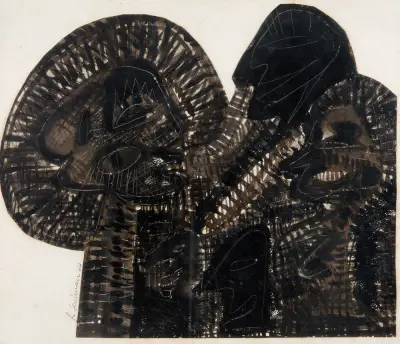
He moved to São Paulo in 1957, where he took classes with Lívio Abramo (1903-1992) at the School of Crafts of the Museum of Modern Art of São Paulo (MAM/SP). From his time with Abramo, Samico retained his concern for exploring the formal possibilities of wood and his interest in highly elaborate textures. The artist began to create linear rhythms that harmonize perfectly with the overall structure of his works.
The following year, he traveled to Rio de Janeiro, where he attended Oswaldo Goeldi's (1895-1961) free engraving course at the National School of Fine Arts (ENBA). His contact with the engraver is evident in his use of nocturnal atmospheres in his works, his reduced number of lines, and his very precise use of color.
His work is definitively marked by the discovery of the popular romanceiro (folk narrative tradition), through cordel literature and the creative use of woodcuts. The space of his prints is then populated by biblical and other characters from legends and folk tales, as well as by many fantastic animals and beings: lions, serpents, dragons.
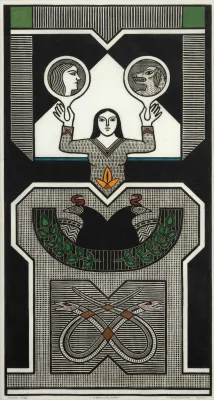
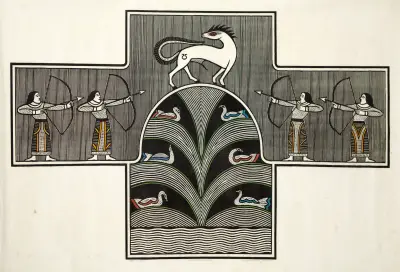
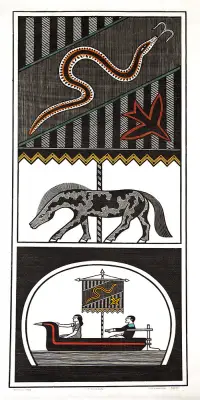
Parallel to this thematic innovation, Samico began to use white with great expressive force. Depth is rarely evoked in his works, which emphasize two-dimensionality, with the figures represented as signs, as occurs, for example, in *The Sorcerous Ox and the Mysterious Horse* (1963). The woodcut *Suzana in the Bath* (1966) presents formal characteristics that become constant in Samico's work: in addition to the differentiated graphic patterns that lend rhythm to the composition, he employs symmetry and the geometric compartmentalization of space.
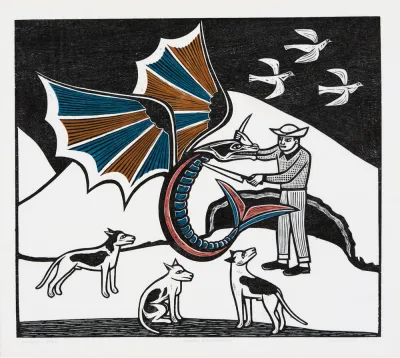
In the 1980s and 1990s, Gilvan Samico dedicated more time to each print, eventually producing one per year. He uses the gouge to practice a wide variety of cuts until he finds the ideal texture for each subject. In his recent works, he simplifies the structure and the linear pattern itself, incorporating motifs originating from architecture: arches, rose windows, and moldings. The work The Sword and the Dragon (2000), for example, showcases a refined technique and a very judicious use of color.
Critiques
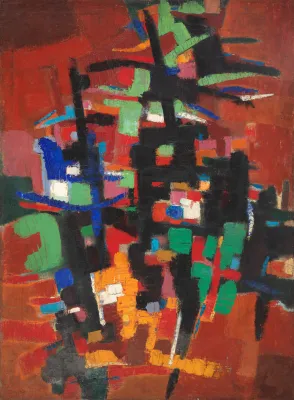
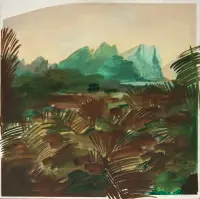
"Beginning as a self-taught painter, woodcuts, however, have been his exclusive expressive medium since the late 1950s, only replaced in the last two years by painting, after returning from a stint in Europe. (...) From the cordel narratives, he draws above all on the elements that most directly reference popular religiosity, with their demonology, their reincorporated myths, their symbols of the collective unconscious, their childhood animals and fears, their astonishment at what seems born of the supernatural. Even when he more recently began to favor painting, these basic elements continued to permeate his work, despite a certain attenuation of the archaic component and the substantial change in the chromatic scheme, now enlivened and diffused in warmth across the entire surface, without the former contrasts with the broad white areas of the woodcuts. The Northeast, however, is always there, shaping his language."
Roberto Pontual
PONTUAL, Roberto. Arte/Brasil/hoje: 50 anos depois [Art/Brazil/Today: 50 Years Later]. São Paulo: Collectio, 1973.
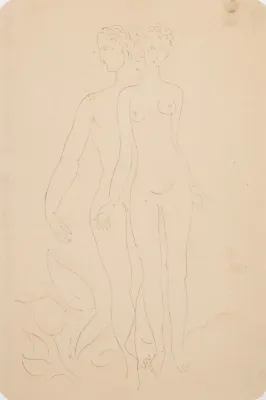
"In the last two decades, Samico has rarely produced more than a single engraving per year. He is a rare artist. In his monastic mansion in Olinda, he extensively researches each of his themes and their corresponding symbols. He exhaustively studies the compartmentalization of space and its relationship to the narrative's time. He drafts, makes sketches in pencil or ink, searching for the precise color, to be set against the flat areas of black and against the white, which functions as light or space. With the gouge, he practices a wide variety of cuts until he finds the ideal "texture" for the subject, the exact "tonality." Time flows slowly in the artist's affective province. Engraving requires patience and a great deal of craft. Samico is not a virtuoso—"I'm not skilled," he often says—so he acts empirically, based on trial and error. But once the work is finished and signed, we will certainly have before us an impeccable work of art of breathtaking beauty. (...) Samico balances, in the right doses, imagination and simplicity, fantasy and technique."
Frederico Morais
MORAIS, Frederico. [Text]. In: Gilvan Samico: works from 1980 - 1994. São Paulo: Silvio Nery da Fonseca Escritório de Arte, 1995. Unpaginated.
"Gilvan Samico began his work in the vicinity of the engraving clubs and their socialist realism. However, still in the 1950s, at the urging of Ariano Suassuna, he exchanged night for day: his woodcuts uncover the inversion operated by the cordel engraver, whose black line establishes the day, the removed, in opposition to the white line that opens the night, the maintained, the graphic basis that situates his work. The valorization of the black line illuminates his woodcut, which not even the circumscribed use of color obscures. As for the iconography, it is linked to the narrative, in which Samico also situates himself close to the cordel, as a storytelling function. Although he narrates, he does so using the solemn arrangement of emblematic figures; rejecting the interpretation that considers it pharaonic, he affirms its meaning of cordel: the confrontation, the axiality, the juxtaposition, the repetition, which operate the static, have a history in another field, made, moreover, of shortcuts and detours that lead from antiquity to the present. The cleanness of the line, verging on geometry, reinforces the hieratic, which can configure the majestic: although, according to Samico, his engraving is popular, it does not remove the historical charge that permeates the so-called 'popular,' which can only be excluded from the history of art under certain perspectives. Samico's presence means that, being erudite, he takes the direction of the woodcut artists of the Northeast, such as Mestre Noza, J. Barros, J. Borges, and others, no less notable; in a different direction, very urban engravers, such as Isa Aderne, José Altino, Calasans Neto, or Raimundo de Oliveira, are included in varying ways in the horizon of this woodcut."
Leon Kossovitch and Mayra Laudanna
GRAVURA: arte brasileira do século XX [Printmaking: Brazilian Art of the 20th Century]. Introduction by Ricardo Ribenboim. São Paulo: Itaú Cultural: Cosac & Naify, 2000. p. 26-27.
Testimonials
"In 1957, I went to São Paulo to study engraving with Lívio Abramo. Then I moved to Rio de Janeiro, where I made some prints to participate in salons. Around that time, on a visit to Recife, I met Ariano Suassuna again and told him that I thought my engraving resembled things I had seen before; it was very nocturnal, very connected to European engraving... So he asked me: 'Why don't you delve into popular engraving?' I went crazy. I felt like it was a daunting challenge. What was I going to do? A transposition of popular prints? That didn't interest me. I was a little stunned, but I didn't give up. Instead of going for the finished print, or the pamphlet cover, or anything else, I decided to go for the text of cordel literature. To do what it was really meant to do: the illustration print. In fact, printmaking was born for this. Historically, it has always, or almost always, had this role: to tell a story. (...)
Goeldi engraved the white line. Most cordel engravers engrave the black line. After a certain point, the black line begins to become evident in my prints. You're no longer immersed in shadow. You could find this print in a cordel, if it had that kind of formal concern. You won't, because I'm the one who made it. Some critics say the origin of my work is much older than cordel. (...)
Some people here ask about my fascination with Egyptian art, because they see Egyptian influences in my prints. I have nothing to say. Except that it is part of my experience, of the collective unconscious, I don't know. It's as if ancient stories were repeating themselves in the genes until they reached me. A critic said that my prints today are imbued with the essential symbols of popular culture. I think he's right."
Gilvan Samico to Tânia Nogueira
NOGUEIRA, Tania. Mythology and Cordel. Samico elevates popular engraving to virtuosity. Bravo, São Paulo, n. 24, p. 32, September 1998.
Solo Exhibitions
1960 - Recife PE - Solo, at Galeria Lemac
1964 - Recife PE - Solo, at Galeria Prefeitura
1965 - Rio de Janeiro RJ - Solo, at Petite Galerie
1966 - João Pessoa PB - Solo, at Universidade Federal da Paraíba - UFPB
1966 - Recife PE - Solo, at Galeria do Teatro Popular do Nordeste
1970 - Madrid (Spain) - Solo, at Galeria de Arte da Casa do Brasil
1985 - Mexico City (Mexico) - Solo, at Museo Nacional de las Culturas Populares
1989 - Porto Alegre RS - Solo, at Bolsa de Arte de Porto Alegre
1994 - Porto (Portugal) - Cumplicidades, at Cooperativa Árvore
1995 - São Paulo SP - Solo, at Escritório de Arte Sylvio Nery da Fonseca
1996 - Olinda PE - Gilvan Samico: Prints and Paintings, at Galeria Sobrado
1997 - Rio de Janeiro RJ - Gilvan Samico: 40 Years of Printmaking, at CCBB
1998 - Recife PE - Gilvan Samico: 40 Years of Printmaking, at MAMAM
1999 - Belo Horizonte MG - Gilvan Samico: 40 Years of Printmaking, at Museu de Arte da Pampulha
2003 - Rio de Janeiro RJ - The Other Side of Rio, at Paço Imperial
2004 - São Paulo SP - Samico: From Drawing to Printmaking, at Pinacoteca do Estado
Group Exhibitions
1954 - Goiânia GO - Exhibition of the National Congress of Intellectuals
1955 - Recife PE - 14th Annual Painting Salon, Museum of the State of Pernambuco
1956 - Recife PE - 15th Annual Painting Salon, Museum of the State of Pernambuco
1957 - Recife PE - 16th Annual Painting Salon, Museum of the State of Pernambuco - 1st Prize in Printmaking
1958 - Recife PE - 17th Annual Painting Salon, Museum of the State of Pernambuco - 1st Prize in Printmaking
1958 - Rio de Janeiro RJ - 7th National Salon of Modern Art, MAM/RJ
1958 - Rio de Janeiro RJ - Estrada Salon
1958 - Rio de Janeiro RJ - Art Salon “Mother and Child”
1959 - Recife PE - 18th Annual Painting Salon, Museum of the State of Pernambuco
1959 - Recife PE - 1st Panorama of Visual Arts in Pernambuco, Cabanga Yacht Club
1959 - Rio de Janeiro RJ - 8th National Salon of Modern Art, MAM/RJ
1960 - Recife PE - 19th Annual Painting Salon, Museum of the State of Pernambuco - 1st Prize in Printmaking
1960 - Recife PE - 19th Annual Painting Salon, Museum of the State of Pernambuco
1960 - Recife PE - 1st Exhibition of the Recife Art Gallery, Recife Art Gallery
1960 - Rio de Janeiro RJ - 9th National Salon of Modern Art, MAM/RJ - Acquisition Prize
1961 - Paris (France) - 2nd Biennial of Young Artists
1961 - Rio de Janeiro RJ - 10th National Salon of Modern Art, MAM/RJ - Jury Exemption Prize
1961 - Rio de Janeiro RJ - Group Exhibition, Brazil–United States Cultural Institute
1961 - São Paulo SP - 6th São Paulo International Biennial, Ciccillo Matarazzo Pavilion
1962 - Madrid (Spain) - Arte de América y España
1962 - Barcelona (Spain) - Arte de América y España
1962 - Paris (France) - Arte de América y España
1962 - Munich (Germany) - Arte de América y España
1962 - Brussels (Belgium) - Arte de América y España
1962 - Amsterdam (Netherlands) - Arte de América y España
1962 - Milan (Italy) - Arte de América y España
1962 - Bern (Switzerland) - Arte de América y España
1962 - Minneapolis (United States) - New Art of Brazil, Walker Art Center
1962 - Recife PE - 2nd Panorama of Visual Arts of Pernambuco, Recife International Club
1962 - Rio de Janeiro RJ - 11th National Salon of Modern Art, MAM/RJ - Travel Award
1962 - Venice (Italy) - 31st Venice Biennale - Liturgical Art Prize
1963 - Paris (France) - 3rd Biennial of Young Artists
1963 - Rio de Janeiro RJ - 12th National Fine Arts Salon
1963 - Rio de Janeiro RJ - 12th National Salon of Modern Art, MAM/RJ
1963 - Salvador BA - Civilization of the Northeast, Solar do Unhão
1963 - Santiago (Chile) - 1st American Print Biennial
1963 - São Paulo SP - 7th São Paulo International Biennial, Bienal Foundation
1964 - Rio de Janeiro RJ - 13th National Salon of Modern Art, MAM/RJ
1964 - Santiago (Chile) - 1st American Print Biennial - Maruja Buchard Prize
1965 - Brasília DF - 2nd Modern Art Salon of the Federal District
1965 - Rio de Janeiro RJ - 14th National Salon of Modern Art, MAM/RJ
1966 - Recife PE - O Cruzeiro, O Cruzeiro Newspaper Branch
1966 - Recife PE - The Face and the Work, Casa Holanda Gallery
1966 - Ribeirão Preto SP - 40 National and International Prints from the MAC Collection, School of Visual Arts of Ribeirão Preto
1966 - São Paulo SP - 40 National and International Prints from the MAC Collection, MAC/USP
1966 - Tokyo (Japan) - 5th International Biennial Exhibition of Prints
1966 - Trieste (Italy) - Biennale of Liturgical Art
1966 - Vancouver (Canada) - International Print Exhibition
1967 - Santiago (Chile) - 3rd American Print Biennial, Museum of Contemporary Art
1967 - São Paulo SP - 9th São Paulo International Biennial, Bienal Foundation
1967 - São Paulo SP - Pernambucan Workshop, MAC/USP
1968 - Piracicaba SP - 40 National and International Prints from the MAC Collection, University of São Paulo, Luiz de Queiroz College of Agriculture
1968 - Rio de Janeiro RJ - 17th National Salon of Modern Art, MAM/RJ
1968 - Salvador BA - 2nd National Biennial of Visual Arts, MAM/BA
1968 - Santiago (Chile) - 3rd American Print Biennial
1968 - Rio de Janeiro RJ - 17th National Salon of Modern Art, MAM/RJ - International Travel Prize
1970 - Olinda PE - 40 National and International Prints from the MAC Collection, MAC/PE
1970 - Penápolis SP - 40 National and International Prints from the MAC Collection, Faculty of Philosophy, Sciences, and Letters of Penápolis
1970 - Recife PE - Armorial Movement, Church of São Pedro dos Clérigos
1970 - San Juan (Puerto Rico) - San Juan Biennial of Latin American and Caribbean Prints, Puerto Rican Institute of Culture
1970 - San Juan (Puerto Rico) - 1st San Juan Biennial of Latin American and Caribbean Prints, Puerto Rican Institute of Culture
1971 - São Paulo SP - 3rd Panorama of Contemporary Brazilian Art, MAM/SP
1972 - Florence (Italy) - 3rd International Biennial of Graphic Arts, Palazzo Strozzi
1972 - Olinda PE - Group Exhibition, Casa de Olinda Gallery
1972 - São Paulo SP - Arte/Brasil/Hoje: 50 Years Later, Collectio Gallery
1973 - Olinda PE - 33 Brazilian Printmakers, Casa de Olinda Gallery
1973 - Recife PE - Franciscan Exhibition, Ranulpho Art Gallery
1974 - Recife PE - The Northeast and Its Cultural Roots, UFPE Rectorate
1974 - Recife PE - The Northeast and Its Cultural Roots, Federal University of Pernambuco - UFPE
1977 - Recife PE - 9 Printmaking Artists, Abelardo Rodrigues Art Gallery
1977 - Rio de Janeiro RJ - 2nd Arte Agora: Vision of the Land, MAM/RJ
1979 - Curitiba PR - 2nd Annual Print Exhibition “City of Curitiba,” Creativity Center
1979 - Curitiba PR - 36th Paraná Fine Arts Salon, Teatro Guaíra
1980 - Penápolis SP - 4th Northwest Visual Arts Salon, Educational Foundation of Penápolis, Faculty of Philosophy, Sciences, and Letters of Penápolis - Guest Artist
1980 - São Paulo SP - 12th Panorama of Contemporary Brazilian Art, MAM/SP - Modern Art Museum Prize
1981 - Belo Horizonte MG - Hilton Printmaking Highlights, Palácio das Artes
1981 - Brasília DF - Hilton Printmaking Highlights, ECT Art Gallery
1981 - Curitiba PR - Hilton Printmaking Highlights, Casa da Gravura Solar do Barão
1981 - Florianópolis SC - Hilton Printmaking Highlights, Museum of Art of Santa Catarina
1981 - Porto Alegre RS - Hilton Printmaking Highlights, Margs
1981 - Recife PE - Hilton Printmaking Highlights, MAMAM
1981 - Rio de Janeiro RJ - Hilton Printmaking Highlights, MAM/RJ
1981 - Salvador BA - Hilton Printmaking Highlights, Teatro Castro Alves
1981 - São Paulo SP - Hilton Printmaking Highlights, MAM/SP
1981 - São Paulo SP - Group Exhibition, São Paulo Gallery
1982 - Curitiba PR - 5th Annual Printmaking Exhibition, Cidade de Curitiba, at Casa da Gravura Solar do Barão
1982 - Penápolis SP - 5th Northwest Fine Arts Salon, at Fundação Educacional de Penápolis. Faculdade de Filosofia, Ciências e Letras de Penápolis - guest artist
1983 - Montevideo (Uruguay) - 1st Ibero-American Print Biennial, at Museo de Arte Contemporáneo
1983 - Olinda PE - 2nd Exhibition of the Abelardo Rodrigues Collection of Fine Arts, at MAC/PE
1983 - Rio de Janeiro RJ - 6th National Fine Arts Salon - special room, at MAM/RJ
1984 - Bonn (Germany) - Group Exhibition, at the Science Center
1984 - Curitiba PR - 6th Woodcut in the History of Brazilian Art, at Casa Romário Martins
1984 - Paris (France) - Dix Artistes de Recife, at Espace Latino-Américain
1984 - Ribeirão Preto SP - Brazilian Printmakers of the 50s/60s, at Galeria Campus
1984 - Rio de Janeiro RJ - Woodcut in the History of Brazilian Art, at Funarte. Galeria Sérgio Milliet
1984 - São Paulo SP - Gilberto Chateaubriand Collection: Portrait and Self-Portrait of Brazilian Art, at MAM/SP
1984 - São Paulo SP - Tradition and Rupture: Synthesis of Brazilian Art and Culture, at Fundação Bienal
1985 - Mexico City (Mexico) - Grabado, Cordel y Canción: Northeast Brazil, at Museo Nacional de Culturas Populares
1985 - Recife PE - 38th Pernambuco Fine Arts Salon, at Museu do Estado de Pernambuco
1985 - Rio de Janeiro RJ - Open-Air Painting, at Centro Cultural Candido Mendes. Grande Galeria
1985 - São Paulo SP - Highlights of Contemporary Art, at MAM/SP
1986 - Brasília DF - Pernambucans in Brasília, at ECT Art Gallery
1986 - Fortaleza CE - Imagine: The Planet Greets the Comet, at Arte Galeria
1986 - Recife PE - The City of Recife Today, at Galeria Futuro 25
1986 - Recife PE - Nature of Painting, at Centro Cultural Adalgisa Falcão
1987 - São Paulo SP - 18th Panorama of Contemporary Brazilian Art, at MAM/SP
1987 - São Paulo SP - Art on Paper, at MAM/SP
1988 - Recife PE - 3 Generations in Pernambuco Art, at Galeria Stúdio A
1988 - Recife PE - Gil Vicente, Gilvan Samico and José Barbosa, at Estudio A Galeria de Arte
1988 - São Paulo SP - 63/66 Figure and Object, at Galeria Millan
1988 - São Paulo SP - Rhythms and Forms: Contemporary Brazilian Art, at Sesc/Pompéia
1989 - Copenhagen (Denmark) - Rhythms and Forms: Contemporary Brazilian Art, at Charlottenborg Museum
1989 - Olinda PE - Viva Olinda Viva, at Atelier Coletivo
1989 - Recife PE - Nature of Painting, at Centro Cultural Adalgisa Falcão
1989 - Rio de Janeiro RJ - Brazilian Printmaking: 4 Themes, at EAV/Parque Lage
1990 - Curitiba PR - 9th Cidade de Curitiba Printmaking Exhibition, at Museu da Gravura
1990 - Dronninglund (Denmark) - Group Exhibition, at Art Center
1990 - Olinda PE - Permanence of Painting, at Atelier Coletivo
1990 - Venice (Italy) - 44th Venice Biennale
1991 - Stockholm (Sweden) - Viva Brasil Viva, at Konstavdelningen och Liljevalchs Konsthall
1991 - Recife PE - Art on Paper III, at Galeria Gamela
1991 - Recife PE - Masters and Contemporaries, at Rodrigues Galeria de Arte
1991 - Recife PE - Women, at Galeria Futuro 25
1991 - Recife PE - Pernambuco: Aesthetics of Resistance, at Artespaço Galeria de Arte
1991 - São Paulo SP - The Forest, at MAC/USP
1991 - São Paulo SP - Man and Nature, at MAC/USP
1992 - Curitiba PR - 10th Cidade de Curitiba Printmaking Exhibition / América Exhibition, at Museu da Gravura
1992 - Rio de Janeiro RJ - Atelier Coletivo, at Galeria do Centro Cultural Cândido Mendes
1992 - Rio de Janeiro RJ - Brazilian Printmaking: Proposal for Mapping, at CCBB
1992 - São Paulo SP - Pernambuco: Aesthetics of Resistance, at Galeria Montesanti Roesler
1993 - Hamburg (Germany) - Atelier Coletivo, at Km Wolff
1993 - João Pessoa PB - Woodcut: From Cordel to Gallery, at Fundação Espaço Cultural da Paraíba
1993 - Recife PE - Recife in the 1930s, at Rodrigues Galeria de Arte
1993 - Rio de Janeiro RJ - Brazil, 100 Years of Modern Art, at MNBA
1994 - Porto (Portugal) - Recife-Roots-Results, at Prédio da Alfândega
1994 - Recife PE - Recife Painting and Poetry, at Rodrigues Galeria de Arte
1994 - São Paulo SP - Bienal Brasil Século XX, at Fundação Bienal
1994 - São Paulo SP - The Print Clubs of Brazil, at Pinacoteca do Estado
1994 - São Paulo SP - Poetics of Resistance: Aspects of Brazilian Printmaking, at Galeria de Arte do Sesi
1994 - São Paulo SP - Woodcut: From Cordel to Gallery, at Companhia do Metropolitano de São Paulo
1997 - Barra Mansa RJ - Contemporary Traces: Tribute to Brazilian Printmaking, at Centro Universitário de Barra Mansa
1997 - Goiânia GO - Brazilianness: Collection of Brazilian Artists, at Galeria de Arte Marina Potrich
1997 - Irving (United States) - Contemporary Brazilian Prints, at University of Dallas. Haggar Art Gallery
1997 - Odessa (United States) - Contemporary Brazilian Prints, at Gallery at The University of Texas of the Permian Basin
1997 - Plano (United States) - Contemporary Brazilian Prints, at Collin County Community College. Spring Creek Art Gallery
1997 - Wichita Falls (United States) - Contemporary Brazilian Prints, at Midwestern State University Art Gallery
1998 - Abilene (United States) - Contemporary Brazilian Prints, at Abilene Christian University Shore Art Gallery
1998 - Baton Rouge (United States) - Contemporary Brazilian Prints, at Louisiana State University
1998 - Rio de Janeiro RJ - 16th National Fine Arts Salon, at MAM/RJ
1998 - São Paulo SP - The Modern and Contemporary in Brazilian Art: Gilberto Chateaubriand Collection - MAM/RJ, at MASP
1998 - São Paulo SP - The Collectors - Guita and José Mindlin: Matrices and Prints, at Galeria de Arte do Sesi
1999 - Rio de Janeiro RJ - Rio Printmaking Exhibition. Guita and José Mindlin Collection, at Espaço Cultural dos Correios
1999 - Rio de Janeiro RJ - Rio Printmaking Exhibition. Modern Brazilian Prints: MNBA Collection, at MNBA
1999 - São Paulo SP - The Resacralization of Art, at Sesc Pompéia
2000 - Curitiba PR - 12th Cidade de Curitiba Printmaking Exhibition. Marks of the Body, Folds of the Soul. - Gilvan Samico: woodcuts, at Museu Metropolitano de Arte
2000 - Recife PE - Atelier Pernambuco: Tribute to Bajado and MAMAM Collection, at MAMAM
2000 - São Paulo SP - Brazil + 500 Exhibition of Rediscovery. Contemporary Art, at Fundação Bienal
2000 - São Paulo SP - Investigations: Brazilian Printmaking, at Itaú Cultural
2000 - São Paulo SP - The Angels Are Back, at Pinacoteca do Estado
2001 - Belém PA - 20th Arte Pará Salon, at Museu do Estado do Pará
2001 - Brasília DF - Brazilian Collections, at CCBB
2001 - Brasília DF - Investigations: Brazilian Printmaking, at Itaú Cultural
2001 - Penápolis SP - Investigations: Brazilian Printmaking, at Galeria Itaú Cultural
2001 - Porto Alegre RS - Liba and Rubem Knijnik Collection: Contemporary Brazilian Art, at MARGS
2001 - Rio de Janeiro RJ - The Image of Sound by Antônio Carlos Jobim, at Paço Imperial
2001 - Rio de Janeiro RJ - Blind Mirror: Selections from a Contemporary Collection, at Paço Imperial
2001 - São Paulo SP - Blind Mirror: Selections from a Contemporary Collection, at MAM/SP
2002 - Rio de Janeiro RJ - Brazilian Art in the Fadel Collection: From the Restlessness of Modernity to the Autonomy of Language, at CCBB
2002 - Rio de Janeiro RJ - Paths of the Contemporary 1952-2002, at Paço Imperial
2002 - São Paulo SP - Brazilian Art in the Fadel Collection: From the Restlessness of Modernity to the Autonomy of Language, at CCBB
2002 - São Paulo SP - Pop Brazil: Popular Art and the Popular in Art, at CCBB
2003 - Brasília DF - Brazilian Art in the Fadel Collection: From the Restlessness of Modernity to the Autonomy of Language, at CCBB
2003 - Recife PE - Seeing Again/Seeing the New, at MAMAM
2003 - São Paulo SP - Printmaking is Doing Well, Thank You: Brazilian Historical and Contemporary Printmaking, at Espaço Virgílio
2003 - São Paulo SP - Art and Society: A Controversial Relationship, at Itaú Cultural
2003 - São Paulo SP - Tomie Ohtake in the Spiritual Fabric of Brazilian Art, at Instituto Tomie Ohtake
2004 - Rio de Janeiro RJ - 90 Years of Tomie Ohtake, at MNBA
2004 - Rio de Janeiro RJ - Tomie Ohtake in the Spiritual Fabric of Brazilian Art, at MNBA
Source: Itaú Cultural