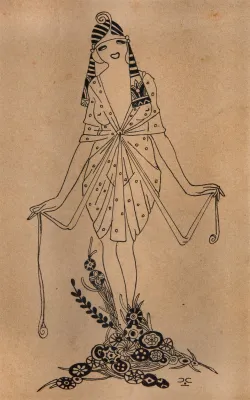
J. Carlos (Rio de Janeiro RJ 1884 - Idem 1950)
j. Carlos was a cartoonist, caricaturist, draftsman, painter and illustrator. He began his career in 1902, in the magazine O Tagarela, directed by Raul Pederneiras (1874–1953) and K. Lixto (1877–1957). The following year, he began to collaborate with several publications aimed at adults and children, until he was hired, in 1908, by the newly founded magazine A Careta, where he worked until 1921. At the same time, he collaborated with other magazines, such as Fon-Fon, The Cicada and the Malho, taking over the direction of the latter from 1918 onwards.
Throughout its trajectory, J. Carlos recorded in his cartoons the urbanization process of the city of Rio de Janeiro and its social impacts. Between 1922 and 1930, he held the position of artistic director of the companies O Malho, starting a wide series of political cartoons, in which he satirized both national and foreign facts and personalities.
Political criticism was present in his work since the beginning of his career. The anti-wart cartoons produced during the period of the two world wars and, especially, throughout the two governments of Getúlio Vargas (1883–1954) stand out, mainly being published in the magazine A Careta. Taking advantage of the relative flexibility of the Vargas censorship of international politics, the artist produced illustrations that criticized US imperialism, especially after the end of the Second World War (1939–1945). He worked tirelessly until his death, which took place in 1950, in the editorial staff of the magazine A Face.
Critical Comment
j. Carlos is one of the most original Brazilian caricaturists of the first half of the 20th century. The humor, the speed and clarity of its trait record the changes in customs and behavior that occurred in Rio de Janeiro, at the turn of the 19th century. His artistic life began in 1902 in the magazine Tagarela. However, it is as an exclusive designer of the magazine Ilustrada Careta between 1908 and 1921 - where he presents a cartoon for cover and six internal drawings weekly - that his characters become known and popular. However, during his career J. Carlos contributes to almost all the important magazines of the time such as Malho, Para Todos, Cigarra and Vida Moderna (both from São Paulo), Revista Nacional, Cinearte, Fon-Fon, Avenida, Tico-Tico (Children's Weekly), O parrot, the cruise and the night. In more than 40 years, J. Carlos has an estimated production of 100,000 drawings, and he also works in the field of advertising between 1931 and 1936 (among his clients are Caixa Econômica Federal, Casa Baby and Companhia Cinematográfica. Cinédia), book illustrations, decoration, scenery for theater plays, sculpture and visual programming.
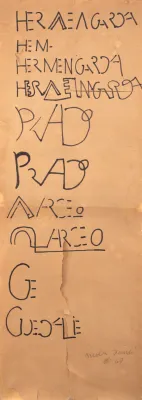
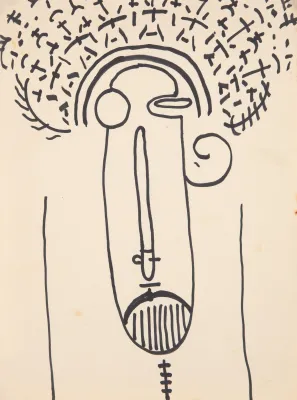
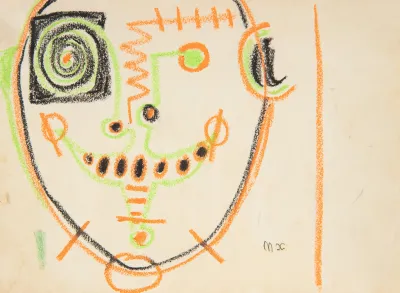
In the beginning, his line still shows vacillating and a little heavy, but over time, especially after the 1930s, he improves his design, which, with Art Deco influences, It becomes stylized, elegant and above all increasingly clear. Its originals are made in pencil, receiving a feather-beak and ink finish, sometimes gouache to thicken the line. For colors, it gives preference to watercolor, using two alternating shades on a white background, almost always on large flat surfaces.
The reason for excellence in the cartoons of J. Carlos is the carioca, its habits and its surroundings. His drawings testify to the emergence of the telephone, photography, beer, samba, electric tram, automobile, cinema, radio, plane, football, beach and carnival culture, and in the political field, the old republic, the revolution of 30, the new state and the two world wars. His visual chronicle does not let the segregating modernization of Pereira Passos's urban project escaped and in this sense portrays both the French habits of the most favored classes - with his footing and afternoon teas at Confeitaria Colombo - and the birth of the culture of the hill, dissemination of the favelas and the survival of Rio Antigo's carioca culture in the Lapa neighborhood.
One of its most famous types is the figure of the slimming, created in 1920. This was immortalized by him with his slender silhouette, eyes Round, the hair cut to the garçonne, with the characteristic snicker on the forehead and next to the face, the heart-shaped mouth painted with strong lipstick. This woman, a mixture of a naive child and a refined and sensual girl, present in every production of J. Carlos, almost always being courted or persecuted by one or more men.
The politicians of the time also did not escape the scorching trait of J. Carlos. Rodrigues Alves, Affonso Penna, Nilo Peçanha, Washington Luiz, Dutra, among others, provided a lot of material for the artist. But with the installation of the Estado Novo and censorship, the artist turns in the late 1930s to the raw reality of war in openly anti-Nazi cartoons.
j. Carlos also created in the early 1920s the children's characters Jujuba, Lamparina, Goiabada and Carrapicho, at a time when almost no one cared about children. No wonder, when Walt Disney visits Brazil on the occasion of the release of his film Fantasia, he tries, without success, to take the Brazilian artist to Hollywood. Some say that the character of the American creator Zé Carioca is based on the character Papagaio by J. Carlos, whom Disney would have seen during his passage through the country. Ironically, when he stopped drawing his children's characters in 1941, J. Carlos states: "I have done them for more than twenty years, but today, a such effort?... Why?... The remuneration is so insignificant. Who can compete with these originals? foreign stereotypes?".
Criticism
"No one has exercised their art with greater professional dignity than this incomparable designer, whose creations, of the most beautiful and correct execution and the finest I like, combined with the grace of the motif and the elegance of the line, they filled the pages of our best illustrated magazines for almost half a century. Drawing, by the balance of composition, by the harmony of color, by the wonderful science of the line that made his original masterpieces of cleansing, free, in almost all, of any amendment or erasure, as evidenced by the public, in his great retrospective exposition of the Assyrian hall, at the 1950".
Herman Lima
Lima, Herman. the precursors (conclusion). In: _____. History of Caricature in Brazil. Rio de Janeiro: J. Olympio, 1963. v. 3, p. 1072. Chapter 12.
"José Lins do Rego wrote that J. Carlos is for Brazilian caricature as Vila-Lobos for music and Machado de Assis for literature. (...) Almost 50 years after His death is still the judgment of posterity, which he was able to recognize in the unfinished trait of José Carlos de Brito e Cunha the most finished expression of the national humor design. of work over 49 years of career in the press guaranteed an uninterrupted flow of drawings to supply the largest illustrated magazines in the country. If the estimated number of the designs that J. Carlos made is impressive (more than 100,000!), it is above all the constant quality that seems almost Unbelievable, given the speed with which the editorial deadlines forced the artist to work. A single bad design is not known by J. Carlos, especially from the 1920s onwards, when his style reaches full maturity and an innate sense invariably seems to guide his line for the best Graphic solution or tasteful effect. (...) J. Carlos was in fact an excellent observer of life and the types of Rio de Janeiro, some of which he helped to create, fixing their image, such as the flammable of the 1920s, or making them recurring, such as the Portuguese of the warehouse or the Bakery".
Pedro Corrêa do Lago
lago, Pedro Corrêa do. Brazilian caricaturists: 1836-1999. Preface Zuenir. Rio de Janeiro: Sextante Artes, 1999. 215 p., Il. Color P. 74-76
Individual exhibitions
1911 - Rio de Janeiro RJ - Individual, at Galeria Brasil
1914 - São Paulo SP - Individual, at the headquarters of the magazine A Cigarra
Posthumous exhibitions
1950 - Rio de Janeiro RJ - Retrosopectiva, in the Assírio hall of the Municipal Theater
1981 - Rio de Janeiro RJ - Universe of Carnival: images and reflections, at the Art Gallery Collection
1982 - Rio de Janeiro RJ - Universo do Futebol, at MAM/RJ
1997 - São Paulo SP - The graphic humor in the 30s, 40s and 50, at Itaú Cultural
1997 - Belo Horizonte MG - The graphic humor in the 30s, 40s and 50s, at Itaú Cultural
1998 - Brasília DF - The graphic humor in the 1930s, 40s and 50, at Galeria Itaú Cultural
1998 - Penápolis SP - The graphic humor in the 30s, 40s and 50s, at the Itaú Cultural Gallery
2000 - Rio de Janeiro RJ - When Brazil was modern: plastic arts in Rio de Janeiro from 1905 to 1960, at Paço Imperial
2001 - São Paulo SP - Brazilian caricaturists, at the Instituto Cine Cultural
2004 - São Paulo SP - The price of Seduction: From the corset to silicone, at Itaú Cultural
2004 - São Paulo SP - The humor of J. Carlos, at the CCSP
2005 - São Paulo SP - Individual, in the Pedrosa Art
Source: Itaú Cultural